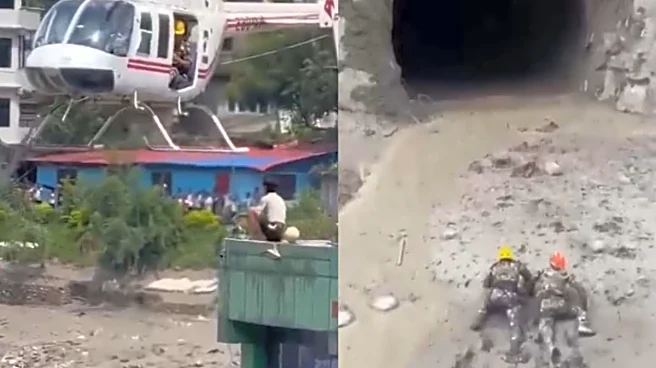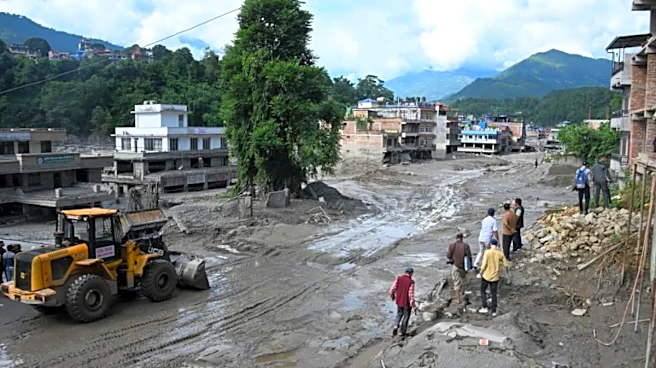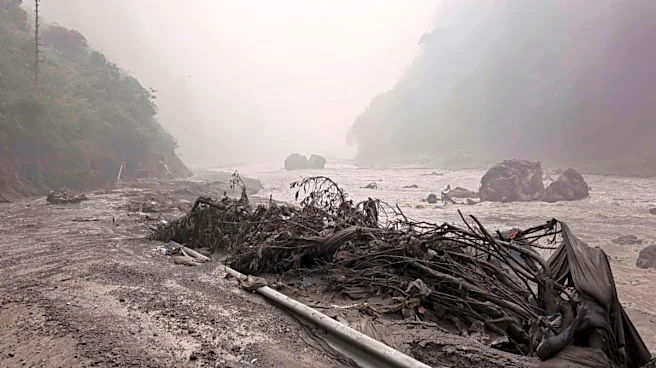

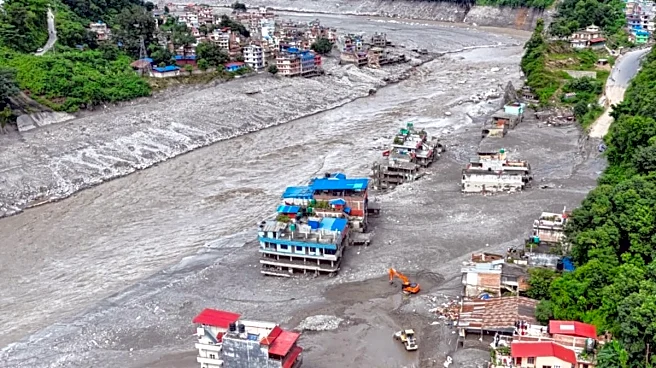


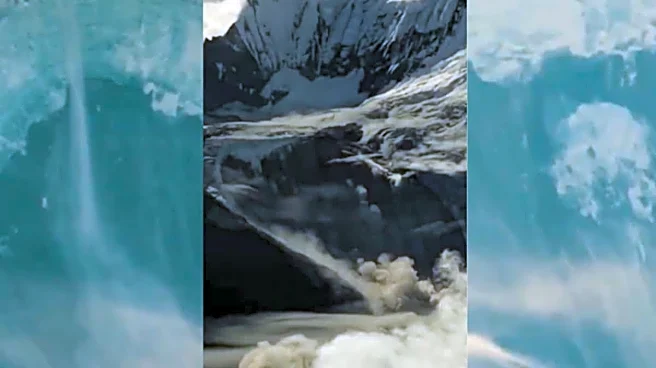
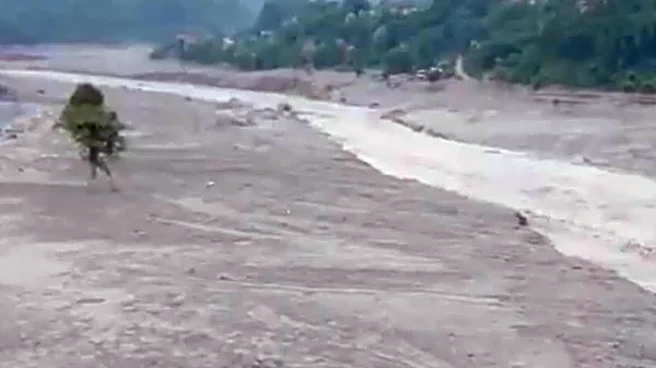
The devastating mudslide and flood disaster that has devastated parts of Nepal has also left a large swathe of Gyirong County in southwest China’s Xizang Autonomous Region cut off, with authorities racing to rescue those trapped, restore access and provide shelter after the Himalayan catastrophe struck the region on August 26.
The worst-hit area on the Tibetan side is around Gyirong Port, a crucial China-Nepal border gateway in Shigatse. The remote mountain crossing was overwhelmed by a sudden surge of water, mud and debris, damaging roads and infrastructure and leaving hundreds of people unaccounted for.
Read More: Nepal Flood Horror: Death Toll Reaches 270, Over 1600 Missing As Search Ops Continue
Chinese authorities have reported three deaths
and 558 people missing in the affected area, including 260 foreign nationals. The missing figure has risen considerably from the preliminary count released soon after the disaster, as authorities have continued verifying people in the affected border region and assessing the scale of the destruction.
Gyirong lies in a deep Himalayan valley close to the Nepal border and serves as one of the principal overland routes between Tibet and Nepal. The region is also used by international travellers and pilgrims travelling towards destinations including Mount Kailash and Lake Mansarovar.
Isha Foundation Group Missing In Gyirong
A group of 80 pilgrims from the Isha Foundation’s Kailash Mansarovar Yatra is also among those unaccounted for in the Gyirong disaster. According to Isha Foundation founder Sadhguru Jaggi Vasudev, the group was at the immigration centre in Gyirong, Tibet, while returning from the pilgrimage when the flash flood struck, inundating the building and surrounding area. The foundation has said it has received no official information on the whereabouts of the group and is working with authorities to locate them. Sadhguru has also appealed to Chinese authorities to allow him and a small team of volunteers to enter the flood-hit area and assist with the search.
Roads Closed, Shelters Being Set Up
The force of the disaster has severely disrupted movement through the region. Roads around the Gyirong border port have been temporarily closed, while authorities have introduced two-way traffic controls on the road connecting Gyirong County with the national border. The restrictions are aimed at controlling movement around the disaster zone and allowing emergency teams to operate in an area where roads and surrounding terrain remain hazardous.
The response has also moved into a temporary-relief phase. Temporary shelters and tents have been set up in Gyirong County for people affected by the disaster, providing emergency accommodation as authorities work to assess damaged homes and infrastructure.
The mountainous geography is making the response particularly difficult. In the aftermath of a major mudslide, debris can block roads and destabilise slopes, while swollen rivers and damaged infrastructure can prevent rescue teams from reaching isolated locations. Keeping traffic away from the worst-hit areas is therefore also a safety measure as search and relief operations continue.
Another concern is the possibility of further flooding. The disaster has resulted in the formation of a barrier lake in the Gyirong area, raising fears that a sudden release of trapped water could create another surge downstream. This has added another layer of urgency to the response, with authorities needing to monitor the changing terrain even as rescue teams search for survivors.





/images/ppid_59c68470-image-178797753371099953.webp)