
/images/ppid_59c68470-image-179059258956112846.webp)

Madhya Pradesh has no shortage of reminders of India’s rich past, from its centuries-old temples and rock-cut caves to forts that once served as centres of power. Now, four more of the state’s historic sites have gained international recognition, with their inclusion in UNESCO’s Tentative List of World Heritage Sites.
The latest additions are the Bagh Caves in Dhar, Ginnorgarh Fort in the Ratapani region, the Bateshwar-Padavali-Kakarmath temple group in Morena, and the Udayagiri Caves in Vidisha. Each offers a distinct window into the region’s artistic, architectural and cultural history. While inclusion on the Tentative List does not guarantee World Heritage status, it is an important step in the process. The recognition could also help bring
greater international attention to Madhya Pradesh’s lesser-known heritage destinations.
Here’s a closer look at the four sites and what makes them worth knowing about.
Bagh Caves, Dhar
Hidden in the Vindhyan landscape of Dhar district, the Bagh Caves are a group of rock-cut Buddhist monasteries that offer a glimpse into India’s early tradition of cave architecture and mural painting. The complex consists of nine caves carved into sandstone, although only a limited number are accessible to visitors today. These ancient viharas, or monastic spaces, are particularly significant for their paintings, which once covered parts of their interiors.
The paintings are often discussed alongside those at Ajanta in Maharashtra because of their shared tradition of narrative mural art. However, the Bagh Caves have their own distinctive visual character, shaped by their materials, colours and setting.
Ginnorgarh Fort
Unlike the temples and caves on the list, Ginnorgarh Fort combines military history with a forest setting. Located within the core area of the Ratapani Tiger Reserve, in the Sehore-Raisen region, the hilltop fort is reached by a steep uphill trek and access is subject to restrictions. Associated with the Paramara period and later Gond rulers, the fort is linked to the region’s changing political history. Its elevated location would have offered a strategic advantage, while the surrounding terrain added to its natural defences. Today, the remains provide a glimpse into the region’s former centres of power, far removed from the busy routes followed by most tourists.
Bateshwar-Padavali-Kakarmath
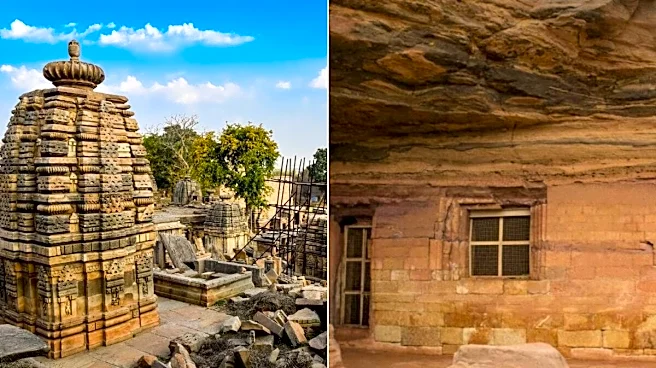
For anyone interested in temple architecture, the Bateshwar-Padavali-Kakarmath group in Morena district is among the most striking heritage clusters in the region. Dating broadly from the 8th to the 11th centuries, the complex includes nearly 200 small sandstone shrines associated with the early Nagara style of temple architecture. The temples are dedicated to Hindu deities, including Shiva, Vishnu and Shakti, and reflect the craftsmanship and religious traditions of the period.
The complex is associated with the Gurjara-Pratihara dynasty, which played an important role in shaping temple architecture across parts of northern and central India. The shrines’ towers, carved pillars and decorative details offer clues to the architectural vocabulary that developed during this era.
The site also tells a story of destruction and restoration. Earthquake damage over the centuries left many of the structures in ruins. Archaeologist K.K. Muhammed and the Archaeological Survey of India subsequently undertook restoration work to bring parts of the complex back into view.
Padavali adds another dimension to the experience, with its ornate temple carvings, while Kakarmath is known for its imposing temple structure. Together, the sites reveal how religious architecture evolved across the region over several centuries. Located within reach of Gwalior, the temple group can be explored as part of a wider heritage itinerary in the area.
Udayagiri Caves, Vidisha
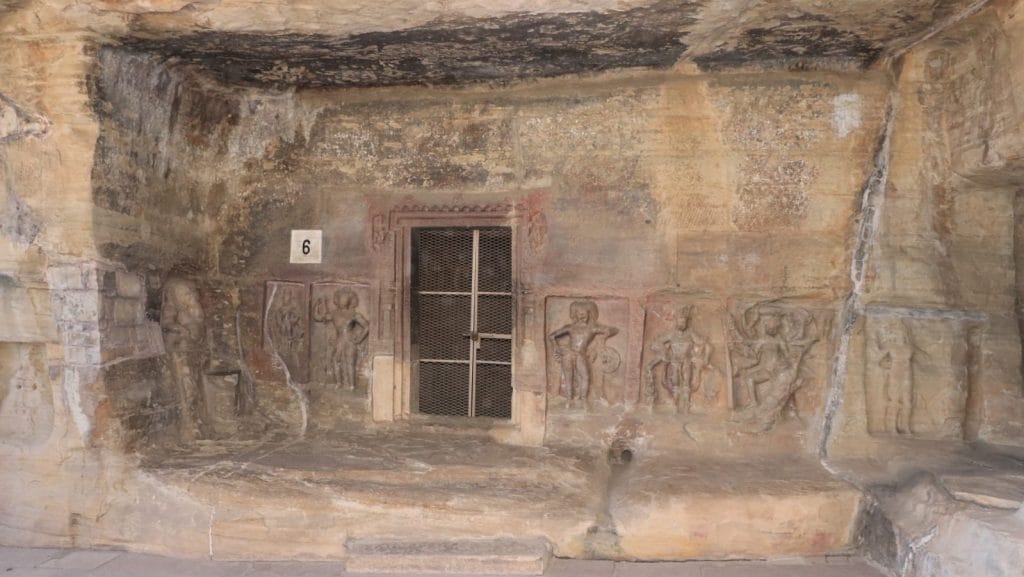
The Udayagiri Caves are among the most significant surviving examples of early Hindu rock-cut architecture. Carved into a sandstone hill near Vidisha during the 4th and 5th centuries CE, the complex comprises 20 caves and sanctuaries associated with the Gupta period. The caves preserve sculptures, inscriptions and religious imagery that help historians understand the development of Hindu iconography and royal patronage in ancient India. Some spaces are associated with Hindu worship, while the complex also reflects the presence of Jain religious traditions.
Its best-known feature is the monumental depiction of Lord Vishnu in his Varaha avatar. In this powerful relief, Vishnu takes the form of a boar to rescue Bhudevi, the Earth goddess, from the cosmic waters. The site is also notable for its Brahmi inscriptions, including records associated with Gupta ruler Chandragupta II and his minister Virasena. These inscriptions provide valuable historical evidence about royal patronage and the political and religious landscape of the time.