



Right a week after catastrophic floods in Nepal upended lives, locals held symbolic funerals for their loved ones as tourists previously reported missing made contact with authorities, ABC News reported.
As many as 1,252 people have been killed so far in devastating floods that tore through several villages along the Tibetan border in Nepal last week, as many others remain unaccounted for.
According to Nepal’s Foreign Ministry, 324 foreign nationals have been rescued, while another 590 from 39 countries remain missing following the flooding. At the same time, over 4,200 people are reported to be missing.
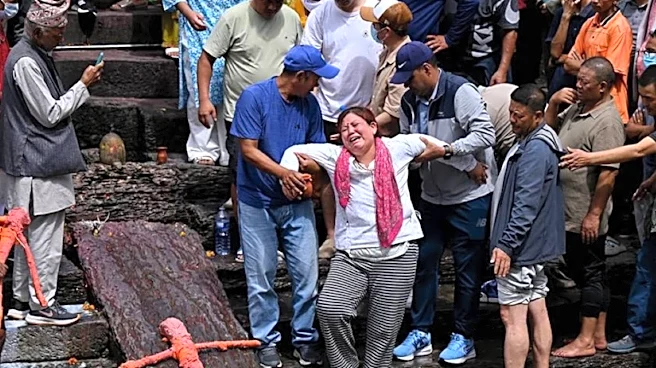
Some families in Nuwakot, one of the most affected districts, held symbolic funerals for their loved ones, hoping to set their souls free as they
were presumed dead in the wake of the disaster, ABC News reported.
🇳🇵 🇨🇳 ⚠️ Nepali families held symbolic funerals on Wednesday to “liberate the souls” of relatives missing since deadly flash floods swept away their villages and homes in the Himalayan region a week ago ➡️ https://t.co/NAF7FR0NWA pic.twitter.com/WbGlx3s9Mi
— AFP News Agency (@AFP) September 2, 2026
In Hinduism, cremation of a family member or relative is considered an important final ritual as it is believed the process provides the deceased with a spiritual release.
Along the banks of the Trishuli River, a priest was seen placing effigies representing the missing people on pyre before setting them alight. Meanwhile, family members and relatives of the missing individuals gathered at the site to witness the ritual and make offerings to the deity.
Nepalese authorities have temporarily buried several bodies until they can be identified. The said bodies were reportedly decomposing and there was no enough room in hospitals and morgues. Over 100 people were waiting to provide blood samples at a Kathmandu hospital, hoping to locate their loved ones, The Guardian reported.
Nepal Floods, India’s Quick Response
The flooding in Nepal along the Tibetan border occurred last week, sweeping through several villages and damaging settlements as well as houses. The flooding is believed to have been caused by a glacial collapse in the Himalayas, leading to the formation of lakes that further descended the valley before tearing through villages along the Nepal-Tibet border.
Nepal’s Prime Minister Balendra ‘Balen’ Shah thanked India for supporting the country through the crisis, acknowledging New Delhi crucial role in the continuing rescue and relief operations.
In line with its ‘neighbours first’ policy, India was quick to dispatch assistance after the August 26 flooding, deploying Indian Air Force aircraft, rescue specialists, medical supplies, forensic experts and equipment to Nepal.
Along with humanitarian aid, India launched highly specialised on-ground operation to accelerate the ongoing efforts in Nepal.