
/images/ppid_59c68470-image-178461505529811661.webp)

/images/ppid_a911dc6a-image-17845415252057784.webp)
Long before Tyrannosaurus rex stalked the land or giant sauropods roamed ancient forests, Earth was ruled by an entirely different class of predators. One of them – a gigantic aquatic hunter that lived around 240 million years ago – is now offering scientists a rare glimpse into a world that existed before dinosaurs came to dominate the planet.
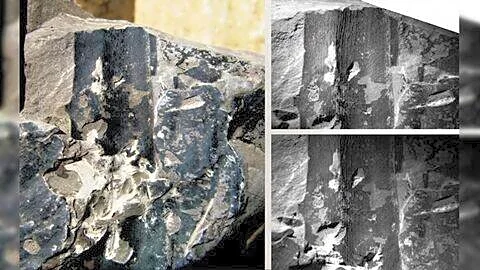
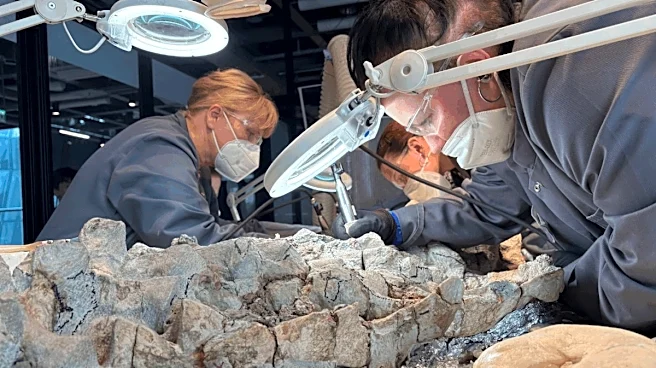
The fossil in question is a nearly complete skeleton of a Mastodonsaurus, one of the largest amphibians known to have existed. Weighing about 1,300 kilograms (2,865 pounds) and stretching nearly six metres (20 feet) in length, the specimen was unearthed in southern Poland in 2023. Today, more than 2,000 volunteers are painstakingly helping scientists free its bones from the surrounding rock in an unusual
citizen-science project at Warsaw’s Copernicus Science Centre, according to a report in The Associated Press.
A Predator From A Different World
Despite often being mistaken for a dinosaur, the Mastodonsaurus belonged to an ancient lineage of giant amphibians known as temnospondyls. It lived during the Middle Triassic period, roughly 240 million years ago—when the first dinosaurs had only just begun to appear and were far from becoming Earth’s dominant animals.
Its broad, flat skull, powerful jaws and sharp conical teeth made it an ambush predator that spent most of its life in rivers and lakes, lying in wait for fish and smaller amphibians before striking. Although its crocodile-like appearance may seem familiar, it was only a distant evolutionary relative.
Scientists believe the newly discovered specimen is the largest and most complete Mastodonsaurus skeleton ever found, potentially rewriting what researchers know about the species.
“The structure of the body is different from what we knew so far. This is information that is completely new to the scientific world,” said Tomasz Sulej, palaeontologist at the Institute of Paleobiology of the Polish Academy of Sciences, who co-discovered the fossil, as quoted by AP.
Before Dinosaurs Took Over
The age of dinosaurs did not begin overnight. Instead, they inherited a planet recovering from the Permian-Triassic mass extinction around 252 million years ago – the deadliest extinction event in Earth’s history, which wiped out the vast majority of marine species and a significant proportion of land animals.
As ecosystems slowly recovered, giant amphibians like the Mastodonsaurus emerged among the dominant predators in freshwater environments. But their reign was temporary. Over millions of years, dinosaurs evolved into larger, more adaptable terrestrial animals, eventually replacing many earlier groups as the dominant vertebrates across the globe.
Science Powered By Ordinary People
More than 2,000 volunteers – including office workers, tattoo artists, cleaners and students – have joined scientists in carefully removing rock from around the fossil millimetre by millimetre using pneumatic tools and ultraviolet light that helps distinguish bone from stone. Each volunteer undergoes training before participating in supervised restoration sessions.
Volunteer coordinator Tatyana Kozyk described the experience as surreal. “I imagine that those bones were lying underground for 240 million years and I am the first human on Earth to touch them. I’m still trying to wrap my head around this experience,” she said.
The restored skeleton is expected to become the largest Mastodonsaurus ever displayed in a museum. Beyond its sheer size, scientists hope it will help answer lingering questions about how life rebounded after Earth’s greatest mass extinction – and how the world’s earliest giant predators paved the way for the age of dinosaurs.



/images/ppid_59c68470-image-178468764141583780.webp)