
/images/ppid_59c68470-image-178027002737863022.webp)


Amid uncertainty surrounding US-Iran peace talks, a senior Iranian military officer stoked fears by saying that a resumption of hostilities with the United States was inevitable.
“The United States demands our total surrender, and the Iranian nation will never surrender. Without surrender, war is inevitable,” said Mohammad Jafar Assadi, deputy head of Iran’s central military command, Khatam al-Anbiya.
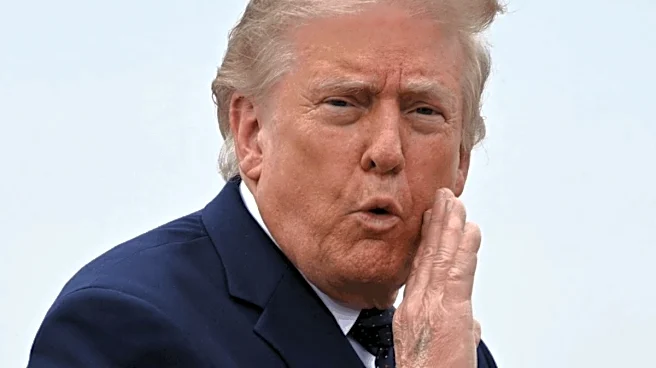
His remarks came as US President Donald Trump said on his Truth Social platform Monday that indirect talks with Iran were continuing at a “rapid pace”, hours after an Iranian news outlet linked to the Islamic Revolutionary Guard Corps (IRGC) said the regime was suspending the talks and opening “other fronts” in the war.
Expressing optimism about a breakthrough,
Trump said a deal that could extend the ceasefire and facilitate the reopening of the Strait of Hormuz may be reached “over the next week.”
Why Did Iran Suspend Talks With US?
Iran had suspended dialogue with mediators, citing Israel’s expanding offensive in Lebanon. Tehran said Israel must halt its offensive in Lebanon before any wider deal to end the war could be agreed.
Ebrahim Aziz, head of the national security commission of the Iranian parliament, earlier said that Tehran is prepared for a military response if the attacks against Lebanon do not stop completely.
However, Trump said he held a “good” and “productive” call with Israeli Prime Minister Benjamin Netanyahu and representatives of Hezbollah, adding that they had agreed to halt the fighting at his request. On the other hand, Netanyahu said the IDF will continue to operate as planned in southern Lebanon.
ALSO READ: ‘You’re F***ing Crazy, You’d Be In Prison’: Trump Rebukes Netanyahu On Call Over Lebanon Strikes
Meanwhile, Iran is yet to respond to a proposed final agreement with the United States aimed at ending the conflict, and discussions on the final text are underway in Tehran, reported Mehr News on Tuesday. The report said Iran was reviewing the proposal cautiously because of what it sees as a history of US non-compliance and longstanding mistrust.
Iran and the US have been engaged in a series of air strikes in the last week despite ongoing diplomatic efforts, which failed to produce an agreement to end the war or restore access through the Strait of Hormuz, a crucial shipping channel for Gulf oil and gas exports.
/images/ppid_59c68470-image-178031503130133945.webp)

/images/ppid_59c68470-image-178033753061768544.webp)
/images/ppid_59c68470-image-178038509833021515.webp)
/images/ppid_59c68470-image-178036505956828902.webp)
/images/ppid_59c68470-image-178036258877715081.webp)
/images/ppid_59c68470-image-178029253095449774.webp)
/images/ppid_59c68470-image-178036262157144385.webp)