
/images/ppid_a911dc6a-image-177501522339644870.webp)
/images/ppid_59c68470-image-177501509611737644.webp)

Every morning, lakhs of Indians pick up a toothpaste tube without a second thought. In Delhi’s Kanjhawala, that trust was being manufactured — tube by tube, chemical by chemical, in a grimy unit that had been quietly filling fake Sensodyne and sending it to neighbourhood shops.
Behind The Raid: A Factory Built On Deception
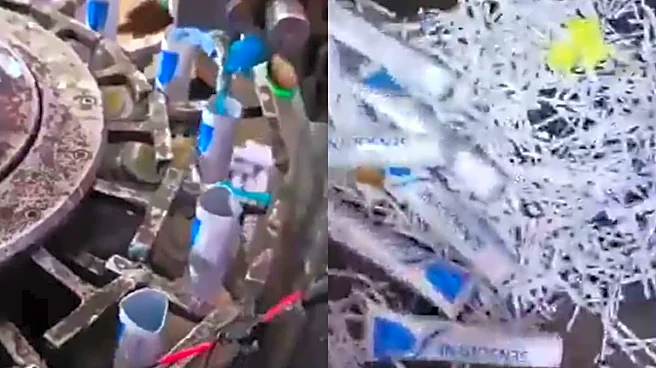
The tubes looked right. The Sensodyne branding was in place. But inside, cheap chemicals, blue bleaching agents and locally sourced fluoride mixtures were being packed in conditions police described as “extremely unhygienic.”
On Friday, Delhi Police arrested a 58-year-old Rohini resident and detained six workers for allegedly running the counterfeit unit, the Hindustan Times reported.
The raid, conducted on Thursday after a tip-off, uncovered a fully operational fake manufacturing
setup: tube-filling machines, heating guns, sealing equipment and drums of cheap chemicals — all working quietly in a northwest Delhi neighbourhood, producing toothpaste that went into real mouths every morning.
The Scale Of The Haul
The numbers are staggering. According to HT, police recovered:
• 2,100 filled tubes ready for sale
• 10,472 empty tubes with Sensodyne packaging, primed for filling
• 200 cartons for dispatch
• Six drums of chemicals used in the mix
• A total of more than 13,000 tubes bearing the Sensodyne brand name
DCP (Crime) Pankaj Kumar confirmed the material was inspected and found to contain unauthorised chemicals. “The material inside the factory was inspected and it was confirmed that other chemicals are being used and toothpaste is being produced in highly unhygienic conditions, making it unfit for use. No valid documents, bills, licenses or authorisations were produced by the accused,” Kumar was quoted by HT.
From Factory Floor To Your Bathroom Shelf
The accused, police say, was buying cheap fluoride mixtures locally, filling and sealing them into Sensodyne-branded tubes, and dispatching them to shops in Rohini, west Delhi and beyond. The operation was lean, low-cost and — until Thursday — completely undetected.
Delhi Police has busted a fake "Sensodyne" toothpaste factory. 1,800 filled tubes, 10,000 empty tubes, 1,200 packed tubes, and 130 kg of paste have been seized. The factory owner, Hariom Mishra, has been arrested. pic.twitter.com/LTK333Pcxq
— Piyush Rai (@Benarasiyaa) April 3, 2026
That last part is what makes it so unsettling. The product was not being sold in back alleys. It was moving through regular retail channels, likely sitting on shelves next to the real thing, indistinguishable to the naked eye.
Raids are ongoing to identify other associates and raw material suppliers, police said.
‘Consider Yourself Lucky If You Live To See Another Day’
Online, the reaction oscillated between fury and dark resignation.
“Avoid buying Sensodyne from Amazon. Unverified sellers sell duplicate products,” warned @saffuu. @kim0thi went further: “The reason nobody noticed this is because the Sensodyne probably does not have any active ingredient. It’s just chalk and water in a fancy package.”
Others called for the harshest possible punishment. “There should be capital punishment for adulteration of food and fake drugs,” wrote @coffeeplanter8, tagging the PMO. @Rangilaaaa captured a more corrosive despair: “This country runs on autopilot. Consider yourself lucky if you live to see another day. Nothing is going to get fixed unless the government starts dishing out life imprisonment.”
Not Just Delhi: A Country Choking On Adulteration
The Kanjhawala bust is no isolated case. Across India, fake and adulterated products have been turning up in daily essentials in recent weeks:
• Hyderabad, April 2026: The Hyderabad City Police declared a “zero-tolerance” war against food adulteration, forming a dedicated Hyderabad Food Adulteration Surveillance Team (H-FAST). In just 30 days, the unit seized nearly 15,000 kg of contaminated products — including spurious ghee, adulterated ginger-garlic paste, fake paneer, and items produced in highly unhygienic conditions using harmful chemicals.
• Telangana, March 2026: Telangana Chief Minister A Revanth Reddy announced a special government mechanism to curb food adulteration, comparing the proposed enforcement model to the state’s existing anti-drug and anti-encroachment units — an acknowledgement of how serious the problem has become.
• Maharashtra, February 2026: The Food and Drug Administration found that consumers were being sold fake paneer and cheese analogues. The state FDA minister announced licence cancellations for those involved, noting the product is especially popular among children.
India currently has no law that specifically punishes adulteration with the severity citizens demand. Under existing provisions, the maximum sentence for food adulteration is six months — a fact that a parliamentary panel flagged, recommending stricter punishment given “the serious health issues” involved. For now, those filling fake toothpaste tubes in Kanjhawala face the same legal ceiling as a man who added water to milk.
/images/ppid_a911dc6a-image-177501455952182982.webp)



/images/ppid_a911dc6a-image-177501462998762175.webp)



/images/ppid_59c68470-image-177501503169041220.webp)

/images/ppid_59c68470-image-177501503628396623.webp)
/images/ppid_59c68470-image-177501506541813481.webp)
/images/ppid_59c68470-image-177501513429425796.webp)