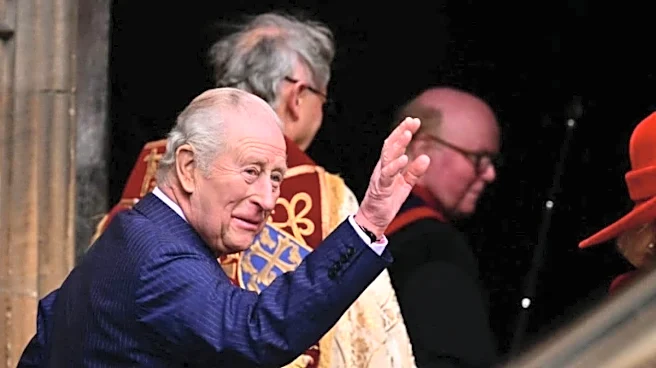




When King Charles III addressed the US Congress on April 28, one line stood out. With a characteristic touch of British wit, he remarked that if not for Britain’s historical role, “the world might be speaking French today.” The comment drew laughter in the chamber. But beyond the humour, it revealed how Britain communicates power on the global stage.
This was not just a throwaway joke. It was a reminder that humour, particularly the dry, understated style associated with Britain, has long functioned as a subtle diplomatic tool. In moments, where formal language can feel rigid or politically loaded, a carefully placed quip can disarm, engage and signal confidence all at once.
The Long Tradition Of Royal Wit
The royal wit is often characterised by
a blend of dry humour, self-deprecation, sharp repartee, and sometimes, intentional eccentricity, designed to navigate the intense scrutiny of public life. And British monarchs have historically relied on understatement and irony to navigate sensitive diplomatic spaces.
Under Queen Elizabeth II, humour often came wrapped in restraint. During her historic 2011 visit to Ireland — the first by a British monarch since independence — Queen Elizabeth II opened her address with a few words in Irish. The gesture, simple yet symbolic, immediately eased tensions during what had been a high-security and politically sensitive visit.
On another occasion, after a speech by George HW Bush, the Queen paused to let the audience’s laughter settle before beginning her remarks. She then added, with characteristic understatement, “I hope you can all see me from where you are,” gently referencing the height difference and the positioning of the microphones.
Even in moments of crisis, British royalty has used humour to steady the mood. During World War II, after a bomb blast near the Tower of London delayed the traditional Ceremony of the Keys, King George VI reportedly remarked that a bombing was a perfectly acceptable excuse—an example of calm wit under pressure.
Similarly, during the 1939 visit of King George VI and Queen Elizabeth to Washington, at a time when Britain was seeking crucial support ahead of the war, the Queen’s charm and humour helped ease diplomatic awkwardness. Her approach made the interactions feel less formal, smoothing relations with a relatively new and assertive global power.
This style of communication became part of the monarchy’s identity. Rather than projecting power through overt declarations, it leaned on subtlety. A light remark, a carefully timed pause or a self-deprecating comment often conveyed more than a formal statement ever could. It reinforced an image of composure and continuity — qualities that have helped sustain Britain’s global influence long after the decline of its empire.
How The British Used Humour As A Wartime Weapon
During World War II, as London faced relentless bombing and uncertainty, the British government introduced what would later become one of its most iconic messages: “Keep Calm and Carry On.” Though it was not widely circulated at the time, the phrase came to embody a distinctly British response to crisis — quiet resilience, composure and a touch of understated irony.
Even Winston Churchill, known for his powerful oratory, used humour to steady public morale. His remark, “If you’re going through hell, keep going,” cut through fear with a mix of dry wit and determination, offering reassurance without sentimentality.
During the Blitz, humour became a coping mechanism as much as a cultural expression. It surfaced in satire, black comedy and even absurdity. Entertainers like Tommy Trinder and Vera Lynn brought moments of levity to audiences living through air raids and destruction. Even as bombs fell, laughter endured — a quiet but powerful assertion that life, and spirit, would continue.
How Humour Is Used As Soft Power
When King Charles III addressed a joint session of the US Congress in Washington, his speech was punctuated by repeated laughter and standing ovations, reflecting the ease with which he connected with lawmakers.
Opening with a historical note, he quipped that the city symbolised a shared past, what Charles Dickens might have called “a tale of two Georges”. He went on to draw a parallel between George Washington and his own ancestor, King George III, a remark that drew a wave of laughter across the chamber.
The King continued in the same vein, assuring the audience that he was not there as part of “some cunning rear-guard action,” prompting more chuckles. He also referenced a centuries-old British parliamentary tradition of symbolically “holding an MP hostage” at Buckingham Palace during a monarch’s address, jokingly asking Speaker Mike Johnson if there were any volunteers in the room.
Beyond the humour, the tone of the speech carried a clear diplomatic purpose. His relaxed demeanour helped ease tensions in a room often marked by political divisions, while also signalling a careful balancing act, strengthening ties with the US even as he subtly responded to criticism over Britain’s role in ongoing global conflicts.
In modern diplomacy, where optics matter as much as policy, humour has emerged as a form of soft power. It makes authority appear more human and approachable, especially in high-level engagements that are otherwise steeped in protocol.
A well-crafted joke can defuse tensions without the need for confrontation. It allows leaders to acknowledge historical realities or political differences in a way that feels less adversarial. In this sense, humour becomes a form of “soft signalling” — a way of communicating intent, confidence or even critique without escalating tensions.
Following the failure to find weapons of mass destruction (WMD) in Iraq, President George W Bush joked about it at the White House Correspondents’ Dinner, showing pictures of himself looking under furniture. This aimed to reduce the perceived severity of the crisis among his supporters.
The Colonial Subtext Beneath The Wit
However, humour in diplomacy is rarely neutral. King Charles’ remark about the world potentially speaking French may have been delivered lightly, but it carries echoes of colonial history. It reflects a past where European powers competed for global dominance, shaping languages, borders and identities.
For audiences in former colonies such as India, such humour can land differently. What may sound like a clever historical aside in one context can evoke memories of colonial control in another. This duality highlights the fine line between charm and insensitivity.
British humour often relies on shared historical understanding. But in a globalised world, those histories are not universally experienced in the same way. As a result, even light-hearted remarks can carry unintended weight, particularly when they touch upon legacies that remain politically and emotionally significant.
Why It Still Works In Global Politics
Despite these complexities, humour continues to be a powerful diplomatic tool. In a multipolar world where influence is increasingly contested, soft power matters as much as economic or military strength. Whether serious or humorous, narratives shape how countries are perceived.
For Britain, humour offers a way to maintain relevance. It allows the country to project confidence and cultural identity without appearing overtly assertive. In settings like international summits or parliamentary addresses, it helps build rapport quickly, creating a sense of familiarity even among political rivals.
At the same time, the effectiveness of this approach depends on context. As global audiences become more diverse and historically aware, the margin for misinterpretation narrows. Diplomacy today requires not just wit, but also sensitivity to how that wit is received.
As Viktor Frankl wrote in ‘Man’s Search for Meaning’, even in the unimaginable horrors of Auschwitz, laughter could momentarily lift the human spirit above suffering. “Humour,” he wrote, “more than anything else in the human makeup, can afford an aloofness and an ability to rise above any situation.”

/images/ppid_a911dc6a-image-177784102933412301.webp)







/images/ppid_a911dc6a-image-177783559212976060.webp)
/images/ppid_a911dc6a-image-177783552481746222.webp)
/images/ppid_a911dc6a-image-177783555932795067.webp)