

/images/ppid_59c68470-image-177894503943539914.webp)
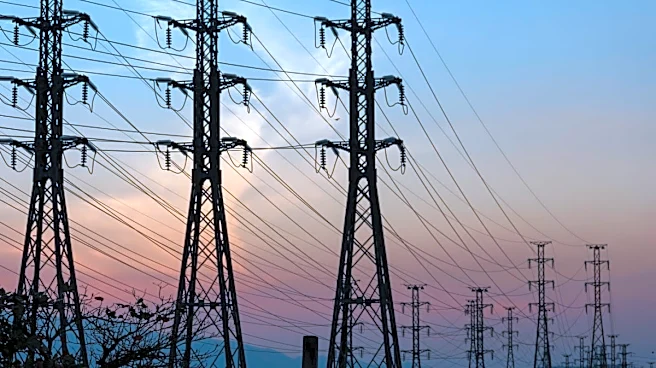
Transmission bottlenecks caused India to lose about 300 gigawatt-hours (GWh) of clean electricity from January to March, according to a new analysis, even as concerns over an emerging energy crisis grow.
The latest analysis done by independent energy think tank Ember showed that India’s renewable energy build-out is now outpacing the expansion of the electricity grid to evacuate it. On March 30 alone, the country lost 34 GWh of clean generation, which is almost equal to the daily electricity needs of about 5 million urban middle-class households. The findings are significant, especially at a time when India is implementing austerity measures to battle the ongoing energy crisis.
According to experts, the lost clean electricity may have reduced
reliance on costly natural gas imports or freed up domestic gas supplies for higher-priority use outside the power sector, as spot prices nearly doubled after the war in West Asia.
As per the report, the total renewable energy losses in the first quarter reached around 470 GWh, of which 300 GWh were caused by transmission constraints. The northern region accounted for 178 GWh and the western region for 122 GWh, while the coordination between power generation and grid expansion was much better in the southern region, which recorded no such losses. “India’s renewable energy losses arising from transmission constraints are beginning to reach materially significant levels. Over time, the system will need to move away from generation-led transmission planning towards a model where generation and transmission are co-optimally planned and executed,” remarked lead author Duttatreya Das, energy analyst, Asia, at Ember.
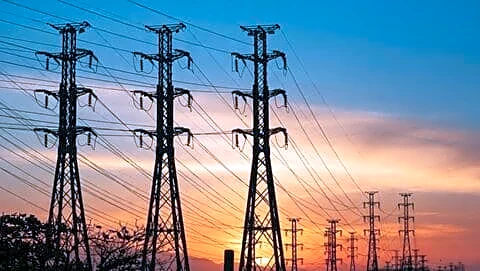
The report flagged a growing mismatch between the pace of renewable energy development and the readiness of the transmission infrastructure in India.
According to the report, India has met only about 80% of its annual transmission targets over the past five years.
As per the report, at least 25% of the transmission projects planned for completion by FY2026-27 are delayed by over a year. One in four major schemes is already running a year or more behind schedule. As a result, 20 gigawatts (GW) of renewable energy capacity are likely to face connectivity delays of more than four months in FY2026-27. In the financial year (FY) 2026–27, India plans to build 25,146 circuit kilometres (ckm) Inter-State Transmission System (ISTS).
The report further emphasised that with the right regulatory changes, there is a commercial case for batteries to help plug India’s transmission gaps in the short term and recommended battery usage for “transmission-as-a-service”. The report suggests two policy steps. First, a government-backed agency to pool power from RE projects with temporary grid access and supply it to battery storage developers. Second, procure battery storage as a transmission asset, so it’s paid for through shared charges across states, just like other grid infrastructure. “Battery storage at pooling stations is the fastest available fix to resolve transmission constraints. Roughly 3-4 GW of two-hour storage could have absorbed most of the losses, against 236 GW of plug-and-play BESS headroom already available at major pooling stations. The technical pieces are in place; the gap is regulatory and commercial,” added Das.

/images/ppid_59c68470-image-17791775308601284.webp)



/images/ppid_59c68470-image-177912760536930455.webp)


/images/ppid_a911dc6a-image-177894090157881490.webp)
