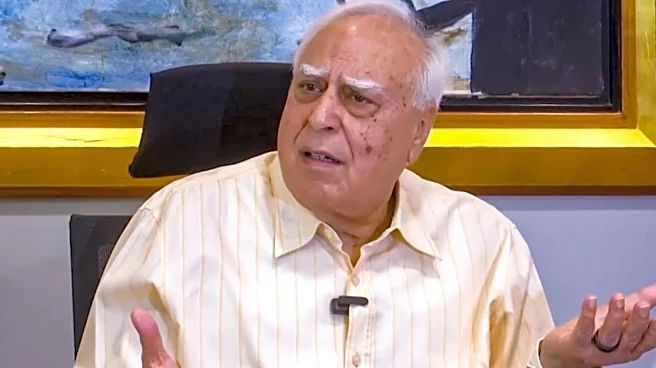

Senior advocate and Congress leader Kapil Sibal deposed before the Joint Parliamentary Committee (JPC) examining the One Nation, One Election (ONOE) proposal on 10 November 10, 2025, presenting his views
to the panel. He urged lawmakers to reassess the long-term implications of synchronising elections across the country.
Sibal opposed ONOE, arguing that it was fundamentally misaligned with the vision the framers of the Constitution had carefully crafted. India’s electoral system, he told the committee, was designed to distribute political accountability across different timelines, ensuring that national and state governments remained independently answerable to the people.
The ONOE proposal — formally introduced in Parliament as the Constitution (One Hundred and Twenty-Ninth Amendment) Bill, 2024 and related amendments — seeks to synchronise elections to the Lok Sabha and state legislative assemblies across India as a single electoral cycle. The Bill was moved in the Lok Sabha in December 2024 and referred to the JPC for detailed scrutiny.
Since being constituted under the chairmanship of BJP MP PP Chaudhary, the 39-member committee has been hearing a range of stakeholders and experts to assess the constitutional, legal, administrative, and economic dimensions of the proposal.
Earlier in the year, several prominent figures also appeared before the JPC to share their perspectives:
Former Chief Justice of India UU Lalit appeared before the panel and suggested a phased or staggered approach to simultaneous polls, noting practical and legal considerations in implementing such a system.
Former CJI Ranjan Gogoi deposed as a constitutional expert, offering views on certain technical aspects of the Bill and the powers proposed for the Election Commission.
Former Law Commission chair AP Shah told the committee that he found elements of the proposal constitutionally questionable and outlined his concerns, while senior advocate Harish Salve provided a contrasting view supporting the legislation’s constitutional validity.
Other experts and specialists including economists like NK Singh and law officials such as the Attorney General and former high court judges have also presented inputs over the course of multiple meetings.
The JPC is expected to weigh these diverse inputs, spanning constitutional interpretations, federal considerations, administrative feasibility, and financial implications, before finalising its recommendations on the ONOE proposal.