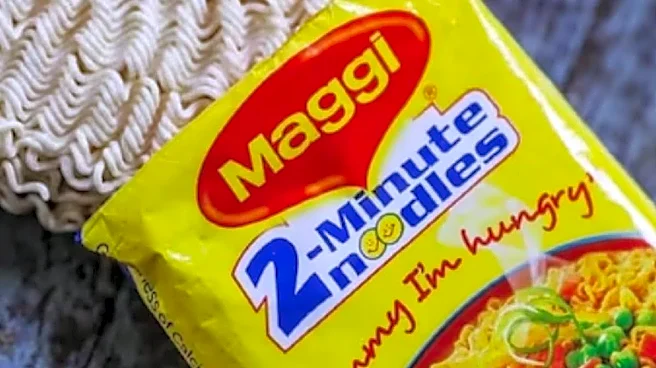




In 2015, Nestlé’s iconic brand Maggi faced its biggest crisis in India. A nationwide ban over safety concerns wiped out sales almost overnight. Fast forward to today, and the same brand has staged one of the most remarkable comebacks in the FMCG sector. India is now Maggi’s largest market, with sales of nearly 16 million packets daily.
The 2015 Ban: A Sudden Fall From Grace
Maggi’s troubles began when food regulators flagged alleged excess lead content and mislabeling of monosodium glutamate (MSG). Following this, multiple states imposed bans, and eventually, a nationwide recall was ordered. Shelves went empty, factories shut down, and a product that had become synonymous with convenience vanished.
For a brand that had built deep emotional and consumption habits over decades, the impact
was unprecedented. Sales dropped to zero, and Nestlé India had to halt production and destroy large quantities of stock.
The Origins: Building a Market From Scratch
Maggi entered India in 1983, at a time when the concept of instant noodles was virtually unknown. It wasn’t competing with other noodle brands; it was competing with traditional staples like roti, rice, and poha.
The breakthrough came with positioning. Maggi wasn’t just marketed as food; it was sold as “instant comfort”. The famous “2-minute” promise made it an easy choice for busy households, especially mothers looking for quick meal solutions.
The Power of the “2-Minute” Promise
The simplicity of preparation became Maggi’s biggest strength. In just two minutes, it offered a hot, tasty, and filling option. Over time, this convenience translated into habit.
Maggi successfully embedded itself into daily life, including after-school snacks, late-night hunger fixes, and quick meals during travel. It wasn’t just a product anymore; it became a routine.
Targeting Indian Families, Not Just Consumers
Unlike in many global markets where instant noodles target young adults, Maggi in India focused on families, particularly homemakers.
The messaging was clear: “No time to cook? Just boil, break, and serve.” Over time, Maggi also built an emotional connection, associating itself with warmth, home, and comfort.
From Product to Ingredient
Another key to Maggi’s success was its flexibility. It evolved from being just noodles to becoming an ingredient in Indian kitchens.
Consumers began customising it—adding vegetables, eggs, spices, and regional flavours. This adaptability made Maggi more than a packaged food; it became a base for creativity.
Distribution and Advertising: The Silent Strength
Maggi’s deep penetration into India’s retail ecosystem, especially kirana stores, ensured it was available almost everywhere at an affordable price.
Simultaneously, Nestlé invested heavily in advertising. Catchy campaigns and consistent messaging built strong brand recall across generations.
Even during the 2015 ban, this ingrained habit and emotional connection meant consumers didn’t easily switch loyalty.
The Comeback: Trust Rebuilt
After months of testing, regulatory approvals, and relaunch efforts, Maggi returned to shelves in late 2015. Nestlé focused heavily on rebuilding trust, highlighting safety standards, transparency, and quality checks.
Consumers responded. The brand quickly regained lost ground, driven by nostalgia, trust, and habit.
Innovation and Expansion
Post-crisis, Maggi doubled down on innovation. New variants such as Atta Maggi and Oats Maggi were introduced to cater to health-conscious consumers. This helped the brand stay relevant while expanding its consumer base.
India: Maggi’s Biggest Market Today
Today, despite being sold in countries like the US, Canada, Germany, and Australia, India stands as Maggi’s largest market. Maggi sells around 16 million packets daily and commands roughly 60% of India’s instant noodle market.
“Robust growth was sustained across all categories, with India becoming the largest Nestlé market globally for Maggi,” Nestle said in its annual report 2023-24.

/images/ppid_a911dc6a-image-177625706440993179.webp)



/images/ppid_a911dc6a-image-177625360577819660.webp)



/images/ppid_a911dc6a-image-177609395176280482.webp)