

/images/ppid_a911dc6a-image-177639282804891253.webp)
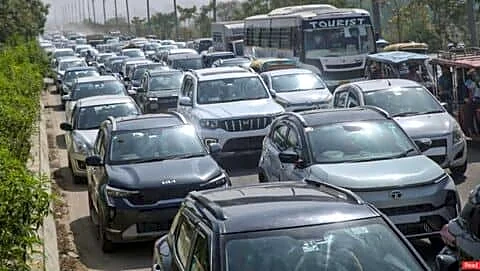
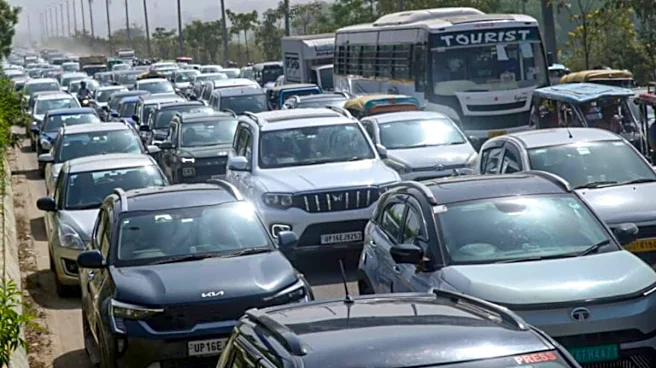
Delhi’s traffic woes are seeing a fresh, community-led intervention with the rollout of Project SANGAM, short for Synergistic Action & Networked Governance for Area Mobility,g an initiative that aims to bring citizens into the heart of decision-making.
The programme, launched on April 3 at the direction of Lieutenant Governor Taranjit Singh Sandhu, seeks to foster coordination between residents, RWAs, market bodies and civic agencies to address everyday mobility issues, according to officials, said a report by Hindustan Times.
Since its inception, joint forums comprising the traffic police, MCD, PWD and local stakeholders have held around 30 meetings, engaging more than 6,000 residents across key neighbourhoods including Karol Bagh, Saket, Chanakyapuri,
Rajouri Garden and Defence Colony.
Inputs gathered during these discussions have already begun translating into on-ground changes. In Karol Bagh, for instance, residents raised concerns ranging from poorly placed e-rickshaw stands and barricades to encroachments, Friday market regulation and safety near Metro stations. Authorities subsequently shifted e-rickshaw stands and cleared barricades.
In Mayur Vihar, complaints about waterlogging at an underpass triggered stricter enforcement measures. Similarly, traffic management around Hanuman Mandir Road and Bangla Sahib Gurdwara was tightened with additional personnel and focused monitoring to tackle unauthorised parking.
Neighbourhoods such as Model Town and New Friends Colony have seen adjustments in signal timing, removal of encroachments and better management of school-hour traffic.
A proposal is also under consideration in Defence Colony to convert the G Block Road stretch in South Extension Part I into a one-way lane, with officials saying a gazette notification has been sought.
In Dwarka and Rajouri Garden, long-standing congestion at busy intersections and parking bottlenecks have been addressed through coordinated action between agencies.
“The initiative seeks to deliver citizen-centric, ground-up traffic solutions by actively involving communities in the decision-making process. By bringing together RWAs, MWAs, and civic agencies on a common platform, the project facilitates real-time resolution of issues ranging from unauthorised parking to pedestrian safety,” Sandhu said in a post on X.
Officials indicated that the exercise is focused on tackling recurring concerns such as illegal parking, e-rickshaw congestion, wrong-side driving, encroachments, signal inefficiencies and pedestrian safety gaps, reported Hindustan Times.
More than 50 suggestions have reportedly been logged so far and are being monitored through a central digital system. Authorities added that the consultations have already resulted in tangible enforcement action, including large-scale issuance of e-challans, towing and clamping drives, along with infrastructure improvements.




/images/ppid_a911dc6a-image-177651687357880795.webp)