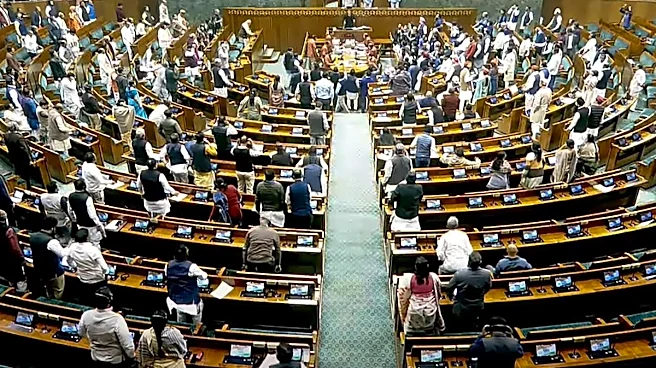

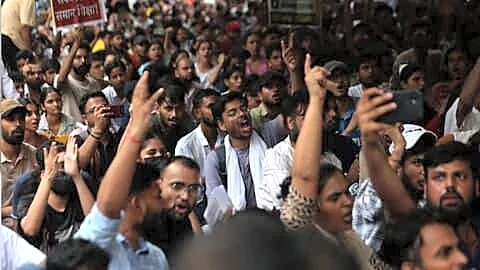




Parliament was adjourned for the second consecutive day on Tuesday as proceedings in the Lok Sabha and Rajya Sabha were disrupted by protests. While repeated disruptions are often seen as part of political disagreements, they also come with a significant financial cost. Every adjournment means public money continues to be spent even as legislative work remains stalled.
How much does Parliament cost to run?
According to reports, it costs around Rs 2.5 lakh per minute to run Parliament. The figure was first shared in Parliament in 2012 by then Parliamentary Affairs Minister Pawan Kumar Bansal.
In 2023, former Lok Sabha Secretary General PDT Acharya reiterated the same estimate, saying the cost includes expenditure on building maintenance, electricity, water, security, salaries and allowances
of Members of Parliament, staff expenses, transport, food and other direct and indirect operational costs.
Based on this estimate, the cost of running Parliament works out to around Rs 1.5 crore per hour and approximately Rs 9 crore for a six-hour working day.
What does a Parliament washout mean?
When Parliament is repeatedly adjourned, the financial burden does not stop.
The expenses involved in running Parliament continue regardless of whether the two Houses are debating legislation or sitting in adjournment.
Using the commonly cited estimate, every hour lost due to disruptions costs around ₹1.5 crore, while a full day lost to adjournments amounts to nearly Rs 9 crore.
Some reports also note that if disruptions continue through an entire session, the notional loss can run into tens of crores depending on the number of hours wasted.
Cost of a full session
The cost rises further when calculated over an entire parliamentary session.
Depending on the number of sitting days, a session can cost between ₹140 crore and ₹200 crore, or even more, based on the estimate of Rs 2.5 lakh per minute.
A session with 15 to 20 sitting days is estimated to cost around ₹135 crore to ₹180 crore, with the amount increasing if additional sittings are held.
Estimated expenditure
Per minute: Rs 2.5 lakh
Per hour: Rs 1.5 crore
Per six-hour sitting day: Rs 9 crore
Per 15–20-day session: Rs 135 crore–Rs 180 crore or more
Why productive sittings matter?
A day lost to repeated adjournments affects more than just the legislative calendar.
It means fewer Bills are debated, ministers answer fewer questions from Members of Parliament and legislative scrutiny is reduced. It also weakens parliamentary accountability, as discussions and debates that are central to the functioning of the legislature are delayed or do not take place.
Taxpayers continue to bear the cost of Parliament’s infrastructure, staff and operational machinery, even when the Houses are unable to function for the full scheduled duration.
Monsoon Session agenda
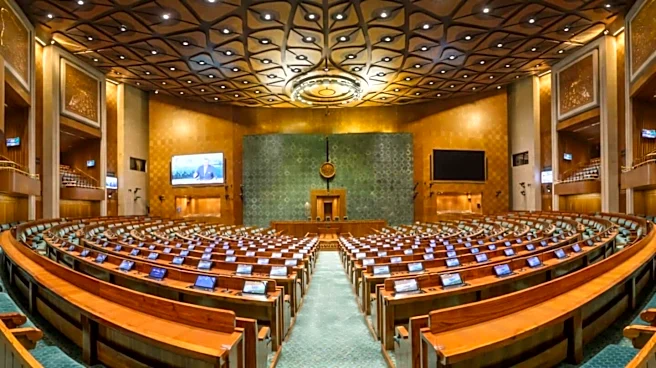
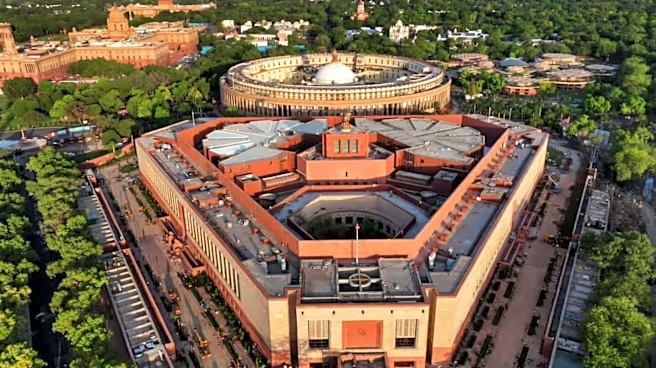
India’s Parliament comprising the Lok Sabha and the Rajya Sabha. Parliament meets every year for three sessions – the Budget Session, the Monsoon Session and the Winter Session.
The Monsoon Session is scheduled from July 20 to August 13 and is expected to have 19 sittings over 25 days.
According to reports, the government is likely to introduce several key legislations during the session, including the Income-tax (Amendment) Bill, 2026, Supreme Court (Number of Judges) Amendment Bill, 2026, Registration of Births and Deaths (Amendment) Bill, 2026, Prevention of Insults to National Honour (Amendment) Bill, 2026, and the MSME Development (Amendment) Bill, 2026.
With Parliament adjourned for a second day, each hour of disruption adds to the cost borne by taxpayers while delaying legislative business scheduled for the Monsoon Session.

/images/ppid_59c68470-image-178452753157863802.webp)




/images/ppid_a911dc6a-image-178460363008378607.webp)