



That a temple has stood for centuries is fascinating enough. But what makes Achaleshwar Mahadev Temple in Gwalior truly intriguing is the story and beliefs surrounding its sacred Shivling, one that, according to local legend, could not be moved despite repeated attempts.
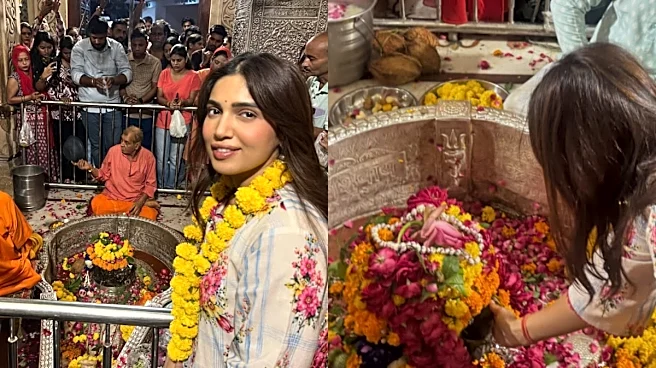
Recently Bollywood actress Bhumi Pednekar visited the temple and shared glimpses of her spiritual experience on social media. Alongside pictures from her visit, she wrote, “Har Har Mahadev 🔱 Praying of peace everywhere. Achaleshwar Mahadev Mandir in Gwalior is believed to be around 750 years old, this ancient Shiv Mandir is home to a swayambhu Shivling.”
She added she was praying for peace everywhere. Describing her experience at the temple, Bhumi wrote, “Standing there, you
can’t really explain what you feel. There is a stillness, a strength, an energy that feels almost beyond words.”
But there is much more to this ancient Shiva shrine than its peaceful atmosphere. From the meaning behind the name Achaleshwar to the legend of a Shivling that people tried to move using elephants, the temple has a fascinating story rooted in faith and local tradition.
What Does Achaleshwar Mean?
The name Achaleshwar is itself connected to the temple’s most famous belief. The word is derived from two Sanskrit terms, achal, meaning immovable or steady, and Ishwar, meaning God or Lord. Together, Achaleshwar is associated with Lord Shiva as the “Immovable Lord”.
And there is a reason this particular name became associated with the shrine. According to the popular legend surrounding the temple, a naturally manifested, or swayambhu, Shivling was discovered at the site. When attempts were later made to remove it, the Shivling reportedly remained firmly in place.
According to local accounts, people dug around the sacred Shivling to find its base and move it elsewhere. But instead of reaching an end, they reportedly encountered water beneath the ground. The deeper they tried to dig, the more mysterious the situation became, as they were unable to determine the end of the Shivling.
When these attempts failed, the legend says that even elephants were brought in to pull the Shivling out. Heavy chains were attached, but the effort reportedly ended with the chains breaking while the Shivling remained exactly where it was.
One version of the story further says that the ruler subsequently had a dream in which Lord Shiva instructed him not to disturb the Shivling. The attempts to move it were then abandoned. These details are part of the temple’s longstanding religious tradition rather than independently verified historical events.
And that is where the name Achaleshwar, the immovable Lord, takes on an even deeper meaning.
Belief Around Shiva’s Footprint
Another belief associated with Achaleshwar Mandir adds to its spiritual significance. The temple is said to have been built around a toeprint believed to belong to Lord Shiva.
The temple follows the familiar traditions of Shiva worship, with devotees offering prayers to the Shivling. For those visiting the shrine, however, the significance goes beyond the ritual itself. The legends surrounding the site have been passed down through generations, giving the temple a distinctive place in Gwalior’s spiritual landscape.
How Old Is Achaleshwar Mahadev Temple?
The temple’s age is described differently across accounts. Bhumi Pednekar referred to it as being around 750 years old in her social media post. Another account describes Achaleswar Mandir as being associated with the 9th-century AD Paramara dynasty.
The temple’s architectural history also has an interesting detail. It is said to have been built using blocks of marble, something reportedly revealed during a period of renovation.
Rather than focusing too heavily on an exact date, the enduring significance of the temple lies in its long-standing place in local religious tradition and the stories that continue to surround it.