
/images/ppid_59c68470-image-178902252237882195.webp)

For decades, Kashmir and Bollywood shared a relationship that was almost inseparable. Long before Switzerland became Bollywood’s preferred destination for snow-clad romance, the Valley’s mountains, lakes and houseboats served as the backdrop for some of Hindi films’ most memorable songs and love stories.
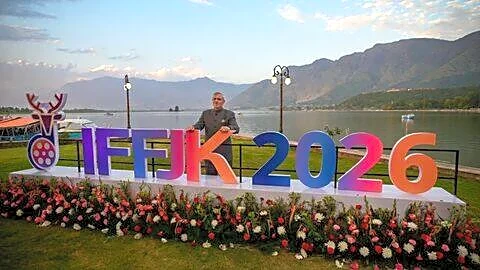
While this relationship in the 80s because of the rise in militancy, today, it has changed once again. Jammu & Kashmir is hosting its first International Film Festival of Jammu & Kashmir (IFFJK) from September 7 to 10, 2026. The event brings together around 135 films from nearly 40 countries.
As India celebrates this history step, let’s take a look at Kashmir and its relationship with Bollywood over the decades:
When Kashmir Was Bollywood’s Switzerland
Kashmir’s cinematic association
goes back several decades. One of the first popular films which brought Kashmir’s beauty to the big screen was Raj Kapoor’s Barsaat (1949). Shot widely in Kashmir, the film helped put the valley’s landscape before a much wider Indian audience.
Shammi Kapoor became particularly associated with this cinematic Kashmir. ‘Junglee and Kashmir Ki Kali’ presented the valley as a place of romance, music and youthful exuberance, while ‘Jab Jab Phool Khile’ used Dal Lake and its houseboats as an integral part of its love story.
By the 1970s and early 1980s, Kashmir was not merely a shooting location, it had become a character in Bollywood films. Over the next few years, films like Bobby, Kabhi Kabhie, Silsila and Satte Pe Satta were also shot in Kashmir.
It would not be wrong to say that cinema also helped Kashmir become a popular tourist destination.
Everything Changed In The 80s…
Unfortunately, the relationship between films and Kashmir began to change in the 1980s as militancy intensified. By 1989-90, cinema halls across the Valley had shut down amid threats from militant groups. Srinagar, which had several functioning theatres, effectively lost its public cinema culture. According to a report by Kashmir Records, Kashmir had more than 20 cinema halls across the Valley before the closures.
As the security situation deteriorated, film producers also stepped away from Kashmir. Places such as Manali and Ooty substituted Kashmir. Foreign destinations like Switzerland also became popular for Bollywood’s romantic songs.
In a report that Al Jazeera published in 2018, it claimed that as the Indian army arrived in Kashmir in 1989, many of the movie halls were also turned into military garrisons.
The Failed Comeback Attempt
It should be noted that there was an attempt to revive cinema halls in the 1990s. The government provided financial assistance to theatre owners to renovate their properties. In 1999, three prominent Srinagar theatres – Regal, Neelam and Broadway attempted to reopen.
Unfortunately, on the day Srinagar’s Regal Cinema reopened in September 1999, a grenade was thrown inside the theatre. One person was killed and several others were injured. The attack crushed the attempt to revive mainstream cinema in the valley. Eventually, Broadway and Neelam also shut down.
For more than two decades, an entire generation grew up without the ordinary experience of going to a cinema hall in Kashmir.
The Return Of Producers In 2000
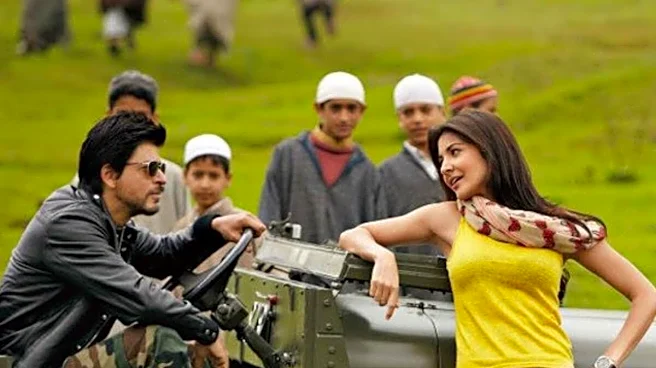
In the early 2000s, filmmakers once again started to move to Kashmir for shoots. Mission Kashmir (2000) brought a major Bollywood production back to the valley. Later, films like Yahaan, Rockstar, Jab Tak Hai Jaan, Highway, Haider, Bajrangi Bhaijaan, Laila Majnu, Manmarziyaan, Romeo Akbar Walter and Notebook, were also shot in different parts of Kashmir.
The revival also received a boost during the Covid-19 period, when restrictions on international travel prompted several filmmakers, including from the Tamil and Telugu industries, to choose Kashmir for sequences that might otherwise have been filmed at different locations in Europe.
In 2021, Jammu and Kashmir also launched film policy to promote UT as shooting destination. The policy aimed to make the Union Territory a major film-shooting destination through financial incentives, a single-window clearance system, location and talent directories, infrastructure development and plans for reviving closed cinema halls.
Importantly, the policy also proposed making identified shooting locations available free of cost after obtaining the necessary clearances. This attracted filmmakers.
2022 Marked The Return Of Films To Kashmir
The biggest symbolic change came in September 2022, when Srinagar got its first multiplex in decades. After roughly 23 years without a functioning mainstream cinema culture, a new INOX multiplex opened in the city. Around the same period, multipurpose cinema halls were also opened in Pulwama and Shopian.
It would not be wrong to say that from being Bollywood’s favourite romantic backdrop to losing its cinema halls and becoming synonymous with conflict, Kashmir’s relationship with movies has come a long way.
Filmmakers returning, theatres reopening and now an international film festival has now put the valley in the global spotlight. It seems Kashmir is reclaiming its old connection with the movies.



/images/ppid_59c68470-image-178893752666164298.webp)



/images/ppid_59c68470-image-178895002569573167.webp)