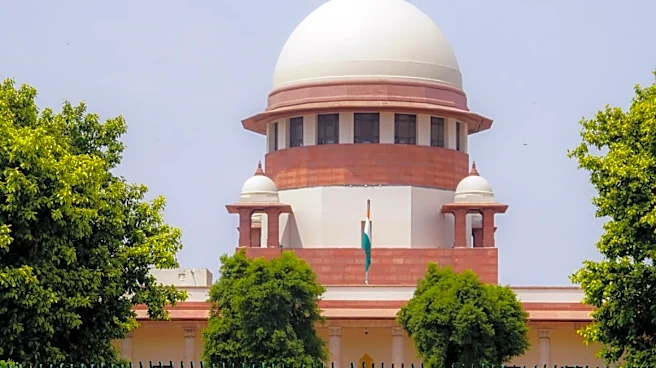




The Supreme Court has brought an end to a 23-year-long marriage after a woman withdrew her consent for divorce despite agreeing to a final settlement earlier. The court strongly criticised her decision, saying such a reversal at an advanced stage of proceedings cannot be accepted.
A bench of Justices Rajesh Bindal and Vijay Vishnoi observed that while parties in a mutual divorce have the right to withdraw consent before the final order, this right is not absolute. Once a full and final settlement is reached and accepted by the court, backing out without valid grounds is not permissible. The bench added that such conduct should attract heavy costs.
The dispute escalated after the settlement was concluded. The woman later claimed that her husband
had also promised to return jewellery worth Rs 120 crore and gold biscuits worth Rs 50 crore.
However, these claims were not part of the written agreement, reportedly to avoid scrutiny from tax authorities. When the husband denied handing over the valuables, the woman refused to proceed with the divorce and filed a domestic violence case.
The court raised serious concerns over the timing of the complaint, noting that it was the first such allegation in a marriage spanning over two decades. It said the move appeared to be an attempt to prolong the dispute rather than seek genuine relief. The judges remarked that such submissions reflect a disregard for the judicial process.
The bench clarified that withdrawal from a settlement can be allowed only in exceptional circumstances, such as fraud, coercion, undue influence, or failure to comply with agreed terms.
In its judgment, the court also said, “Another argument raised by the Respondent-Wife, that she only agreed to exclude these terms from the Settlement Agreement upon being asked so by the Appellant-Husband in order to avoid alerting the Income Tax Department and to evade any liability towards wealth tax, is highly egregious. We are appalled at the sheer audacity of such a submission being advanced before a court of law and deplore the evident disregard exhibited towards the legal system”.
Taking note of the woman’s conduct, the Supreme Court invoked its powers under Article 142 of the Constitution to dissolve the marriage and bring finality to the matter. It also dismissed the domestic violence case filed by the woman.






/images/ppid_a911dc6a-image-177662165365191581.webp)


/images/ppid_a911dc6a-image-17766212304748345.webp)
/images/ppid_a911dc6a-image-177662107665864393.webp)
/images/ppid_a911dc6a-image-177662111155363476.webp)
/images/ppid_a911dc6a-image-177662104254693096.webp)