



Cancer is one of the world’s deadliest diseases, but what if it could spread like an infection? Scientists have now confirmed that this bizarre phenomenon exists — at least in a handful of animal species.
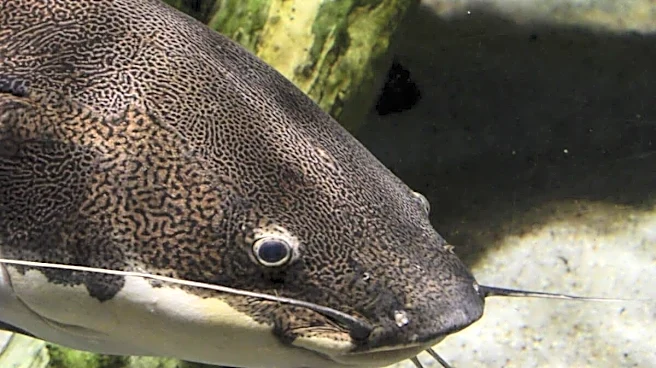
Researchers have identified the first known case of a naturally transmissible cancer in a freshwater fish, the brown bullhead catfish, after investigating mysterious black skin tumours in fish from Lake Memphremagog on the US-Canada border. The discovery, published in Nature, has renewed interest in one of biology’s rarest phenomena: transmissible cancer, where living cancer cells pass from one individual to another.
The discovery expands an extraordinarily small group of animals, including Tasmanian devils, dogs and some shellfish, that can
naturally pass living cancer cells from one individual to another.
While transmissible cancer may sound alarming, experts stress that human cancers do not spread through everyday contact. You cannot catch cancer by touching, hugging, kissing or sharing food with someone who has the disease.
What Is Transmissible Cancer?
Most cancers begin when a person’s own cells acquire genetic mutations and start growing uncontrollably. They remain confined to that individual’s body, even if they spread internally through metastasis.
Transmissible cancer is fundamentally different. Here, the cancer cells themselves leave one individual, enter another member of the same species and continue growing there as living cells. Instead of behaving like a disease caused by viruses or bacteria, these cancer cells behave almost like parasites that survive by moving from host to host.
This is also different from cancers linked to viruses such as human papillomavirus (HPV) or hepatitis B virus. In those cases, the virus is contagious, not the cancer. The infection may increase a person’s cancer risk years later, but no cancer cells are transmitted between people.
For contagious cancer to occur, tumour cells must survive outside their original host, evade the immune system of another individual and establish themselves in a completely new body — something that is biologically extraordinarily difficult.
“Viruses such as human papillomavirus (HPV) and hepatitis B virus (HBV) are infectious pathogens, but they do not transmit cancer cells from one individual to another. Instead, these viruses establish persistent infections that, over many years, can induce chronic inflammation, genomic instability, and alterations in cellular regulatory pathways, thereby increasing the risk of malignant transformation. For instance, HPV infection leading to cervical, anal, vulvar, penile and oropharyngeal cancers, Chronic hepatitis B and hepatitis C infections increasing the risk of hepatocellular carcinoma, Epstein–Barr virus (EBV) contributing to several lymphoid and epithelial malignancies, and Human T-cell lymphotropic virus type 1 (HTLV-1) causing adult T-cell leukaemia/lymphoma. Therefore, infectious agents may increase cancer risk, but they do not make cancer itself contagious,” said Dr Vijay Kumar Srinivasalu, Senior Consultant – Medical Oncology, Sakra World Hospital, Bengaluru.
Why Did The Catfish Discovery Surprise Scientists?
The story began in 2012, when unusually high numbers of brown bullhead catfish were found with dark skin lesions. At first, researchers suspected pollution or environmental contaminants because the affected lake had experienced severe flooding and concerns over pollutants. Genetic analysis, however, revealed a far more unusual explanation.
Scientists sequenced DNA from tumours and healthy tissue collected from multiple fish. Instead of finding separate cancers developing independently in each animal, they discovered that the tumours shared the same genetic lineage. The cancer cells were more closely related to one another than they were to the fish carrying them, proving that the melanoma had originated once before spreading between different fish.
The exact route of transmission remains unclear. Researchers suspect the cancer could spread through close contact during spawning, much like in dogs and Tasmanian devils, or through exposure to cancer cells released into freshwater, similar to what happens in shellfish.
The discovery marks the first known transmissible cancer in any freshwater fish, opening an entirely new area of cancer research.
Which Rare Animals Can Pass Cancer To One Another?
Nature has documented only a handful of naturally occurring transmissible cancers. Tasmanian devils develop facial tumours that spread when the animals bite one another during fights or mating. Because the species has very low genetic diversity, their immune systems often fail to recognise incoming cancer cells as foreign.
Dogs have a sexually transmitted cancer known as canine transmissible venereal tumour (CTVT). During mating, living cancer cells pass directly between animals and continue growing in the new host.
Several species of shellfish, including clams, mussels and cockles, can also transmit cancer. Unlike mammals, they release cancerous blood cells into the surrounding water, where neighbouring shellfish can absorb them while filter feeding.
The brown bullhead catfish is now the newest member of this exceptionally exclusive group.
Why Humans Don’t Get Contagious Cancer
The first line of defence is a human being’s immune system. Cancer cells from another person appear foreign and are usually destroyed almost immediately by immune surveillance before they can establish themselves.
Humans also have enormous genetic diversity. Every person’s cells carry unique genetic signatures, making it extremely difficult for foreign cancer cells to blend in.
Another important safeguard is histocompatibility—the same biological barrier that causes organ transplant rejection. Unless a donor and recipient are carefully matched and immunosuppressive medicines are used, transplanted tissues are rejected. Cancer cells face the same obstacle.
“The human immune system is highly efficient at recognising and eliminating foreign cells through immune surveillance and human leukocyte antigen (HLA)-mediated recognition. Cancer cells transferred from another person are usually identified as non-self and rapidly destroyed. Humans possess substantial genetic diversity, making successful engraftment of another person’s cells extremely unlikely. Foreign cancer cells must overcome immune rejection, adapt to an entirely different tissue environment, establish a blood supply, and continue proliferating, an extraordinarily difficult biological challenge. There is no evidence that cancer spreads through touching, kissing, sharing utensils, coughing, blood contact during everyday activities, sexual intercourse, or living with someone who has cancer,” Srinivasalu explained.
There are a few rare medical exceptions. Occasionally, an undetected cancer may be transmitted through an organ transplant if the recipient is taking drugs that suppress immunity. A very small number of cancers have also passed from mother to foetus during pregnancy. These are extraordinary medical events, not examples of cancers spreading naturally through communities.
Why Scientists Are Excited
Transmissible cancers offer researchers a rare opportunity to study how tumours survive outside their original host, evade immune detection and evolve over decades, or even centuries.
Understanding these mechanisms could improve cancer immunotherapy by revealing new ways to help the immune system recognise and destroy tumour cells. The diseases also provide a unique window into tumour evolution, immune escape and metastasis, helping scientists understand how cancers adapt to changing environments and overcome biological defences.
The catfish discovery also raises new ecological questions about how these cancers emerge, how long they persist and whether similar diseases may exist unnoticed in other wildlife populations.
Myth vs Fact
The discovery has understandably raised public curiosity, but the science is reassuring. You cannot catch cancer by kissing, hugging or touching someone with cancer. Sharing food, drinking from the same glass, breathing the same air or living together also does not spread cancer.
Cancer is not transmitted through casual blood contact either. While viruses such as HPV, hepatitis B and hepatitis C can spread between people and increase cancer risk later in life, the viruses are infectious, not the cancer itself.
Pets also cannot pass these rare animal cancers to humans. The transmissible cancers seen in dogs, Tasmanian devils, shellfish and catfish remain confined to their own species.
The newly discovered catfish cancer is therefore not a public health threat. Instead, it is an extraordinary reminder that evolution sometimes finds surprising ways to break biological rules—and that studying these rare exceptions could ultimately help scientists better understand, and perhaps better treat, cancer in humans.










/images/ppid_59c68470-image-178529003060391950.webp)
