




New Delhi, Jun 13 (PTI) Nearly a century after Maharaja Sawai Man Singh II of Jaipur gifted a part of his Delhi estate to the Delhi Polo Club, the historic Jaipur Polo Ground finds itself at the centre of a legal battle over its future.
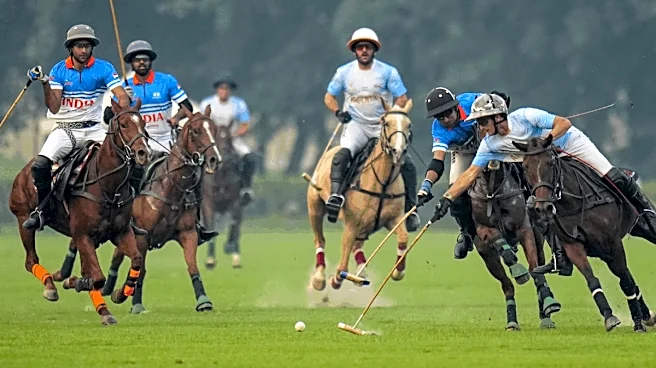
Named after the legendary ruler and polo player, the 15.2-acre venue in Delhi’s Race Course area has long been regarded as one of India’s most prestigious and oldest polo grounds.
For generations, it has hosted some of the country’s biggest polo tournaments and remained closely associated with a sporting tradition that traces its roots to India’s princely era.
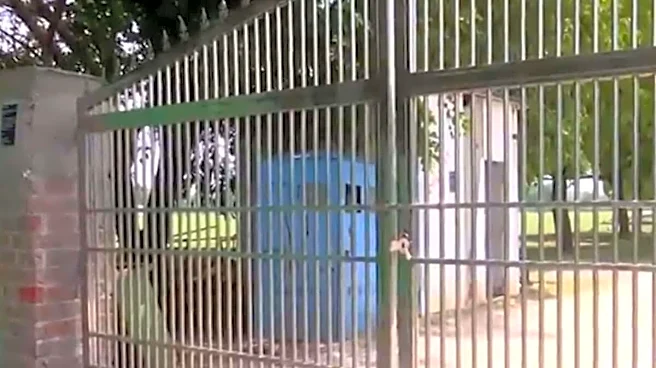
Officials of the Land and Development Office (L&DO) under the Union Housing and Urban Affairs Ministry took physical possession of the ground on Saturday
following a May 20 eviction order.
The order cited a “larger public purpose and benefit” for the land parcel but did not specify its proposed use. On June 8, the Delhi High Court directed a district court to decide on a plea moved by the Indian Polo Association (IPA) seeking a stay on the eviction notice.
The district court, however, declined to grant the interim relief, following which government officials moved to take possession of the property.
According to the IPA, the land originally formed part of the Jaipur Estate in Delhi and belonged to the erstwhile Jaipur royal family.
The ground was gifted by Maharaja Sawai Man Singh II to the Delhi Polo Club around 1930 and went on to become one of the most prominent centres for the sport in the national capital.
“Sawai Man Singh II is widely regarded as one of the greatest polo players of his era and the Jaipur Polo Team under his leadership dominated the sport through much of the early and mid-20th century,” said Major Nirvikar Singh (Retd), counsel for the IPA.
“It is one of the oldest polo grounds in India and has traditionally been regarded as the most coveted venue for the sport in the country, hosting the annual Delhi fall and spring polo seasons,” he said.
Over the decades, the Jaipur Polo Ground became one of the country’s most sought-after venues for polo, staging several national and international tournaments.
“The venue has also hosted major equestrian events, including competitions linked to the Asian Games, the IPA National Polo Championship and the Indian Masters Trophy,” Singh said.
He said the ground is not a conventional members’ club but a sporting facility dedicated to the promotion of polo that has supported generations of players, including Arjuna awardees, and remains one of the very few dedicated polo venues in the country alongside Jaipur.
The ground’s history is also tied to a long-running dispute over the land.
After it was gifted by Maharaja Sawai Man Singh II to the Delhi Polo Club in the early 20th century, the ground remained a hub for polo in the capital. According to the IPA, the Central Public Works Department (CPWD) signed a 20-year lease for the property in 1951 and polo activities continued at the venue.
When the lease expired in 1971, it was extended from time to time on the same terms and conditions until the end of 1982, according to the association.
A major change followed in 1983 when the Delhi Polo Club was dissolved and the IPA, recognised as the national governing body for the sport, took over the management and possession of the venue.
The association says government communications issued in 1983 and 1984 recorded the transition and extended the lease arrangement in its favour.
According to the IPA, a 1991 communication described the Jaipur Polo Ground as a historic venue that was used for polo since New Delhi was founded.
The communication recommended renewing the lease, noting that proposals to shift activities linked to the Delhi Race Club could take time and that relocation could be discussed later.
The association further cites a November 30, 1992, communication which, it says, reaffirmed the decision to renew the lease and stated that from April 1, 1993, extensions would be granted on a yearly basis until the ground shifted to an alternative site.
The IPA says it continues to pay ground rent and remains in possession of the venue. It argues that notices and communications issued by authorities over the years reflect the government’s continued engagement with the lease arrangement.
The association also says it deposited Rs 30,400 as ground rent in April 2025 for the period ending March 31, 2030, and that the payment was accepted through the government’s online portal.
The government’s position, however, is that the lease expired in March 1993 and that the association has been occupying the land without authority since then.
The dispute escalated this year after the L&DO issued an eviction notice in March. An estate officer passed an eviction order on May 20 and on June 8, the high court directed the district court to consider the IPA’s plea for a stay. The district court declined the interim relief.
With no stay in place, officials of the L&DO took physical possession of the Jaipur Polo Ground on Saturday.
“The IPA considers the eviction to be wrongful, arbitrary and contrary to law. The association is presently examining the order and will pursue all remedies available to it in law to safeguard its rights and interests,” Singh said.
“As the matter is sub-judice and ongoing, the association does not propose to comment further at this stage,” he added. PTI SGV RC

/images/ppid_59c68470-image-178150251977244986.webp)