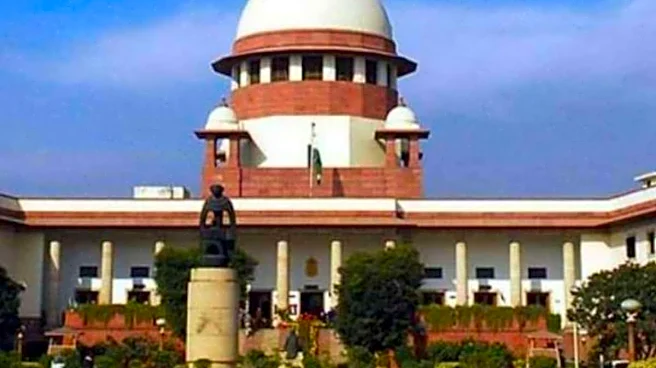



The Supreme Court on Thursday ruled that the Bar Council of India (BCI) does not have the authority to initiate disciplinary proceedings against law students, holding that such matters fall within the jurisdiction of the universities and educational institutions where the students are enrolled.
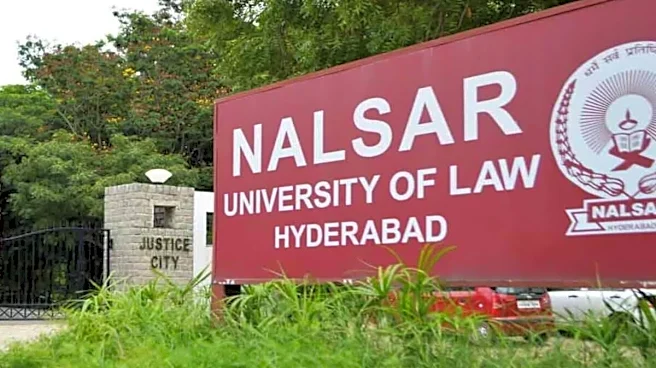
A bench headed by Chief Justice of India Surya Kant was dealing with a controversy triggered by communications issued by the BCI to NALSAR University of Law over a protest by students from the 2026 graduating batch concerning the university’s convocation.
The communications sent to the Vice-Chancellor and Registrar had recommended action against the students. The BCI subsequently withdrew the communications within 24 hours.
During Thursday’s proceedings,
the Chairman of the BCI appeared before the court and submitted that the communications in question had already been withdrawn. On that basis, the BCI contended that there was no surviving issue requiring adjudication.
Senior Advocate K. Parameshwar, appearing for the petitioners, however, submitted that withdrawal of the communications did not eliminate the need for the court to settle the legal question concerning the BCI’s powers over law students.
The Supreme Court agreed that the issue required clarification and examined the scope of the authority granted to the BCI under the Advocates Act.
What The Supreme Court Said?
CJI Surya Kant, while dictating the order, said, “On an independent consideration of the issue, we are of the considered opinion that the Advocates Act, 1961, under which the Bar Council of India has been constituted, does not confer any express or implied power upon it to take disciplinary action against students pursuing legal education.”
Also Read: National Law School Calls Off Convocation Amid CJI-NALSAR Invite Row, Cites ‘Unavoidable Circumstances’
The court held that disciplinary authority over students rests with the university or educational institution in which they are studying.
“Such power is vested in the university or educational institution in which the students are enrolled. The Bar Council of India may prescribe and enforce standards of legal education in accordance with the statutory provisions and applicable regulations. It cannot, however, take disciplinary action against a law student,” it added.
The court also declared that the BCI’s August 13 communication against the NALSAR students, along with subsequent modified communications, had been issued without jurisdiction.
“Having regard to what we have declared above, the communication dated August 13, 2026, and all subsequent modified communications are declared to have been issued without jurisdiction.”
Supreme Court’s August 14 Direction
The Supreme Court had, on August 14, directed that neither the BCI nor any State Bar Council should take punitive action against the students or faculty members of NALSAR University of Law while the matter was pending.
The Supreme Court further confirmed the protection it had earlier granted to the NALSAR students and faculty. “The interim direction issued by this Court on August 14, 2026, is made absolute.”
What Is CJI-NALSAR Controversy?
The controversy began after a group of NALSAR students wrote to the university’s vice-chancellor, registrar and professors opposing any proposal to invite CJI Surya Kant as chief guest for the convocation.
Also Read: ‘Issued In Haste’: BCI Chief On Withdrawal Of Order Against Law Students Amid NALSAR-CJI Row
The first representation was submitted on July 23 by 70 members of the outgoing LLB batch. Students from subsequent batches later extended their support to the representation.
The controversy further escalated after the BCI intervened, issuing a directive that barred State Bar Councils from enrolling the university’s 2026 graduates. The move effectively threatened to prevent the graduating batch from entering the legal profession.
The BCI directive triggered a backlash, with questions raised over whether a professional regulator could take action against an entire graduating class over students’ opposition to a proposed chief guest.
The BCI later withdrew the directive, saying the matter would be reconsidered after an inquiry.



/images/ppid_59c68470-image-178877008819330031.webp)