



As the cool winds of February begin to fade, the sky is quietly preparing for a rare and fascinating celestial phase. This time, the situation is especially intriguing. In 2026, both a solar eclipse and a lunar eclipse will occur within just 15 days of each other, between February and March.
Although having two major eclipses within a short span is not entirely rare, it certainly captures attention. This raises an important question: does such an event truly affect our lives, or is it simply a beautiful coincidence unfolding in the sky?
Discussions about this “double eclipse” are already trending on social media—some people view it as a sign of major change, while others see it simply as an astronomical event. Let’s understand the full picture.
When will the eclipses occur?
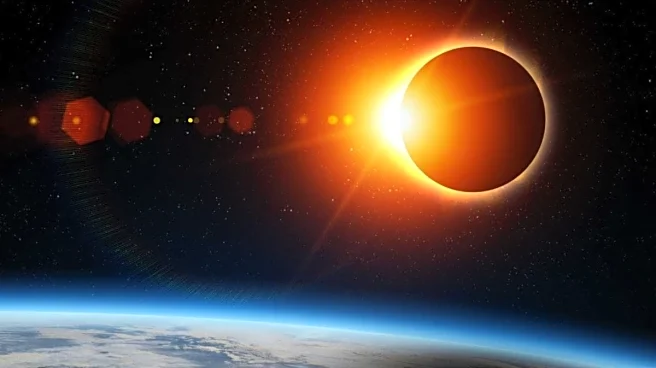
The annular solar eclipse will occur on February 17, where the Moon covers the centre of the sun and will be surrounded by a bright, fiery ring—often called the “ring of fire.” This eclipse will last from the afternoon until late evening. However, it will not be visible in India, which means the traditional sutak period will not be observed here.
The second eclipse will be a lunar eclipse, occurring on March 3, on the day of festival Holi. Unlike the solar eclipse, this one will be visible in India, which is why it is receiving greater attention. Since it coincides with an important cultural and religious occasion, it holds additional significance for many people.
What Does It Mean In Astrology
According to astrology, two eclipses within such a short period are believed to signal shifts in energy. Rather than being a reason for fear, many astrologers consider this a time for reflection and inner awareness.
Some experts believe such periods may coincide with social changes, shifts in seasonal patterns, or heightened political activity.
However, not all astrologers view eclipses as negative or inauspicious. Many consider them part of the natural cosmic cycle—just as seasons change, celestial bodies also follow their own rhythms.
In many rural areas, traditional practices are still followed during eclipses. People often cover food to protect it and avoid consuming it during the eclipse period. In several households, prayers, chanting, and charitable acts are performed, as eclipses are seen as spiritually significant moments.
Even in urban settings, some people treat eclipses as an opportunity to pause and reflect. Many turn to meditation, mindfulness, or quiet introspection to calm their minds. Others attempt to link eclipses with major global events or fluctuations in financial markets, such as movements in the stock market. However, these beliefs are largely based on tradition and perception, and there is no concrete scientific evidence supporting such connections.
Dos And Donts During An Eclipse
From a spiritual perspective, practices such as chanting mantras, meditation, donating to those in need, and maintaining mental calmness are encouraged. Many people use this time for self-reflection and spiritual focus.
From a practical perspective, avoid looking directly at the Sun during a solar eclipse with the naked eye. Ensure that children are also aware of this precaution. If you wish to observe the eclipse, use proper solar viewing filters or certified protective glasses.
Do not look at the Sun without proper protection, as it can harm your eyes. If you experience discomfort or irritation in your eyes, seek medical advice immediately. It is also important to avoid believing or spreading rumours and misinformation about eclipses.
Traditional beliefs suggest that pregnant women should rest during eclipses and avoid stress. Many people advise them to stay indoors during the eclipse period and avoid using sharp objects or tools. These practices are rooted in cultural traditions rather than scientific evidence, but many families continue to follow them out of caution and respect for custom.
What Does Science Say?
According to science, eclipses are purely astronomical events. They occur due to the alignment and positioning of the Sun, Earth, and Moon. There is no proven scientific evidence linking eclipses to harmful effects on human life or major disruptions on Earth. However, protecting your eyes while observing a solar eclipse is essential. That remains the most important and scientifically supported precaution.
In the end, eclipses are a reminder of the vast and precise movements of the universe. Whether seen as a spiritual moment or a scientific phenomenon, they offer a rare opportunity to pause, observe, and reflect on our place within the cosmos.




/images/ppid_a911dc6a-image-177106804197029945.webp)