
/images/ppid_a911dc6a-image-177060802130265096.webp)
Polo is often viewed as an elite sport. The horses, the uniforms and the setting create a composed picture. But what is rarely spoken about is how physically intense and risky the game can be for those who play it seriously.
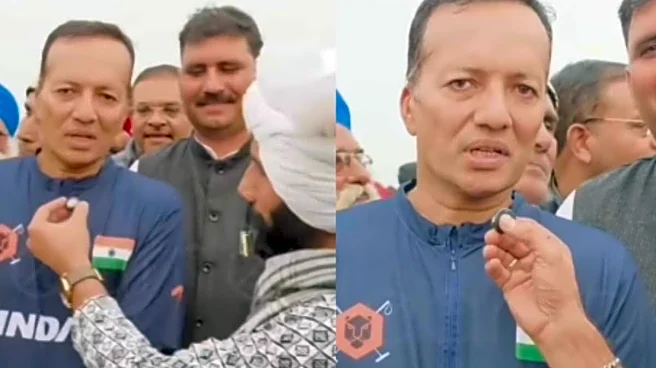
That side of polo came through when billionaire industrialist and experienced player Naveen Jindal spoke about the sport in his own words. His explanation was direct and it opened space to look at another life that has been shaped by polo.
Naveen Jindal Talks About Polo In Haryanvi Language
In the video, Jindal is seen speaking in a Haryanvi accent about what polo demands from its players.
Explaining the basics, Jindal says, “Each player needs 6-8 horses to play.” He then speaks about how his mother reacted to his matches. “Many
times, my mother didn’t come to see me as she was scared for me where I might fall,” he says.
Recalling his injuries over the years, Jindal adds, “She has seen me many times falling where my bones were also broken. This is a dangerous game and not everyone can play it.”
His words highlight the physical cost that often stays hidden behind polo’s polished image. That reality has also been part of the journey of players who grew up with the sport and built their lives around it.
The Polo Prince
One such figure is Shivraj Singh, the Prince of Jodhpur, for whom polo was part of daily life. Born to Maharaja Gaj Singh II and Maharani Hemlata Rajye, he was the only son and the heir to the Rathore dynasty of Marwar.
His father introduced him to polo at a young age. Shivraj began playing at Mayo College and continued at Eton where the sport remained a constant. He later represented Oxford Brookes University while completing his studies.
After earning a degree in Business Administration, Shivraj worked outside India. He was associated with Schroder’s Bank in Geneva and London and later worked with Jardine in Hong Kong. He eventually returned to Jodhpur to manage the family’s responsibilities.
He also played a role in developing Umaid Bhawan Palace into a luxury hotel in collaboration with the Taj Group, a project that reportedly cost around Rs 10 crore.
Alongside his professional work, Shivraj continued to focus on polo. With a handicap of +3, he came to be regarded as one of India’s leading players. He represented Indian polo on the international stage.
As captain of the Jodhpur Eagles, he led the team to victories in tournaments held in England, Brazil, South Africa and Switzerland.
The Day Everything Changed
On February 18, 2005, during the Birla Cup match at Jaipur’s Rambagh Polo Ground, Shivraj was playing an intense game. While leaning in for a near-side shot, a rival horse collided with his. He lost balance and fell heavily.
He was taken to Sawai Man Singh Hospital and later airlifted to Mumbai’s Tata Hospital. Doctors found that he had suffered a severe brain hemorrhage. Shivraj remained in a coma for over two months.
At the time, neurosurgeon Dr Suneel N Shah told reporters, “He is much better and came out of the coma medically yesterday.”
Eleven months later, Shivraj could speak in short sentences and move only with support. His recovery involved years of therapy and rehabilitation that included treatment with an American physiotherapist.
Changes Within The Family
After the accident, Shivraj’s elder sister, Shivranjani Rajye, took over the responsibility of managing the family’s affairs. A Cambridge graduate, she oversaw Umaid Bhawan Palace, the heritage hotels and the restoration of the Mehrangarh Fort Museum.
Five years after the accident, Shivraj married Gayatri Kumari Pal of Askot, who belongs to the former royal family of Uttarakhand.
The Risks Behind The Game
Polo is a thrilling sport but it comes with real dangers. From fast-moving horses to high-speed collisions, players face many ways to get injured.
Falls from horses: The most common source of injury. Players can get bruises, fractures or concussions if they fall at high speed.
Collisions: Shoulder-to-shoulder bumps between horses and players happen often during fast-paced play.
Equipment impact: The ball moves very fast and mallets can accidentally hit a player or horse.
Overuse injuries: Repeated riding and swinging can strain the shoulders, wrists and back that may sometimes cause long-term issues.




/images/ppid_59c68470-image-177073258566288418.webp)