



The Union Budget 2026 signaled a renewed decarbonisation push as part of its climate action plan with the government committing Rs 20,000 crore to support scale up Carbon Capture Utilization and Storage (CCUS) technologies over the next five years.
While renewable energy remains central to India’s climate action strategy, it is also increasingly focusing on technologies like CCUS to control emissions from its hard-to-abate sectors like power, which is heavily dependent on fossil fuels like coal. These technologies remain at a nascent and development stage in the country. The Department of Science and Technology (DST) and Council of Scientific and Industrial Research (CSIR) has also recently taken up various projects to validate and deploy CCUS technologies at small
scale in real industrial setting.
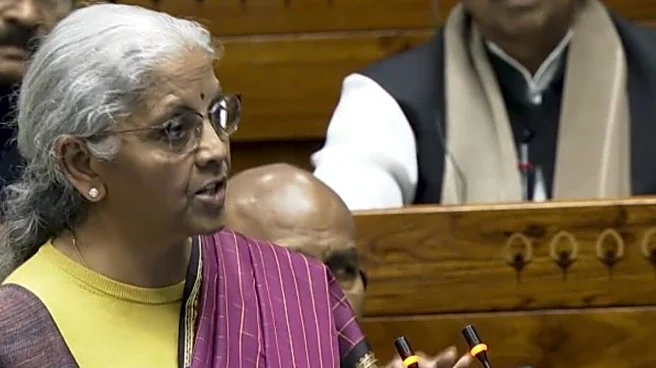
Speaking in Parliament on Sunday, Finance Minister Nirmala Sitharaman said the government looks to scale up CCUS technologies to achieve higher readiness levels in end-use applications across five industrial sectors – power, steel, cement, refineries and chemicals. The investment in CCUS technologies have grown globally in recent years, as countries look for ways to limit their emissions, amid increasing energy demand. These technologies are designed to reduce emissions from direct sources like power plants and industrial units where emissions are difficult to control because of their dependence on fossil fuels like coal. This is done by separating Carbon Dioxide coming out of a facility before it is released into the atmosphere. It is either permanently stored or used in making certain type of products like synthetic fuels, fertilisers, construction materials, and industrial gases.
Pradeep Singhvi, Executive Director, Grant Thornton Bharat said the decision was long-awaited and demonstrates a clear understanding of industry needs. “Building on the CCUS Roadmap released in December 2025, this move will accelerate the transition from promising pilots to scalable industrial deployment. This also sends a strong signal that India is preparing its heavy industries for a lower-carbon future with confidence and clarity,” said Singhvi.
The government had told Parliament last August that some industries have taken initiatives for pilot or demonstration projects which are currently operational. Meanwhile, National Thermal Power Corporation (NTPC) also recently commissioned a pilot project of 10 Metric Tonnes Per Day CO2 to Methanol conversion plant in Vindhyachal, Madhya Pradesh with annual capacity of 6,000 MT. JSW Steel also operates a Direct Reduced Iron unit plant in Salav, Maharashtra where CO2 is deployed in line to strip out CO2 from the process gas of capacity of upto 500 TPD.
“CCUS is expected to play a transformative role in enabling industrial decarbonization in the country, aligning with the nation’s overarching goal of achieving Net Zero by 2070. By promoting indigenous research and development, CCUS reduces dependence on imported technologies. The deployment of CCUS technology across sectors, hard-to-abate sectors is expected to encourage investment, foster innovation, and potentially support job creation in high-skilled domains,” government told Parliament last year.