
/images/ppid_a911dc6a-image-178521727364993469.webp)
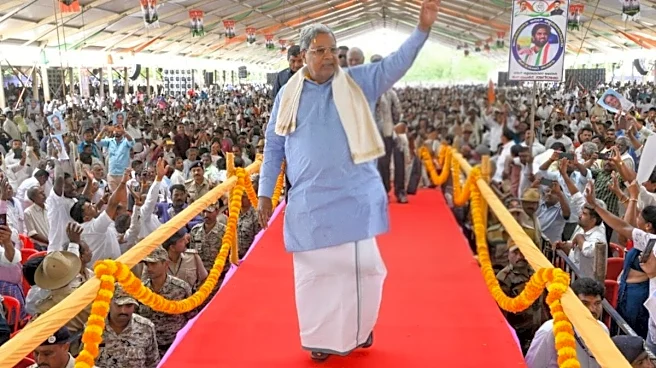
Veteran Congress leader and former Karnataka Chief Minister Siddaramaiah has announced his retirement from electoral politics, confirming that he will not contest the 2028 Assembly elections or any future electoral polls.
Does that mean he will not be active in Karnataka politics? No.
SIDDARAMAIAH’S RETIREMENT FROM ELECTORAL POLITICS
Citing advancing age, declining health, and the increasingly corrupt nature of election campaigns, the 79-year-old leader declared that he will step away from contesting elections. Siddaramaiah expresseddeep concern over modern campaign practices, noting that elections are now dominated by “money power”. He recalled that while his past campaigns were voluntarily funded by supporters, honest politics has now become difficult to sustain.
ಚಿತ್ರದುರ್ಗ ಜಿಲ್ಲೆಯ ಹಿರಿಯೂರಿನಲ್ಲಿ
ಇಂದು ಮಾಜಿ ಸಚಿವರಾದ ಡಿ. ಸುಧಾಕರ್ ಅವರ ಗೌರವಾರ್ಥ ಆಯೋಜಿಸಿದ್ದ ನುಡಿ ನಮನ ಕಾರ್ಯಕ್ರಮದಲ್ಲಿ ಭಾಗವಹಿಸಿ, ಅಗಲಿದ ನಾಯಕನಿಗೆ ಗೌರವ ನಮನ ಸಲ್ಲಿಸಿದೆ.
ಸಮಾರಂಭದಲ್ಲಿ ಮುಖ್ಯಮಂತ್ರಿ ಡಿ.ಕೆ.ಶಿವಕುಮಾರ್, ಕೆಪಿಸಿಸಿ ಅಧ್ಯಕ್ಷರಾದ ಬಿ.ಕೆ. ಹರಿಪ್ರಸಾದ್, ರಾಜ್ಯ ಸರ್ಕಾರದ ಹಾಲಿ ಮತ್ತು ಮಾಜಿ ಸಚಿವರು,… pic.twitter.com/HvKC1btk3Z
— Siddaramaiah (@siddaramaiah) July 26, 2026
Despite stepping away from the ballot, Siddaramaiah confirmed he will remain active in public life, the Indian National Congress party, and will continue advocating for the people.
Having begun his career in 1978 as a Taluk Board member, his electoral exit will coincide with the completion of his 50-year milestone in public and political life.
WILL SIDDARAMAIAH’S INFLUENCE WANE?
Siddaramaiahwill continue to exercise immense, non-electoral influence in Karnataka politics as a premier mass leader and crucial strategist, say experts.
His enduring power and footprint in the state post-retirement will manifest across several key dimensions:
1. Retention of AHINDA Core Vote Bank: Siddaramaiah remains the primary architect and face of the AHINDA coalition (Minorities, Backward Classes, and Dalits). His personal connection with the marginalized communities cannot be easily replicated by other state leaders, ensuring that the Congress high command will rely heavily on him to maintain this vital vote bank for upcoming elections.
2. High Internal Factional Influence: Despite stepping down as Chief Minister in May 2026 to make way for D.K. Shivakumar, Siddaramaiah retains a large contingent of loyalist MLAs. He continues to use his political leverage to push for cabinet representations and crucial positions for his loyalists and his son, Yatindra Siddaramaiah, ensuring his camp’s long-term dominance in the state structure.
#Karnataka | Former Karnataka CM Siddaramaiah announces retirement from electoral politics, calling it corrupt he said 'he will stay away from the politics'
What's behind Sidda's signal? @_pallavighosh @afreen_hussain_ get you the latest | @nabilajamal_ @harishupadhya pic.twitter.com/qHPvv8HBff
— News18 (@CNNnews18) July 27, 2026
3. Kinship as a Kingmaker and Strategist: Declining National Roles: By declining a Rajya Sabha seat and choosing not to enter Delhi’s national political sphere, his singular focus remains rooted in Karnataka’s soil.
4. The Voice of Public Grievance: He plans to serve as an elder statesman and a “voice for the people’s hardships”. His vast governance experience over an eight-year tenure across two terms means his stance on public issues will dictate state narrative lines.
5. Counterweight within State Congress: His active political status creates a natural power balance against current Chief Minister D.K. Shivakumar. The high command is highly likely to utilize Siddaramaiah’s unparalleled state-level influence to arbitrate internal party rifts and navigate ticket distributions during the 2028 elections.