
/images/ppid_59c68470-image-179057760724510204.webp)


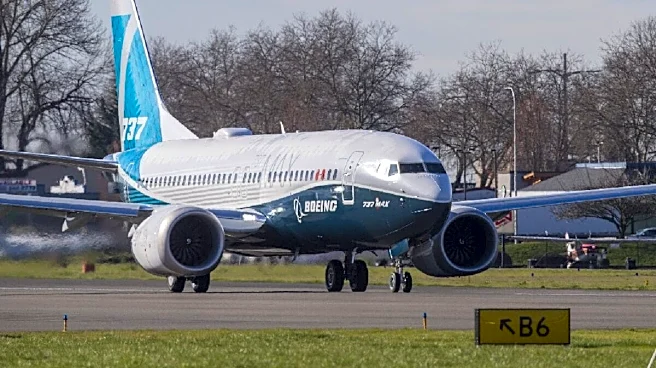
A new software problem has surfaced on Boeing’s 737 MAX family, raising questions about what happens inside the cockpit when a landing does not go as planned. The issue was first reported by The Wall Street Journal, which cited Boeing documents, and has since been acknowledged by Boeing and the US Federal Aviation Administration (FAA).
The glitch involves an automated flight-guidance function that can become unavailable during a very specific sequence of events following a missed approach, potentially increasing the workload for pilots at a particularly busy stage of a flight. Boeing says existing procedures allow pilots to safely handle the situation and that it is working on a permanent software fix.
What Is The Boeing 737 MAX Glitch?
The problem is linked to software in the
aircraft’s flight-management computer and involves a system known as VNAV, or vertical navigation.
VNAV helps the aircraft follow the vertical profile programmed into the flight-management system, helping it manage its planned altitude and descent path at different points along a route. It is one of several layers of automation available to pilots.
According to the report and subsequent details from Boeing, the problem can occur only under a particular combination of circumstances.
A plane has to be conducting a precision approach with the autopilot engaged. The crew then has to abandon the landing, known as a go-around or missed approach, and subsequently make changes to the flight path programmed into the aircraft’s flight-management computer.
Under that sequence, the software can cause VNAV to disengage and transition to a less sophisticated form of automated pitch control.
Boeing told CBS News that even if VNAV disengages, the autopilot can continue to function. Pilots are also trained to land an aircraft without VNAV.
Why Is The Glitch Significant?
A go-around is a normal aviation procedure. If a pilot decides that an approach or landing cannot safely continue, because of weather, runway conditions, another aircraft, an unstable approach or another reason, the aircraft climbs away and the crew prepares for another approach.
But it is also a phase of flight in which pilots can already have a high workload. The software problem can therefore introduce an additional task at a moment when the crew is changing the aircraft’s flight path, managing altitude and speed and preparing for another approach. CBS News quoted an airline source questioning whether airlines should be introducing additional distractions “at the worst possible moment.”
That does not mean the situation is inherently unsafe. Boeing has said it informed all 737 operators about the issue and reinforced existing procedures for dealing with it.
“We shared information with operators that reinforced existing pilot procedures for safely handling such cases,” Boeing said in a statement. The company added that its engineers are working on a software update to permanently address the problem.
What Has FAA Said?
The FAA is now reviewing the issue. The regulator said it was aware of a potential problem in a software update for flight computers on certain 737 MAX aircraft and was working with Boeing and airlines.
The agency said it would convene a Corrective Action Review Board, or CARB, to examine the matter and “will take immediate action if it identifies a safety concern.”
The affected software is associated with Boeing’s newest MAX variants, the 737 MAX 7 and MAX 10. The MAX 7 received FAA certification in August, while the MAX 10 is in the final stages of its long-delayed certification process.
Are Passengers At Risk?
There has been no announcement of a grounding of the 737 MAX fleet because of this issue. It is also not clear how many aircraft currently operating worldwide have the affected software. The Wall Street Journal, citing company documents, reported that Boeing, airlines and regulators were still assessing the scale of the problem and whether it poses a flight-safety concern.
Major US airlines have provided some reassurance about their existing fleets. Alaska Airlines, American Airlines, Southwest Airlines and United Airlines told CBS News that their in-service 737 MAX aircraft do not use the software versions involved in the issue. Southwest and United have nevertheless asked Boeing not to deliver new MAX aircraft equipped with the affected software and instead requested an earlier version.
Boeing’s permanent fix was initially expected in 2028, according to reports, although the company is now working to accelerate it. In the meantime, airlines have been given guidance on handling the scenario should it occur.
The current information does not suggest that passengers need to avoid a 737 MAX simply because of this software disclosure. The issue is narrow, occurs only under a specific sequence involving a missed approach and changes to the programmed flight path, and Boeing says pilots have procedures to manage it.
However, the FAA’s review means the matter is not considered closed. The regulator will determine whether further action is required.
The development is also significant because of the 737 MAX’s history. The aircraft was grounded worldwide after two fatal crashes in 2018 and 2019 that killed 346 people, while the model came under renewed scrutiny after the 2024 Alaska Airlines door-plug blowout.
For passengers, the key takeaway is that this is a software problem affecting automated vertical navigation in a specific go-around scenario, not evidence that the entire autopilot system on 737 MAX aircraft can simply switch off during a normal flight. Boeing is working on a permanent fix, while the FAA is examining whether additional safety action is necessary.

/images/ppid_59c68470-image-179058517102984276.webp)


/images/ppid_59c68470-image-179068003496766619.webp)
/images/ppid_59c68470-image-179060263424077179.webp)
/images/ppid_59c68470-image-179060502893062799.webp)