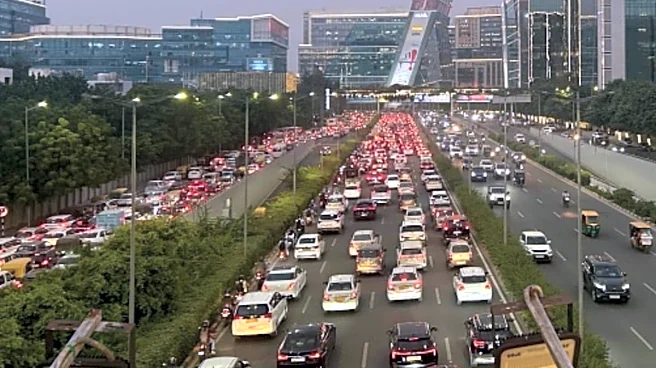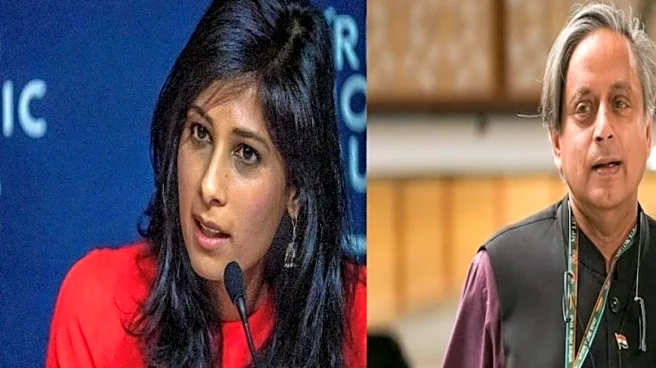



In a sobering assessment of India’s economic trajectory, Gita Gopinath, a professor at Harvard University and former chief economist of the International Monetary Fund, has warned that environmental degradation poses a more significant threat to the nation’s wealth than international trade barriers. Speaking at the World Economic Forum in Davos on Thursday, Gopinath asserted that the internal costs of pollution—ranging from public health crises to diminished labour productivity—now outweigh the potential risks posed by global protectionism or shifting tariff regimes. Her remarks put the spotlight on a growing consensus among global economists that India’s macroeconomic stability is inextricably linked to its air and water quality.
The intervention
has drawn immediate support from some domestic political figures who have long advocated for environmental reform. Shashi Tharoor, a Member of Parliament and veteran diplomat, echoed Gopinath’s concerns by highlighting a decade-long struggle to bring air pollution into the mainstream political discourse. Tharoor noted that despite chairing a roundtable on air pollution for ten years, the issue has only recently achieved the necessary public and global traction. The Congress leader proposed a radical administrative shift, suggesting that the Prime Minister’s Office should appoint a dedicated “Air Quality Czar” to oversee a nationwide Swachh Vayu Abhiyan (Clean Air Mission). Such a role, he argued, would have the authority to coordinate various government departments that currently operate in silos, ensuring that environmental targets are met with focused, singular action.
Indeed! For ten years now I have run a RoundTable on Air Pollution without getting the political traction i had hoped for. Finally i am relieved that the issue has broken through in public consciousness this year and is now also getting global attention. We need a… https://t.co/bVFMHTJHMW
— Shashi Tharoor (@ShashiTharoor) January 22, 2026
The economic data supporting these warnings is increasingly stark. Recent studies suggest that air pollution alone costs India approximately 1.36 per cent of its Gross Domestic Product annually, primarily through lost working years and increased healthcare expenditure. Furthermore, the persistent “smog seasons” in northern India frequently lead to the closure of schools and construction sites, disrupting local economies and deterring foreign direct investment in regions perceived as hazardous to employee health. While the Indian government has previously launched the National Clean Air Programme, critics argue that the lack of stringent enforcement mechanisms and interstate coordination has limited its effectiveness.
Gopinath’s assessment shifts the narrative of pollution from a purely social or health-related issue to a fundamental component of sovereign risk. By comparing it to trade tariffs, she highlighted that while protectionism is a variable external pressure, pollution is a compounding internal tax on the entire economic system.
/images/ppid_59c68470-image-177088253353351703.webp)

/images/ppid_a911dc6a-image-177078442745915794.webp)





/images/ppid_a911dc6a-image-177072742938547079.webp)