


/images/ppid_59c68470-image-178826003094981611.webp)
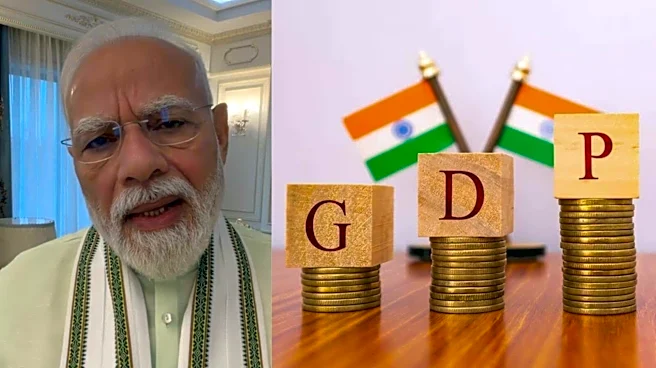
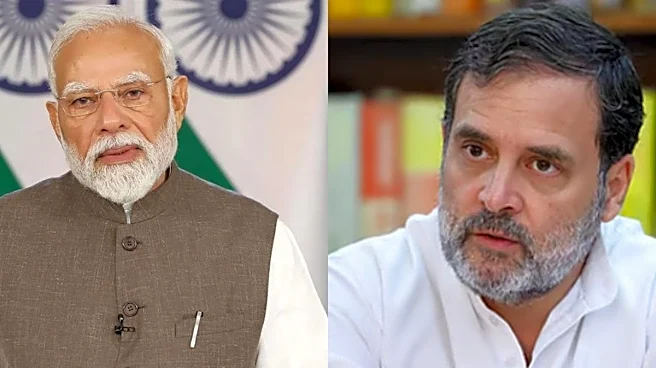
Real GDP growth in 1QFY27 (April-June 2026 quarter) for India came in at a stellar 7.8%. Malaysia and Singapore grew by 6.0% and 5.9%, with Indonesia at 5.29% and China at 4.3%, during the said quarter. Growth in the USA was a meagre 2.1% and in most large European economies, barely 1% or even lower. In the midst of India’s meteoric GDP growth trajectory under PM Modi, Rahul Gandhi’s reckless allegations about India being a “Dead Economy” have fallen flat. The Congress ecosystem is trying to salvage Rahul’s reputation with flimsy arguments that GDP growth of 7.8% was driven by a change in “Base Year” from 2011-12 to 2022-23. Well, most large economies change base year frequently, every three or five years, and some even do it every single year via
something called a rolling base year. So India changing its base year to 2022-23 is nothing unusual. Under erstwhile Congress governments too, the base year changed at regular intervals, so the “base year” narrative that is now being spuriously peddled by Rahul Gandhi and his cabal is just an attempt to undermine Modinomics.
Make in India and Aatmanirbhar Bharat were never limited to slogans. Complementary reforms like GST implementation, insolvency resolution, labour code rationalisation, the National Single Window System, PM GatiShakti for multimodal connectivity and industrial corridors, all combined to improve the ease of doing business. Foreign direct investment (FDI) into manufacturing rose substantially; equity inflows into the sector reached approximately $184 billion between April 2014 and March 2025, a marked increase over the previous decade.
Prime Minister Narendra Modi launched the Make in India initiative with a bold vision to transform India from a primarily services-driven and import-dependent economy into a global manufacturing hub. The campaign sought to raise manufacturing’s contribution to GDP, attract foreign investment, create jobs, build self-reliance (Aatmanirbhar Bharat), and integrate India deeper into global value chains. Over the subsequent 12 years, through policy reforms, the Production Linked Incentive (PLI) scheme, infrastructure push and targeted sectoral missions, India has recorded measurable strides, particularly in electronics, mobile manufacturing, semiconductors and defence aerospace. What began as an invitation to the world has evolved into a tangible success story of rising production, surging exports and growing indigenous capability.
Defence production offers one of the clearest indicators of Make in India’s progress, with Aatmanirbhar Bharat leading from the forefront as an actionable plan. Domestic defence manufacturing touched a record Rs 1.78 lakh crore in FY 2025-26—nearly four times the Rs 43,746 crore recorded in FY 2013-14. Private sector contribution reached about 24% (around Rs 42,000 crore). Defence exports hit an all-time high of Rs 38,424 crore in the same year, with equipment shipped to over 100 countries. Platforms such as the Tejas fighter, BrahMos missiles, Akash systems, and artillery guns are now produced at scale domestically. These gains sit alongside growth in other sectors like automobiles and components, pharmaceuticals, textiles, renewable energy equipment and toys. The overall narrative is one of expanding capacity, rising private participation and a gradual shift from import dependence towards export orientation in several high-value areas.
The Production Linked Incentive (PLI) scheme, launched from 2020 onwards across 14 strategic sectors with a combined outlay of roughly Rs 1.97 lakh crore, marked a decisive shift from traditional input subsidies to performance-linked rewards based on incremental production and sales. By late 2025/early 2026, the results were substantial; cumulative investments exceeded Rs 2.40 lakh crore, production and sales crossed Rs 20.41 lakh crore, exports surpassed Rs 8.3 lakh crore and more than 14 lakh direct and indirect jobs were created. Incentives disbursed reached tens of thousands of crores.
Electronics and large-scale mobile manufacturing emerged as star performers, followed by pharmaceuticals, automobiles and solar modules. The PLI scheme’s design of tying incentives to actual output encouraged companies to scale facilities, deepen localisation and target export markets. Evaluations and industry feedback have noted timely disbursements and a catalytic effect on capital-intensive projects. Nowhere is the “Make in India” and “Vocal for Local” story more dramatic than in electronics, especially mobile phones. In 2014-15, electronics production stood at around Rs 1.9 lakh crore and exports at roughly Rs 38,000 crore. By 2025-26, production had risen approximately seven-fold to about Rs 13.11 lakh crore, while exports surged eleven-fold to roughly Rs 4.24 lakh crore.
Mobile phones drove much of this transformation. Production grew from about Rs 18,000 crore in 2014-15 to Rs 6.27 lakh crore in 2025-26, a roughly 33-fold increase. Exports skyrocketed from around Rs 1500 crore to Rs 2.59 lakh crore, a 165-fold jump. India transitioned from a net importer of mobile phones (with imports meeting a large share of demand in 2014) to a net exporter. Today, over 99% of mobile phones used in India are manufactured domestically, and the country ranks as the world’s second-largest mobile phone manufacturer by volume. The number of manufacturing units expanded from just two in 2014 to more than 300 today.
Smartphones have become India’s top individually exported commodity in FY 2025-26, overtaking traditional leaders such as petroleum products and gems & jewellery in certain periods. Major global players like Apple (via Foxconn, Tata Electronics and others), Samsung and several Chinese brands have ramped up production and exports from Indian facilities. The PLI scheme for Large Scale Electronics Manufacturing (LSEM) played a central role. Against a five-year investment target of Rs 7000 crore, reported investments reached over Rs 20,000 crore (nearly three times the target); production exceeded Rs 11.6 lakh crore and exports surpassed Rs 6.4 lakh crore. The scheme catalysed approximately Rs 96,000 crore of investments across the broader mobile manufacturing ecosystem.
Domestic value addition has improved to 18–23% in recent years, with progress in printed circuit board assemblies, batteries, camera modules and displays. Complementary schemes such as the Electronics Component Manufacturing Scheme (ECMS), SPECS and Electronics Manufacturing Clusters have begun addressing the component ecosystem. FDI inflows into electronics manufacturing exceeded $4 billion since 2020-21. The result is not only import substitution but also integration into global supply chains, with the United States, UAE and other markets emerging as key destinations.
Semiconductors represent the next frontier of strategic manufacturing, giving wings to Aatmanirbharta and Make in India initiatives. India launched the India Semiconductor Mission (ISM) in December 2021 with an initial corpus of around Rs 76,000 crore. By mid-2026, 12 projects had been approved under ISM 1.0 with committed investments of approximately Rs 1.64 lakh crore. Three facilities, primarily the Outsourced Semiconductor Assembly and Test (OSAT) and ATMP plants in Sanand, Gujarat (Micron, Kaynes Semicon and CG Power–Renesas), entered commercial production and began shipping chips, including memory modules.
The largest single project remains Tata Electronics’ joint venture with Taiwan’s Powerchip Semiconductor Manufacturing Corporation (PSMC) for a logic fab in Dholera, Gujarat (for around Rs 91,000 crore). In July 2026, the Union Cabinet approved ISM 2.0 with an outlay of Rs 1.27 lakh crore, shifting emphasis towards materials, speciality chemicals and gases, equipment, advanced packaging, design, talent and supply-chain resilience–areas where India still imports the bulk of its needs.
India has also unveiled indigenous design capabilities, including a 32-bit microprocessor (Vikram) developed for harsh environments. The strategy prioritises durable demand segments (automotive, power management, industrial, consumer electronics) alongside strategic self-reliance. Defence aerospace provides another concrete illustration of Make in India. In 2021, India signed a Rs 21,935 crore agreement for 56 Airbus C-295 medium transport aircraft to replace the ageing Avro fleet of the Indian Air Force. Sixteen aircraft were to be delivered in flyaway condition from Spain; the remaining 40 would be manufactured in India by Tata Advanced Systems Limited (TASL) in partnership with Airbus at a final assembly line in Vadodara, Gujarat.
The Vadodara facility was jointly inaugurated by Prime Minister Modi and Spanish Prime Minister Pedro Sánchez in October 2024. By mid-2026, the first India-assembled C-295 had been completed and successfully completed its maiden test flight in June 2026—this has been a landmark milestone, as the C-295 became the first military transport aircraft fully assembled by a private Indian company. Over 85% of the structural work and final assembly for the Indian-built aircraft occurred domestically. More than 13,000 components are being produced in India by a growing supplier base that includes public sector units such as BEL and BDL. Indigenisation, measured by labour content, is targeted to reach over 98%. The line has a capacity of about 12 aircraft per year, with deliveries scheduled through 2031.
Across PLI sectors and Make in India priorities, employment generation has been significant—over 14 lakh jobs have been created under PLI alone. Defence industrial corridors in Uttar Pradesh and elsewhere have attracted investments and MoUs. Industrial parks, plug-and-play infrastructure, and logistics improvements under PM Gati-Shakti support the broader ecosystem. Value addition in manufacturing has risen in absolute terms, and merchandise exports have shown resilience, with electronics, engineering goods, pharmaceuticals and automobiles contributing strongly. India has also strengthened its position in renewable energy equipment and electric mobility components through related incentives.
Semiconductor fabs require sustained capital, talent and supply-chain localisation—areas ISM 2.0 explicitly targets. In just over a decade, India has moved from near-total import dependence in mobiles to becoming a major exporter; from zero commercial semiconductor packaging capacity to multiple operational plants shipping chips; and from exclusive reliance on foreign assembly of transport aircraft to private-sector indigenous production of the C-295. The PLI model has proven effective in catalysing investment and scale. Defence self-reliance metrics have improved dramatically. Make in India under the Modi government is therefore best understood as a foundation successfully laid. Continued focus on components and materials, skill development, R&D, export competitiveness and ease of doing business (EODB) are adding impetus to the Aatmanirbhar Bharat trajectory. The numbers already achieved—multi-fold growth in electronics production and exports, record defence output, operational chip facilities, and the first Made-in-India C-295—demonstrate that the vision of a manufacturing powerhouse is translating into factory floors, export figures and strategic capability. The journey continues, but the success story from making chips to ships thus far is already substantial and measurable in hard numbers, in an ode to Modinomics.
India is scaling up its domestic shipbuilding under the Make in India initiative with a Rs 69,725 crore reform package aimed at breaking into the global top 10 by 2030. The Indian Navy commissions a Made in India warship or submarine roughly every 40 days, with 52 vessels currently under construction. India aims to enter the top 10 shipbuilding nations by 2030 and top 5 by 2047, targeting a 5% global market share by 2030. The Rs 24,736 crore Shipbuilding Financial Assistance Scheme provides direct financial aid and ship-breaking credit notes. Large ships have been granted infrastructure status to lower long-term borrowing costs. Dedicated shipbuilding parks are coming up, such as the National Shipbuilding & Heavy Industries Park in Tamil Nadu, alongside expansions in Andhra Pradesh, Maharashtra, Gujarat and Odisha. Prominent State-backed yards driving this growth include Cochin Shipyard Limited, Mazagon Dock Shipbuilders Limited and Garden Reach Shipbuilders & Engineers (GRSE).
Rahul Gandhi’s desperation to undermine India’s Make in India initiative was dealt a stinging blow by the giant strides in the Space sector, with India’s Chandrayaan-3 mission in 2023 being a resounding success. More recently, in 2026, India launched her first, indigenous, hydrogen-powered passenger train. Indian Space StartUp Skyroot Aerospace made history by successfully executing India’s first-ever private orbital rocket launch. Make in India under PM Modi has not merely created world-class entrepreneurs but it has laid the ground-rules for catapulting India into the global league of the fittest, where merit embraces vision and performance embraces a rules-based order.
Sanju Verma is an economist, national spokesperson of the BJP and the bestselling author of ‘The Modi Gambit’. Views expressed in the above piece are personal and solely those of the writer. They do not necessarily reflect News18’s views.

/images/ppid_59c68470-image-178833007351947917.webp)




/images/ppid_59c68470-image-178834002543314395.webp)