
/images/ppid_59c68470-image-177926011374554636.webp)
/images/ppid_a911dc6a-image-177926002254927778.webp)

The UAE’s Barakah nuclear power plant came under drone attack amid the intensifying West Asia war, triggering alarm across capitals already worried about the widening scope of the confrontation. UAE authorities said there was no radiation leak and reactor operations remained stable, but the strike prompted India and other countries to issue strong statements
condemning attacks on nuclear infrastructure and calling the development a “dangerous escalation”.The concern stems from what Barakah represents, a critical energy lifeline for the UAE, a symbol of the Gulf’s nuclear ambitions, and a facility whose safety carries implications far beyond one country’s borders.
What Is The Barakah Nuclear Plant?
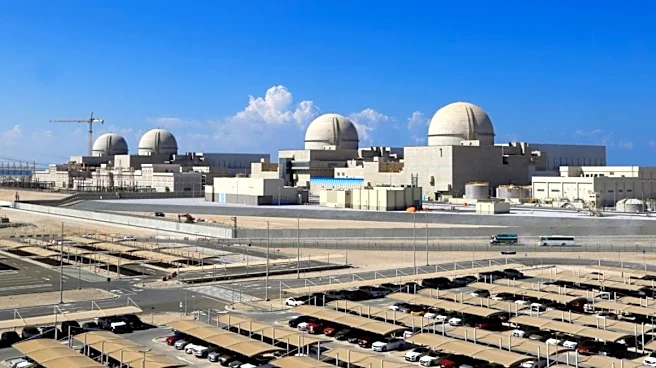
Located in Abu Dhabi’s Al Dhafra region near the Gulf coast, Barakah is the Arab
world’s first commercial nuclear power plant. The project consists of four nuclear reactors built with South Korean assistance under a multi-billion-dollar agreement signed more than a decade ago.
Three reactors are operational, while the fourth has been undergoing commissioning and final integration phases. Together, the plant is expected to generate up to 5.6 gigawatts of electricity – supplying roughly 25 per cent of the UAE’s total electricity needs.
For the UAE, Barakah is among the country’s most strategically important infrastructure projects. It was built to reduce dependence on natural gas, diversify the economy beyond hydrocarbons, and provide stable long-term electricity as energy demand rises.
The facility also forms a central pillar of the UAE’s climate commitments. Nuclear energy allows the country to produce large-scale electricity without the carbon emissions associated with fossil fuels, helping Abu Dhabi project itself as a future-facing energy economy rather than a purely oil-dependent state.
Why A Strike On A Nuclear Facility Causes Global Alarm
Governments and nuclear watchdogs treat attacks involving nuclear infrastructure differently from conventional military strikes because the potential consequences can be extraordinarily severe.
Modern nuclear plants are built with reinforced containment systems, multiple cooling mechanisms and backup safety layers. Yet military attacks create unpredictable risks. Damage to transmission lines, cooling systems, backup generators, water supply systems or nearby infrastructure can complicate plant operations even if reactors themselves are not directly hit.
The International Atomic Energy Agency (IAEA) has repeatedly warned that nuclear facilities must never become military targets because even limited damage or operational disruption can raise the risk of radioactive release or environmental contamination.
That fear explains why the Barakah attack immediately drew international attention despite UAE officials confirming there had been no radiation leak.
The psychological impact is equally significant. Nuclear infrastructure carries a level of public fear unmatched by most other civilian assets because any perceived threat quickly raises concerns about long-term environmental and humanitarian consequences.
Why India Called It A “Dangerous Escalation”
“India is deeply concerned at the attack targeting the Barakah nuclear facility in the UAE. Such actions are unacceptable and represent a dangerous escalation. We urgently call for restraint and a return to dialogue and diplomacy,” India’s statement said.
India’s strong reaction reflects the depth of its strategic ties with the UAE and the growing importance of nuclear cooperation between the two countries.
In September 2024, India and the UAE signed a civil nuclear cooperation agreement during the visit of Abu Dhabi Crown Prince Sheikh Khaled bin Mohamed bin Zayed Al Nahyan to New Delhi. The agreement was signed between India’s Nuclear Power Corporation of India Limited (NPCIL) and the Emirates Nuclear Energy Corporation (ENEC), which oversees the Barakah nuclear programme.
The agreement expanded cooperation in areas such as operation and maintenance of nuclear plants, sourcing of nuclear goods and services, technical expertise, investment opportunities and capacity building.
That means Barakah is not just a strategic Emirati asset from India’s perspective. It is linked to an evolving India-UAE partnership in civilian nuclear energy and advanced infrastructure cooperation.
The UAE is also among India’s most important economic and strategic partners in West Asia. The two countries have deep ties across energy trade, investment, maritime, security, logistics, technology, defence cooperation
Millions of Indians live and work in the Gulf region, while India remains heavily dependent on West Asian energy imports. Any escalation involving critical infrastructure in the UAE therefore directly affects India’s economic and strategic interests.
For the international community, the incident has reopened concerns over the vulnerability of civilian nuclear infrastructure in an era shaped by drones, precision strikes and rapidly escalating regional conflicts.









/images/ppid_a911dc6a-image-177926023383558522.webp)