
/images/ppid_59c68470-image-17854826104054371.webp)
/images/ppid_59c68470-image-178548006477755160.webp)
Choosing between a smart plug and a smart switch isn’t always straightforward. Both allow you to control appliances using your smartphone or voice assistants like Amazon Alexa and Google Assistant.
Both can automate everyday tasks and help reduce unnecessary power consumption. Yet they are designed for different users and different homes.
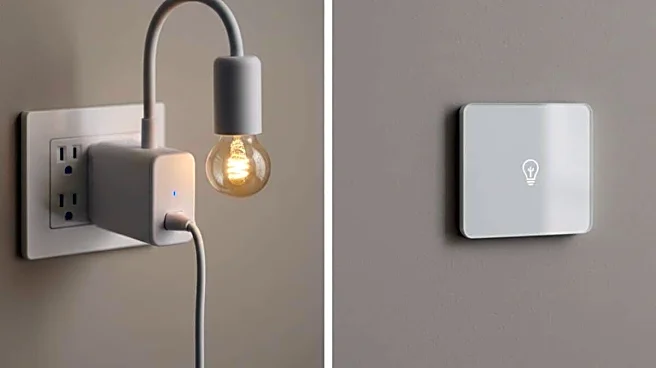
A smart plug simply plugs into an existing wall socket and makes almost any appliance smarter without changing your home’s wiring. A smart switch, on the other hand, replaces your existing wall switch, allowing you to control built-in lights, ceiling fans and other fixed electrical fixtures.
The right choice depends on whether you own or rent your home, how comfortable you are with installation, and which appliances
you want to automate.
For many renters and first-time smart home users, a smart plug offers the easiest entry point. Homeowners planning a permanent smart home setup may find smart switches to be the more practical long-term investment.
Verdict: Which one should you choose?
Choose a smart plug if:
• You rent your home.
• You don’t want electrical installation.
• You want plug-and-play convenience.
• You mainly want to automate table lamps, coffee makers, air purifiers or similar appliances.
• You may move to another home.
Choose a smart switch if:
• You own your home.
• You want smart control for ceiling lights or fans.
• You prefer a cleaner, built-in appearance.
• You’re renovating or building a new home.
• You plan to automate multiple rooms.
For most renters, a smart plug is the clear winner because it requires no modifications to the house and can be installed in seconds. For homeowners creating a permanent smart home, smart switches provide a more seamless and elegant solution.
Top picks
1. Wipro 16A Wi-Fi Smart Plug – Best overall smart plug
Price: Was – Rs 2,290 | Now – Rs 999 | Discount – 56%
2. TP-Link Tapo P110 Smart Plug – Best value smart plug
Price: Was – Rs 1,699 | Now – Rs 955 | Discount – 44%
3. Qubo 16A Smart Plug – Best heavy-duty smart plug
Price: Was – Rs 2,299 | Now – Rs 899 | Discount – 61%
4. Wipro Smart Switch Module – Best overall smart switch
Price: Was – Rs 4,499 | Now – Rs 1,594 | Discount – 64%
5. AZIOT 2 Node Smart Switch – Best value smart switch
Price: Was – Rs 3,999 | Now – Rs 879 | Discount – 79%
6. HomeMate WiFi 2 Node Smart Switch – Best premium smart switch
Price: Was – Rs 2,990 | Now – Rs 719 | Discount – 76%
Quick comparison
| Feature | Smart Plug | Smart Switch |
| Installation | Plug into socket | Replaces wall switch |
| Electrical work | Not required | Required |
| Best for | Portable appliances | Fixed lights and fans |
| Rental-friendly | Excellent | Poor |
| Portability | Excellent | None |
| Voice control | Yes | Yes |
| Scheduling | Yes | Yes |
| Cost | Lower | Higher |
| Best for | Renters and beginners | Permanent smart homes |
How does a smart plug work?
A smart plug fits between your wall socket and your appliance. Once connected to Wi-Fi through the manufacturer’s app, it allows you to switch the appliance on or off remotely, create schedules, set timers and control it through Alexa or Google Assistant.
Because it doesn’t require any wiring, installation usually takes less than five minutes. If you later move houses, you simply unplug it and take it with you.
Where smart plugs perform best
Smart plugs are ideal for lamps, coffee makers, kettles, air purifiers, humidifiers, Wi-Fi routers, decorative lighting and many other plug-in appliances.
They’re also an excellent way to experiment with smart home automation without making permanent changes.
Where smart plugs fall short
A smart plug cannot control built-in ceiling lights, exhaust fans or hardwired appliances. It also adds some bulk to the wall socket and occupies one outlet.
How does a smart switch work?
A smart switch replaces your existing wall switch and connects directly to your home’s electrical wiring. Once installed, it allows lights and fans to be controlled through an app, schedules or voice assistants, while still functioning like a normal wall switch.
Many models also support automation routines, allowing several lights to turn on or off together at preset times.
Where smart switches perform best
Smart switches work best for ceiling lights, outdoor lighting, ceiling fans, staircases and homes with multiple smart devices.
Because they’re integrated into the wall, they offer a much cleaner appearance than external smart plugs.
Where smart switches fall short
Installation usually requires an electrician, particularly in older homes. Once installed, they’re not portable and generally cost more than smart plugs.
Which is easier to install?
This is where smart plugs have a clear advantage.
Most people can install one within minutes without tools or technical knowledge. Simply plug it into a wall socket, connect it to Wi-Fi and pair it with the companion app.
Smart switches require replacing the existing switch, working with electrical wiring and, in many cases, hiring a qualified electrician. While installation is usually a one-time process, it is significantly more involved.
Which is better for renters?
Smart plugs are almost always the better choice for renters.
Since they don’t alter the home’s electrical wiring, they can be installed and removed without leaving permanent changes. They’re also easy to pack and move to a new apartment.
Many landlords may not allow tenants to replace wall switches, making smart plugs the practical option.
Which is better for homeowners?
Homeowners who plan to stay in the same house for several years may benefit more from smart switches.
They provide permanent smart control without adding bulky devices to wall sockets and offer a cleaner appearance throughout the house. If you’re renovating or constructing a new home, installing smart switches from the beginning can make the entire smart home experience more seamless.
Which one offers better automation?
Both products support schedules, timers and voice assistants, but smart switches generally integrate more naturally into a whole-home automation setup.
They can automate lighting across multiple rooms while still functioning normally from the wall switch.
Smart plugs excel at controlling individual appliances but aren’t designed to replace a home’s lighting system.
Which one saves more electricity?
Neither device automatically reduces electricity consumption.
However, both can help lower unnecessary power usage by allowing appliances and lights to switch off automatically according to schedules or timers.
If you frequently forget to switch off lights or appliances before leaving home, either option can contribute to lower electricity bills over time.
Which is better for Indian homes?
For many Indian households, the answer depends largely on whether the property is rented or owned.
Smart plugs are an affordable way to automate everyday appliances without any electrical work, making them ideal for tenants and first-time buyers.
Smart switches become more attractive for homeowners looking to automate ceiling fans, living room lighting and multiple rooms while maintaining a neat appearance.
If you’re only buying one smart home device, a smart plug usually offers the easiest and most affordable introduction. If you’re planning a complete smart home, smart switches provide greater long-term value.
Common usage scenarios
| Situation | Better choice |
| Bedroom lamp | Smart Plug |
| Coffee maker | Smart Plug |
| Air purifier | Smart Plug |
| Decorative lights | Smart Plug |
| Ceiling light | Smart Switch |
| Ceiling fan | Smart Switch |
| Outdoor lighting | Smart Switch |
| Rental apartment | Smart Plug |
| New home construction | Smart Switch |
FAQs
1. Which is better, a smart plug or a smart switch?
It depends on your needs. Smart plugs are better for renters and portable appliances, while smart switches are better for permanent lighting and fan control.
2. Can a smart plug control ceiling lights?
No. Smart plugs only work with appliances that plug into a wall socket. Ceiling lights usually require a smart switch.
3. Do smart switches work if Wi-Fi goes down?
Yes. Most smart switches continue to function as normal wall switches even without an internet connection, although remote control features may not be available.
4. Can I install a smart switch myself?
If you’re experienced with household electrical wiring, you may be able to. However, most manufacturers recommend professional installation for safety.
5. Do both work with Alexa and Google Assistant?
Yes. Most modern smart plugs and smart switches support Amazon Alexa and Google Assistant, allowing voice control once they’re connected to your home Wi-Fi network.
6. Which is the better long-term investment?
For homeowners building a smart home ecosystem, smart switches generally offer the better long-term solution. For renters or those just getting started with home automation, smart plugs provide greater flexibility and lower upfront costs.
Disclaimer: The product descriptions mentioned in the article are solely based on the primary and secondary research conducted by our experts. To keep you ahead of the curve with these latest products, News18 utilises affiliate links. This means if you decide to shop through our recommendations, we may earn a small referral commission at no extra cost to you. Please be advised that News18 is not responsible for any claims under the Consumer Protection Act, 2019, or other applicable laws regarding the final performance, quality, or safety of these products.

/images/ppid_59c68470-image-178547507389618740.webp)

/images/ppid_59c68470-image-178547259016210875.webp)