
/images/ppid_a911dc6a-image-176983106627718541.webp)
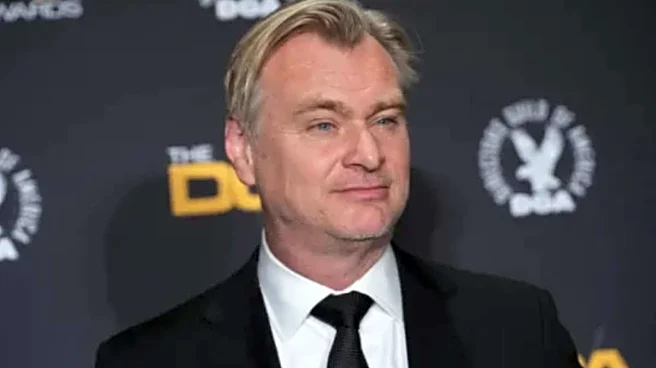
Hollywood is at a crossroads, and Christopher Nolan is front and center. While the acclaimed filmmaker works on his ambitious adaptation of Homer’s The Odyssey, he is also navigating his first year as president of the Directors Guild of America (DGA), representing 20,000 directors and crew members during what he calls a “very worrying time for the industry.”
In his first interview as DGA president since being elected in September 2025, Nolan addressed a host of challenges facing filmmakers and crew: declining employment, the rise of artificial intelligence, and the proposed acquisition of Warner Bros. by Netflix or Paramount, which could reshape streaming and threaten the future of theatrical distribution. “We have very, very significant concerns
about how this is all going to happen,” Nolan said. “I think it’s a very worrying time for the industry. The loss of a major studio is a huge blow.”
The DGA enters bargaining with major studios this spring, with its contract set to expire on June 30, just two weeks before The Odyssey hits theaters. At a meeting with reporters at the guild’s Los Angeles headquarters, Nolan outlined the DGA’s priorities: employment, AI, health care, and protecting the theatrical experience.
“We need to look at how the new models have created this disconnect between—frankly—the level of production and overall spending from the consumer,” he said. “That’s completely unacceptable.”
Nolan, a dual U.K. and U.S. citizen, also addressed broader industry policies without weighing in on political debates. Asked about President Trump’s proposed 100% tax on films made overseas, he said, “I don’t know how a tariff system would work. I will say that since President Trump has started bandying these ideas around, there’s a much more serious conversation from the studios about how to improve the situation in the United States—to be perfectly frank about it.”
The DGA has a storied history, with past presidents including Frank Capra, Joseph Mankiewicz, Paris Barclay, Thomas Schlamme, and Lesli Linka Glatter. Nolan emphasized the importance of active, working members leading the guild: “I see the value of having active, working members run the guild. I’m prepared to knuckle down and figure it out.”
The proposed Netflix acquisition of Warner Bros.—still subject to regulatory approval—has sparked concern throughout Hollywood. Beyond the loss of a major distributor, TV and streaming workers worry about consolidation, including the possible merger of HBO Max into Netflix. Nolan stressed that while theatrical windows are a visible concern, “the issues on the television side and the streaming side are far more important to our membership.”
Both Netflix and Paramount have held talks with the DGA regarding the deal. “We’re interested to hear more about the specifics of how they’re going to run these things,” Nolan said, noting that nine of his own films are in the Warner Bros. library. While Netflix has pledged a 45-day theatrical window and Paramount has offered to maintain traditional windows while expanding output to 30 films annually, Nolan cautioned that verbal commitments are not enough.
Employment for directors, assistant directors, unit managers, and stage managers has been declining sharply despite steady consumer demand. “If you look at the overall spending from the consumer on media, on entertainment, on our work, it’s extremely stable,” Nolan said. “But we’re looking at a 35% to 40% decline in employment for our members. How do you reconcile those things?”
AI is another looming challenge. With companies like Disney experimenting with AI in content creation, the DGA seeks to ensure that technological innovation does not undercut creators’ rights or compensation. “You have to have a voice in how this tool is being used,” Nolan said. “There are myriad issues to do with control of our work and how it might be manipulated through AI.” He compared the debate to the 1980s fight over colorization of classic films, framing it as a continuation of the union’s mission to protect creative integrity.
The home viewing experience has also changed, Nolan noted. Increasingly, audiences watch films on ad-supported streaming platforms, disrupting the uninterrupted viewing that DVDs and early streaming once provided. “The first time it goes to the home, it’s interrupted with commercial breaks,” he said. “That hasn’t happened, frankly, since the 1970s… In a strange way, with this brand-new technology, we’re sort of looping back into those kinds of scenarios.”
The DGA will negotiate after SAG-AFTRA and the Writers Guild of America this year, tackling key labor issues including health care funding. Nolan, while not on the negotiating committee, emphasized the guild’s broader responsibilities. “We have a responsibility to our members to look to the future, to look at what innovation is and what’s going to change, but also to keep a clear head,” he said. “We don’t want innovation to just be an excuse to pay our members less.”
/images/ppid_a911dc6a-image-177009702850989378.webp)

/images/ppid_59c68470-image-177001255963315662.webp)

/images/ppid_59c68470-image-177000768191765899.webp)
/images/ppid_59c68470-image-176999759888735704.webp)
/images/ppid_a911dc6a-image-177010087576765026.webp)
/images/ppid_59c68470-image-17700001103632798.webp)
/images/ppid_a911dc6a-image-176985904087282405.webp)