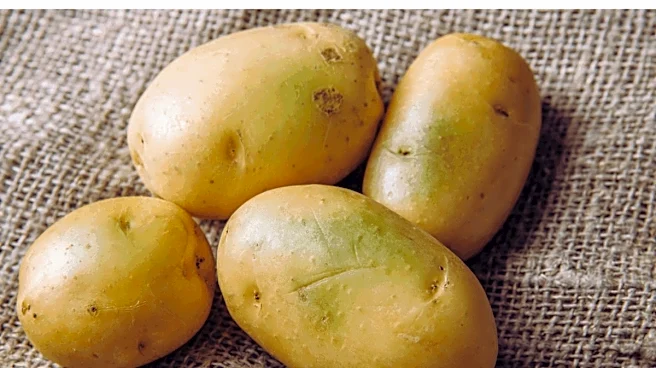




Potatoes are being described as “boiling” underground in South Korea as the country battles an unprecedented heatwave. But before you picture potatoes literally cooking at 100°C beneath the soil, that is not what is happening.
Farmers in parts of South Korea are finding potatoes that have become soft, collapsed and spoiled underground after being exposed to extreme heat. The unusual reports have raised questions about just how severe the heatwave has become and what it means for the country’s farmers.
What’s Happening To Potatoes In South Korea?
In Yanggu county, in South Korea’s Gangwon province, farmer Lee Sang-hyuk recently dug into his potato field expecting to find a crop that had appeared healthy only a week earlier. Instead, he found potatoes
that had become soft and were collapsing because of the intense heat.
“It’s not just one or two fields like this. How can I even put it into words? It’s so upsetting,” Lee told South Korean broadcaster SBS.
The damage is not limited to potatoes. Farmers growing watermelons have reported fruit turning mushy within days, while a strawberry farmer in South Jeolla province said seedlings that had been cultivated for three months were destroyed by the heat.
How Hot Is South Korea Right Now?
The scale of the heat can be seen in the temperatures being recorded across the country. On August 2, the southeastern city of Yangsan reached 42.5°C, the highest temperature recorded in South Korea since modern weather observations began in 1904.
The heat has also taken a heavy toll on people, animals and farms. South Korea’s disease control agency has attributed at least 31 deaths to the heat, while more than 900,000 livestock and 1.4 million farmed fish have reportedly died. Authorities have issued heat warnings and urged people to immediately stop outdoor activities in affected areas as the country continues to experience exceptionally high temperatures.
Isn’t South Korea Supposed To Have Hot Summers?
South Korea does have hot and humid summers, with August normally among the hottest months of the year. The country experiences four distinct seasons and high temperatures during the summer are therefore not unusual. What is unusual this time is the intensity of the heat and how far temperatures have moved beyond the levels normally experienced during the season.
Temperatures around 30°C are common during a South Korean summer but temperatures above 40°C represent a dramatic departure from those conditions. The record of 42.5°C in Yangsan illustrates the extent of that departure.
Why Is This Happening?
Scientists said that the current heatwave is being influenced by a combination of atmospheric conditions and a warming climate. June-Yi Lee, a climate scientist at Pusan National University and a coordinating lead author of the UN’s most recent climate assessment, said a strengthening ridge of high pressure over the Tibetan Plateau and western Pacific may have helped create the conditions for the extreme heat. This year’s El Niño event may also have influenced the regional weather pattern.
South Korea is also not experiencing the phenomenon in isolation. Japan has recorded temperatures of 40°C or higher at multiple locations, while Hong Kong recently recorded 36.9°C, its highest official temperature since records began in 1884. In China’s western Xinjiang region, a weather station recorded 50°C in July.

/images/ppid_59c68470-image-178672006327166948.webp)


/images/ppid_59c68470-image-178664502817562935.webp)
/images/ppid_59c68470-image-178670506432838298.webp)


/images/ppid_59c68470-image-178653255933339507.webp)