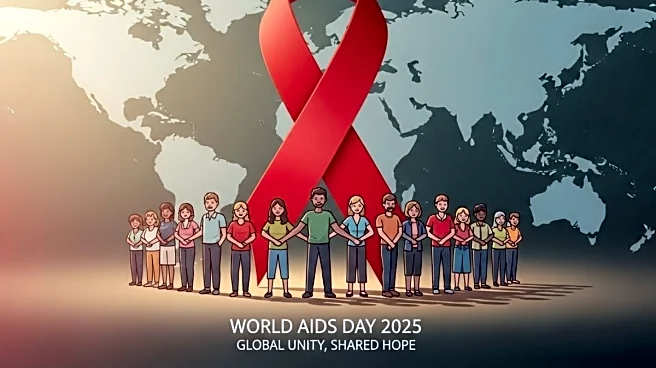

World AIDS Day, observed every year on December 1, is dedicated to the fight against HIV/AIDS. The day is aimed at raising awareness about human immunodeficiency virus (HIV) and acquired immunodeficiency syndrome
(AIDS). The global event is an occasion to show solidarity with the people infected by the virus and to pay homage to the people who have lost their lives to the disease.
The day focuses on educating people about HIV prevention, while encouraging timely testing and treatment. The global observance is also aimed at eradicating the social stigma and discrimination surrounding the disease.
World AIDS Day 2025: Theme
Every year, the World Health Organization (WHO) decides a new theme, focused on a major issue related to HIV/AIDS, for World AIDS Day.
The theme for this year’s World AIDS Day is “Overcoming disruption, transforming the AIDS response.” According to WHO, the theme and the initiative call for “sustained political leadership, international cooperation, and human-rights-centred approaches to end AIDS by 2030.”
After decades of progress, the global HIV response stands at a critical juncture. Life-saving services are being disrupted and many communities are experiencing increased risks and vulnerabilities. Yet, despite these challenges, hope persists, driven by the determination, resilience and innovative methods of the communities committed to ending AIDS.
World AIDS Day 2025: History
In 1998, the World Health Organization (WHO) and the United Nations established World AIDS Day. Since then, the day has become an annual global observance on December 1. The goal was to raise awareness about HIV/AIDS, erase myths, provide support and build empathy for those living with the condition.
Over the years, World AIDS Day has grown into a worldwide movement, bringing together governments, NGOs, healthcare institutions, and individuals to stand united in the fight against AIDS.
World AIDS Day 2025: Significance
World AIDS Day serves as a global reminder that the fight against HIV is still ongoing and that awareness, education and empathy remain essential in preventing the disease. The day also works to break the stigma and discrimination that people living with HIV often face, urging society to treat them with dignity and compassion.
Additionally, it highlights the need for early testing, safe practices and access to antiretroviral therapy (ART) to improve the lives of those affected.
How Can We Prevent HIV/AIDS?
Human Immunodeficiency Virus (HIV) infections lead to AIDS. The disease can be prevented by stopping the spread of HIV. While there is no vaccine or permanent cure yet, some simple precautions can reduce the risk of the infection.
- Practice Safe Sex: Always use a condom during intercourse. Avoid multiple sexual partners and undergo regular testing for HIV and other sexually transmitted infections (STIs).
- Don’t Share Needles: Avoid sharing needles, syringes, or other injecting equipment. Use sterilised or disposable needles.
- Prevent Mother-to-Child Transmission: HIV-positive pregnant women should take antiretroviral therapy (ART) as prescribed to reduce the risk of transmitting the virus to their babies during pregnancy, childbirth and breastfeeding.
- Ensure Safe Blood Transfusions: Always receive blood or blood products from certified and properly screened sources.
- Use HIV Prevention Medicines: Pre-Exposure Prophylaxis (PrEP) and Post-Exposure Prophylaxis (PEP) can significantly lower the risk of HIV infection for individuals with higher exposure.
/images/ppid_a911dc6a-image-177092774715746114.webp)

/images/ppid_a911dc6a-image-177092767520012684.webp)
/images/ppid_a911dc6a-image-177092763347449403.webp)
/images/ppid_a911dc6a-image-177092652580356823.webp)






/images/ppid_a911dc6a-image-177092306157991736.webp)