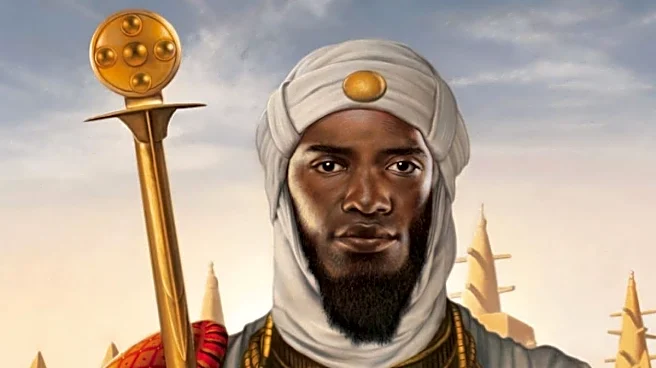




It sounds exaggerated. But by most historical estimates, the richest person to have ever lived wasn’t a modern billionaire. It was Mansa Musa, a 14th-century ruler of the Mali Empire. And his wealth wasn’t just large. It was on a completely different scale. Mansa Musa ruled over one of the richest regions in the world at the time, covering large parts of West Africa. This wasn’t just any territory — it was one of the main sources of gold, which was incredibly valuable back then. At one point, the Mali Empire is believed to have controlled a huge share of the world’s gold supply. That’s really what made his wealth so different. It didn’t come from companies or stock markets like it does for billionaires today. It came from controlling actual
resources — the gold mines, the land, and the trade routes that connected Africa to Europe and the Middle East. In a way, he wasn’t just wealthy. He controlled how wealth itself moved. And there are moments that show just how vast that wealth was. In 1324, Mansa Musa set out on a pilgrimage to Mecca. He didn’t travel lightly. Historical accounts describe thousands of people accompanying him — soldiers, officials, servants — along with long caravans of camels, each said to be carrying large amounts of gold. But what stands out is what he did with it. As he passed through cities like Cairo, he gave away gold freely — to the poor, to officials, and as gifts along the way. The amount was so large that it reportedly caused the price of gold to drop in the region, affecting the local economy for years. That’s the kind of scale being described. Even today, it’s hard to imagine one person having enough wealth to influence the value of a major commodity just by spending it. He also used that wealth to build. Mansa Musa funded mosques, schools, and centres of learning, especially in cities like Timbuktu, which went on to become an important hub for education and culture. His wealth wasn’t just about how much he had, but what he did with it. It helped shape the region in ways that lasted long after his time. Trying to put a number on it today is difficult. Some estimates place his fortune in the hundreds of billions of dollars, possibly more, but even that doesn’t really capture the full picture. Because this wasn’t just personal wealth in the modern sense. It was tied to an entire empire — its gold, its land, its trade routes, and its influence. The kind of wealth that wasn’t separate from power, but deeply connected to it. That’s what makes comparisons tricky. Even the richest people today, like Elon Musk or Jeff Bezos, built their fortunes within systems. Mansa Musa, in many ways, was the system. And that’s why his story still stands out. Not only for his abundance, but rather the magnitude by which it made a difference – influencing entire economies, carving out regions, and making such an impression that is still talked about centuries later.






/images/ppid_a911dc6a-image-17772720281656765.webp)