


/images/ppid_59c68470-image-178239003668395668.webp)


In less than a week, a series of powerful earthquakes have struck different parts of the world. From twin tremors in Venezuela to separate quakes in Pakistan, Afghanistan, Japan and Northern California. The rapid succession of seismic events has sparked questions about whether the earthquakes are connected or simply a coincidence.
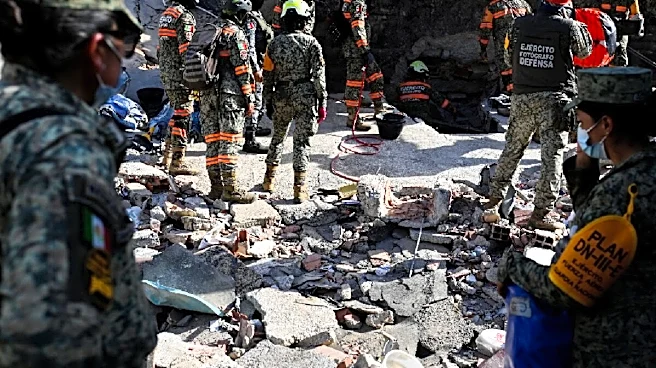
The ground beneath the feet of Venezuelans roared and rumbled first on Wednesday. Within moments, people were killed and injured as buildings and infrastructure were reduced to rubble by the magnitude 7.2 and 7.5 earthquakes.
The death toll reached 1,430, and hopes of finding survivors dwindled as the first 72 hours after a natural disaster are considered the key, narrow window for rescuing the living. After that, the search
becomes one of recovering bodies. At least 50,000 people were reported missing.
On the same day, a 5.6-magnitude earthquake struck a rural part of Northern California, and hours later, a 7.2-magnitude earthquake hit the northern coast of Japan.
| Date | Country/Region | Magnitude |
|---|---|---|
| June 24 | Venezuela | 7.2 |
| June 24 | Venezuela | 7.5 |
| June 24 | Northern California, US | 5.6 |
| June 24 | Northern Japan | 7.2 |
| June 27 | Pakistan | 5.5 |
| June 27 | Afghanistan (Hindu Kush) | 6.2 |
| June 28 | Venezuela (Aftershock) | 5.6 |
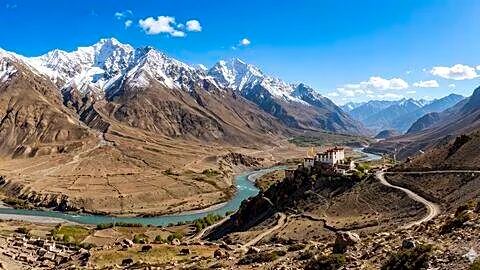
The tremors did not end there. After the devastation in Venezuela and earthquakes in North America and Japan, South Asia experienced its own bout of seismic activity on Saturday. A 5.5-magnitude earthquake struck Pakistan’s Balochistan province, damaging more than 100 houses and injuring at least 20 people. This was followed hours later by a 6.2-magnitude earthquake centred in Afghanistan’s Hindu Kush region, whose tremors were felt across Afghanistan, Pakistan and parts of northern India. No immediate casualties were reported from the Afghan quake.
Are These Earthquakes Connected?
Earthquakes occur because the Earth’s outer layer is not one solid shell but is broken into several giant pieces called tectonic plates. These plates are constantly moving, albeit very slowly—often just a few centimetres each year. As they collide, slide past one another or move apart, stress gradually builds up along cracks in the Earth’s crust known as faults. When that stress becomes too great, the rocks suddenly slip, releasing energy in the form of seismic waves that shake the ground.
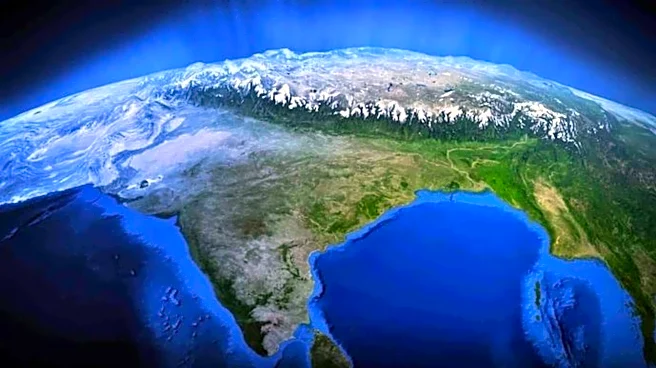
Although the recent earthquakes occurred within days of one another, they took place on different tectonic plate boundaries. The Pakistan and Afghanistan earthquakes occurred along the collision zone between the Indian Plate and the Eurasian Plate. The Indian Plate continues to push northwards into the Eurasian Plate, making the Himalayan and Hindu Kush regions among the most earthquake-prone in the world.
Venezuela, on the other hand, sits along the boundary where the Caribbean Plate slides past the South American Plate. Because these regions belong to separate tectonic systems thousands of kilometres apart, scientists say the recent earthquakes were not part of a single connected event but were instead independent earthquakes in regions where seismic activity is already common.
‘Large Earthquake Can Trigger Tremors, But…’
An official from the US Geological Survey said the earthquakes share one common feature: they all occurred along well-known plate boundaries. Speaking to The Guardian, William Barnhart, assistant coordinator for the US Geological Survey, said the timing of the consecutive earthquakes is a “coincidence”.
“Earthquakes happen every day all over the world. Most of them happen far from people. Yesterday was just a very peculiar day where you had a couple of fairly significant earthquakes happen in areas where people felt them. It is possible for a large earthquake to trigger tremors in other parts of the world,” Barnhart was quoted as saying by the UK-based newspaper.
Martin Hudson, an adjunct professor of civil and environmental engineering at UCLA, told The Guardian that it is “unusual that such a cascade effect would happen thousands and thousands of miles apart.”

/images/ppid_a911dc6a-image-178257042873951085.webp)

/images/ppid_59c68470-image-17825725243916919.webp)