

A magnitude 7.8 earthquake struck off the coast of Mindanao in the southern Philippines on Monday, June 8, 2026, killing at least 32 people, injuring more than 200, and pushing 1-metre tsunami waves into coastal provinces.
The quake, the country’s strongest this year, hit at 7:37 a.m. local time at a depth of 33 kilometres, about 32 kilometres southwest of Maasim town in Sarangani province, according to Teresito Bacolcol, director of the Philippine Institute of Volcanology and Seismology.
Thirteen of the dead were killed when a quake-triggered landslide buried houses in the mountainous town of Glan in Sarangani province, disaster-mitigation official Rene Punzalan told radio network DZBB.
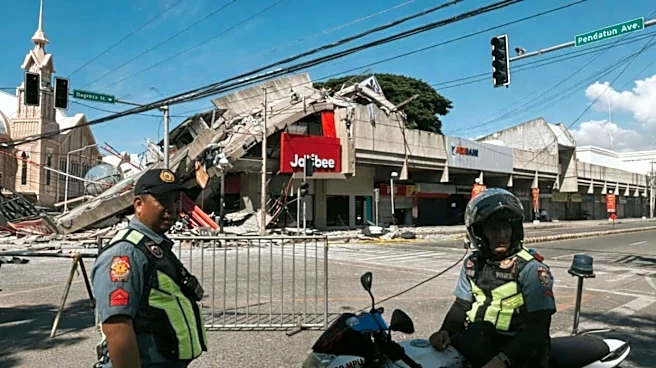
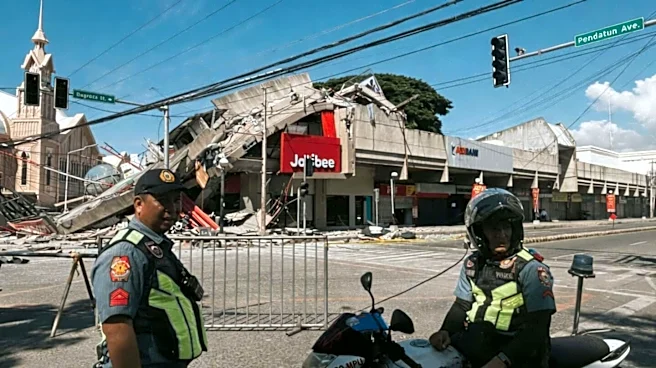
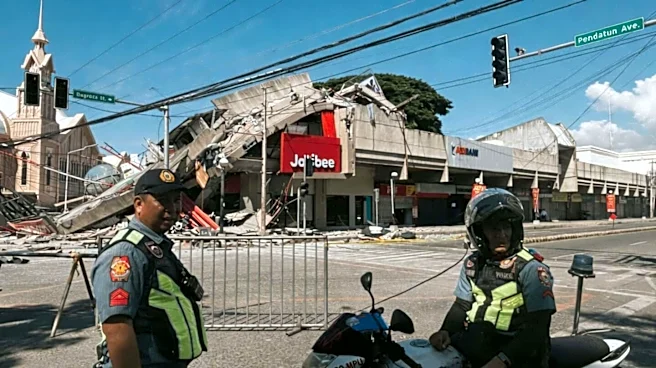
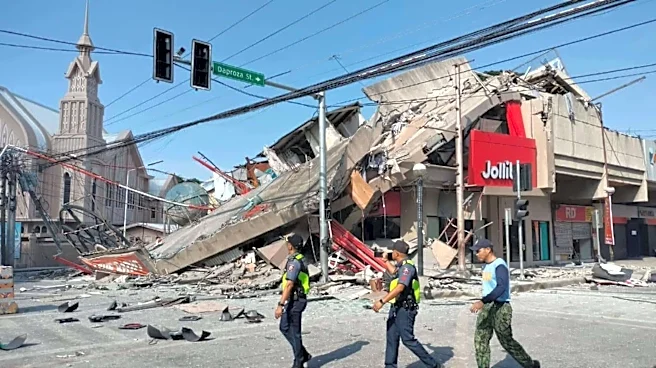
Seven more died in General Santos, the region’s main port
city, where several buildings collapsed. The remainder died across South Cotabato, Davao Occidental, and Balut Island from falling debris and a damaged mosque.
The National Disaster Risk Reduction and Management Council said at least 134 people were injured and 12 remained missing, all in the Soccksargen region.
“The shaking was very strong and people dashed out of houses into the streets,” said Rod Sosmeña, regional director of the Office of Civil Defence, who was travelling through General Santos when the quake struck.
In Davao, his counterpart Ednar Dayanghirang told The Associated Press that he could “hardly stand and keep my balance” as he was leaving his house.
School Collapse, Airport Shut On First Day Of Academic Year
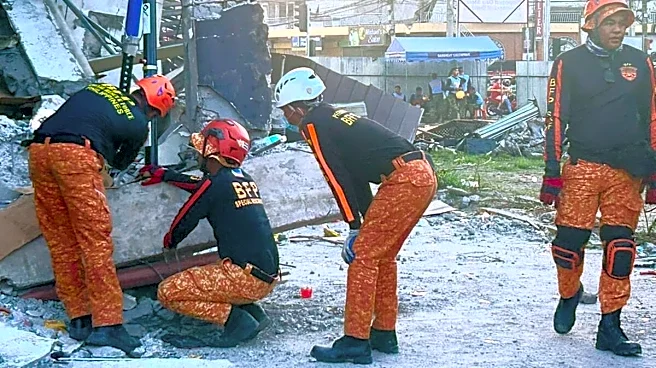
The quake struck on the opening day of the school year. A two-storey school building collapsed in General Santos and rescuers were searching for any trapped students.
Philippine President Ferdinand Marcos Jr. ordered class suspension in affected areas, with 3.2 million students and 128,000 teachers affected. The General Santos international airport was temporarily closed and 17 domestic flights were cancelled. Aftershocks as strong as magnitude 6.5 followed through the morning.
Tsunami Warnings Lifted, Waves Reach Japan And Indonesia
The Pacific Tsunami Warning Center declared the threat largely passed about five hours after the quake. Waves of 1 metre were recorded along Sultan Kudarat and Sarangani.
A 1.4-metre surge was measured at Kiamba in Sarangani. Smaller waves of 83 centimetres were recorded off Sulawesi in Indonesia, 30 centimetres in Palau, and up to 20 centimetres at Japan’s Chichijima island and the coastal town of Kushimoto.
There were no deaths or significant damage from the tsunami outside the Philippines.
UNICEF Philippines said on X that pre-positioned emergency supplies and cash transfers were ready for deployment. Quick Response Fund resources were also made available through the national budget for immediate use by disaster response agencies.
UNICEF stands in solidarity with, and is ready to support, children and families affected by the 7.8 magnitude earthquake that struck Mindanao on 8 June 2026, impacting communities in Sarangani Province, General Santos City, and nearby regions.#LindolPH #EarthquakeSarangani pic.twitter.com/31ZM0PSyWN
— UNICEF Philippines (@unicefphils) June 8, 2026
/images/ppid_59c68470-image-178090010792860354.webp)

/images/ppid_59c68470-image-1780885127947489.webp)

/images/ppid_59c68470-image-178089756597095710.webp)
/images/ppid_59c68470-image-178088256604089668.webp)

/images/ppid_59c68470-image-17808825352437673.webp)