

/images/ppid_59c68470-image-178902502661057205.webp)
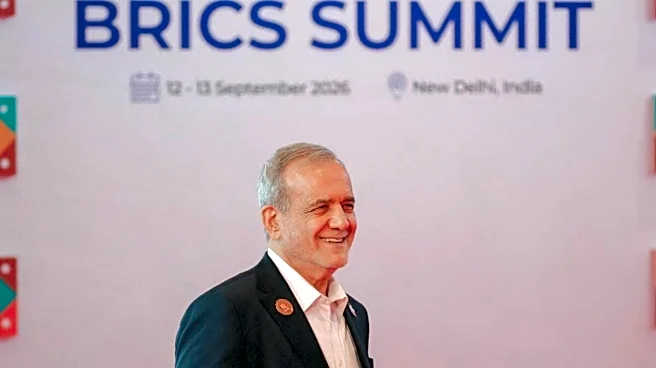
Iranian President Masoud Pezeshkian on Saturday called on BRICS nations to oppose attacks and threats against civilian infrastructure and peaceful nuclear facilities, saying such actions pose a direct threat to international peace and security.
Addressing the BRICS Summit in New Delhi, Pezeshkian said the grouping must take “practical measures” to counter what he described as unilateral and “inhumane” sanctions, and urged BRICS to become “a voice for justice”.
“BRICS members have a responsibility to stand against the normalisation of attacks on civilian infrastructure and peaceful nuclear facilities,” Pezeshkian said, arguing that any action against such facilities threatens international peace and security.
ALSO READ | ‘We Don’t Need A Regional
Policeman’: Pezeshkian’s Message To US From BRICS Summit
His remarks come against the backdrop of the ongoing war involving Iran, the United States and Israel. The conflict began with US-Israeli strikes on Iran in late February and has since entered a new phase, with Washington and Tehran resuming tit-for-tat attacks after a pause in fighting in August.
Iran has repeatedly criticised US sanctions and military action, while seeking greater support from BRICS, which has expanded into a major Global South grouping. Tehran has also pushed for mechanisms within BRICS to reduce members’ dependence on Western financial systems and increase trade in national currencies.
Pezeshkian Raises Palestine At BRICS
The Iranian president also brought the Palestine issue to the BRICS table, saying the grouping must play an active role in upholding Palestinians’ right to self-determination.
He said the issue was a “serious test” of the credibility and legitimacy of global governance, putting the onus on BRICS to take a more active position.
Pezeshkian’s remarks come as BRICS leaders seek consensus on conflicts and global security at the New Delhi summit, even as member states themselves have divergent positions on the Iran war. Iran and the UAE, both part of the expanded BRICS grouping, are on opposing sides of the wider Gulf conflict, making consensus on the Middle East particularly challenging.
India, which is hosting the summit, has maintained that conflicts in West Asia must be resolved through dialogue and diplomacy. Prime Minister Narendra Modi reiterated this position during his meeting with Pezeshkian, while also stressing freedom of navigation, commerce and the safety of seafarers.


/images/ppid_59c68470-image-178914002635279422.webp)



