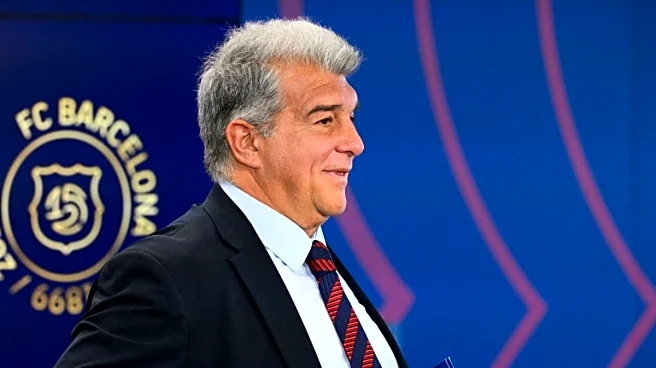



Joan Laporta’s resignation on Monday was not a dramatic departure or a reaction to crisis. Instead, it was a calculated, statute-driven decision designed to keep him in power — by allowing him to run again.
Laporta, who has led FC Barcelona since March 2021, stepped aside to activate the club’s electoral process and meet a key legal requirement laid out in the club’s statutes.
The Statute That Forced the Move
The decision centres on Article 42.f of Barcelona’s statutes. Under this rule, a sitting president must resign before being eligible to stand for re-election. By formally stepping down, Laporta cleared the only legal obstacle preventing him from contesting the presidency again.
In simple terms, he resigned in order to run.
Why the Timing Matters
Barcelona is not facing an immediate sporting or financial emergency, but the club is mid-season and approaching the end of Laporta’s mandate. Calling elections now creates a controlled transition rather than a rushed or destabilising one later in the year.
It also allows Laporta to seek a fresh mandate while pointing to economic recovery and on-field stability as evidence of progress under his leadership.
Freeing Laporta to Campaign
Resigning removes institutional constraints. Laporta can now campaign as a private citizen rather than as a sitting president, directly appealing to members and responding to rivals such as Víctor Font, Xavi Vilajoana, and Marc Ciria without the limitations imposed by office.
What Happens to the Board?
Laporta’s resignation automatically triggered the departure of eight members of his executive board, as required by club rules. This, however, is procedural rather than political. Should Laporta win in March, those same figures would return after ratification by the Assembly of Delegates, since they are not elected individually.
Interim Leadership and Continuity
First vice-president Rafa Yuste has stepped in as interim president until June 30. A trusted Laporta ally and head of the sporting department, Yuste’s role ensures continuity and minimises disruption during the election period.
The Intention Behind the Resignation
Laporta has been clear about his aim: to continue.
He believes his board has stabilised Barcelona economically, restored competitiveness, and reconnected the club with its supporters. The resignation, then, is not an exit — but a reset, designed to secure approval to complete and extend his project.