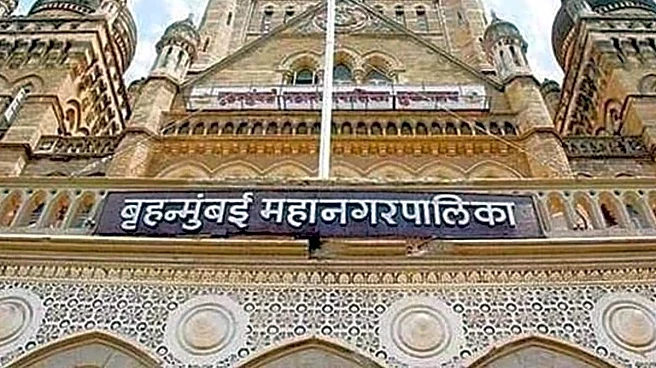




As Mumbai prepares for the Brihanmumbai Municipal Corporation (BMC) elections on January 15, the city is witnessing a familiar surge in political campaigning. However, for the average Mumbaikar, the significance of the “ward vote”—the choice of a local corporator—often remains eclipsed by the higher-profile state assembly and parliamentary ballots. While Members of the Legislative Assembly (MLAs) deal with statewide policies and law and order, it is the corporator who holds the keys to the micro-realities of daily life. In the context of India’s richest civic body, your ward-level vote is arguably the most consequential decision you will make for your immediate environment.
Money power
The primary reason the ward vote carries such weight lies in the sheer
financial power of the BMC. With an annual budget that has soared to over Rs 74,367 crore in 2025-26, the BMC’s spending capacity exceeds that of several small Indian states. This wealth is not just for mega-projects like the Coastal Road; it is designated for the “local” essentials that determine your quality of life. From the maintenance of internal colony roads and the frequency of garbage collection to the pressure in your water taps and the repair of municipal schools, every “hyper-local” service falls under the corporator’s jurisdiction. While an MLA might debate land laws in the Vidhan Sabha, it is the corporator who has the “discretionary funds” to fix a broken streetlight or clear a clogged drain in your specific lane.
Local touch
Furthermore, the corporator serves as the most accessible link between the citizen and the massive civic bureaucracy. In a city of over 12 million people, reaching an MLA or a Member of Parliament (MP) can be a daunting task for a common resident. In contrast, a corporator represents a much smaller geographic unit—one of 227 wards—making them directly accountable to a few thousand households. They chair the local Ward Committees, where decisions regarding naming roads, repairing markets, and managing dispensaries are finalised. This proximity means that your vote at the ward level translates into a direct “customer service” relationship with the government; if the waste in your ward is not managed, the corporator is the first official you can hold to account.
‘Governance deficit’
Finally, the 2026 election is particularly critical because the city has been without elected representatives for nearly four years, governed instead by state-appointed administrators. This “governance deficit” has led to a perceived lack of transparency in how ward-level funds are allocated. A recent report by the Praja Foundation highlighted a decline in the share of the total budget specifically allocated to wards, dropping from 18% to 11%. By casting a vote for a corporator, residents are reclaiming their right to participatory budgeting and ensuring that their specific neighbourhood’s needs are not ignored in favour of city-wide grandiosity. Ultimately, while the assembly ballot decides who runs the state, the ward ballot decides who ensures your street is liveable tomorrow morning.