
Role of Subhas Chandra Bose and INA in India’s Freedom Struggle: India’s Independence Day, observed every year on August 15, commemorates the country’s freedom from British colonial rule in 1947. As India marks its 80th Independence Day in 2026, the occasion offers an opportunity to revisit the many strands of the freedom movement and the individuals who shaped its course.
Among the most prominent was Subhas Chandra Bose, popularly known as Netaji, whose approach to independence differed sharply from the methods of Mahatma Gandhi and many other Congress leaders.
Read More: Is Independence Day 2026 India’s 79th Or 80th? History And Facts Explained
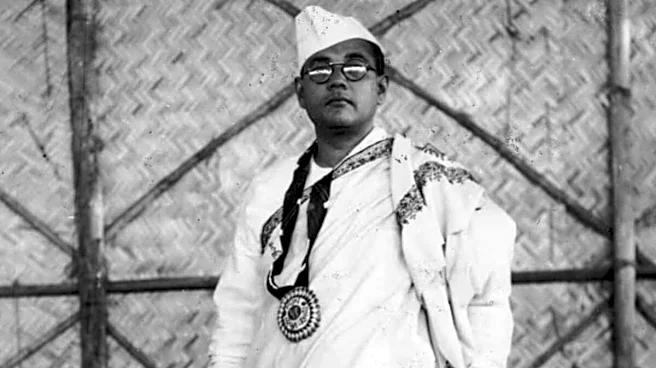
Born on January 23, 1897, in Cuttack, Odisha, Bose became an important nationalist leader and eventually
sought international and military support to challenge British rule.
He believed that the circumstances of the Second World War created an opportunity to strike against the British Empire and pursued an armed struggle through the Indian National Army (INA).
The Government of India’s Ministry of Culture describes Bose as a leader who played a pivotal role in India’s struggle for independence.
The INA’s military campaign did not succeed in driving the British out of India. Its importance to the freedom struggle, however, extended beyond the battlefield. The INA trials of 1945-46 generated widespread public interest and sympathy, while Bose’s message of nationalism and his attempt to unite Indians from different communities left a lasting imprint.
Read More: Independence Day 2026: 80 Interesting Facts About Indian Independence Day You Should Know
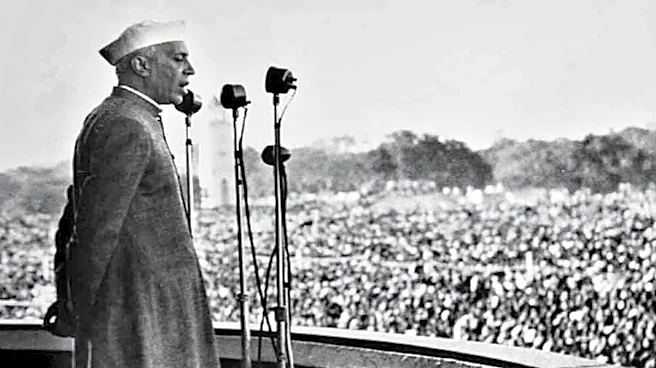
Jawaharlal Nehru, despite having significant political differences with Bose, later acknowledged the courage associated with his struggle and noted the public response to the INA.
Who Was Subhas Chandra Bose?
Subhas Chandra Bose emerged as one of the most forceful nationalist leaders of the Indian independence movement. He joined the Indian National Congress and rose rapidly within its ranks, eventually serving as Congress president in 1938 and again in 1939.
Bose advocated a more militant and immediate approach to ending British rule. His differences with the Congress leadership, particularly over strategy and the pace of the struggle, eventually led him to leave the Congress mainstream and establish the Forward Bloc in 1939.
Read More: Independence Day 2026: How To Upload Har Ghar Tiranga Selfie And Get Certificate
During the Second World War, Bose saw Britain’s involvement in the conflict as an opportunity for India. He escaped from British surveillance in India in 1941 and eventually travelled to Europe before reaching East Asia, where he took leadership of the Indian independence movement among Indian expatriates and prisoners of war.
What Was the Indian National Army?
The Indian National Army, or INA, was an armed force formed during the Second World War to fight British rule in India. Its origins date to 1942, when Indian prisoners of war captured by Japanese forces in Southeast Asia were recruited under the leadership of Captain Mohan Singh.
The organisation later came under the leadership of Subhas Chandra Bose after he arrived in Southeast Asia in 1943. Under Bose, the INA was reorganised and became closely associated with his campaign for India’s independence.
Read More: Independence Day 2026: 10 Har Ghar Tiranga Rules You Must Know
Bose gave the movement a powerful political and military identity, using slogans such as “Jai Hind” and “Delhi Chalo” to rally supporters.
Bose and the Provisional Government of Free India
One of Bose’s most significant political steps came in October 1943, when he established the Provisional Government of Free India, also known as the Azad Hind government, in Singapore.
The government claimed to represent a free India and was recognised by several Axis-aligned countries. Jawaharlal Nehru’s correspondence from 1945 also records that the Provisional Government was established in Singapore on October 21, 1943, with Bose as its head.
Bose’s government sought to transform the independence movement into a state-building project, with the INA serving as its military arm.
The INA’s Military Campaign
The INA fought alongside Japanese forces during the Burma campaign and advanced towards India’s northeastern frontier in 1944.
Its forces participated in the campaigns around Imphal and Kohima, where Japanese and INA forces attempted to break through British defences and enter India.
The campaign ultimately failed. Japanese forces suffered severe losses, while the INA faced shortages of supplies, equipment and logistical support. The retreat from the northeastern theatre marked the collapse of the military effort to enter India.
Therefore, it would be historically inaccurate to claim that the INA militarily defeated the British or directly liberated India. Its importance lies in the wider political and psychological impact of Bose’s campaign and the events that followed.
The INA’s Role in Inspiring Nationalism
One of Bose’s most important contributions was his ability to turn the idea of armed resistance into a powerful symbol of Indian nationalism.
The INA included Indians from different regions, religions and social backgrounds. Its image as an Indian force fighting under its own national banner resonated with sections of the population.
Nehru later highlighted the INA’s ability to create communal unity within its ranks, describing this as one of its notable achievements.
Read More: 10 Lines On Independence Day For Students: Simple Speech Ideas In English
Bose’s appeal also extended beyond military strategy. His speeches, slogans and political vision helped create a sense that Indians could organise themselves as a nation capable of challenging imperial authority.
Rani of Jhansi Regiment and Women’s Participation
The INA also became notable for the Rani of Jhansi Regiment, a women’s military unit commanded by Captain Lakshmi Sahgal.
Its creation challenged conventional expectations about women’s participation in military and nationalist movements at the time. Although the regiment did not become a decisive combat force in the campaign against the British, its existence became an important symbol of women’s participation in the struggle associated with the INA.
The regiment’s name honoured Rani Lakshmibai of Jhansi, one of the prominent figures associated with the uprising of 1857.
The INA Trials and Their Impact
The INA’s most significant impact on India’s final years under British rule came after the Second World War.
After Japan’s defeat in 1945, many INA personnel were taken into British custody. The British government began prosecuting INA officers for offences including treason.
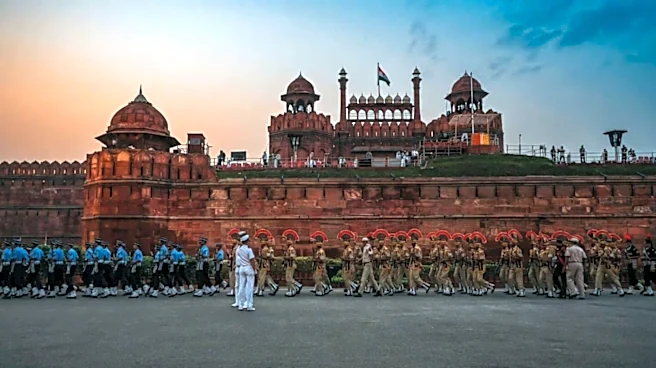
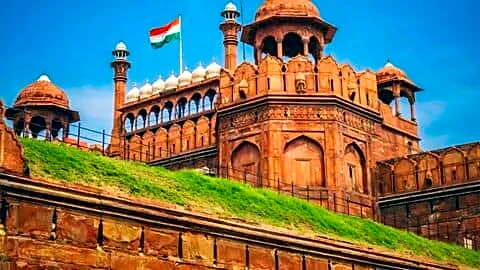
The first major INA trial was held at the Red Fort in Delhi, beginning in November 1945. The accused included Shah Nawaz Khan, Prem Kumar Sahgal and Gurbaksh Singh Dhillon.
The trials attracted enormous public attention in India. Political leaders, lawyers and sections of the public rallied around the INA personnel.
Nehru’s archival records document the formation of an INA Defence Committee and widespread public interest in the trials.
The issue also crossed political boundaries. The defence of INA personnel became a major public cause and contributed to a broader sense of national solidarity.
Why the INA Trials Mattered
The INA trials transformed former soldiers who had fought under Bose into symbols of the larger independence struggle for many Indians.
Nehru, who had previously disagreed with Bose’s political and strategic choices, acknowledged in January 1946 that the INA had become a powerful symbol and that public opinion had played a major role in the campaign surrounding the first trial.
This is an important distinction when assessing the INA’s contribution. The organisation’s battlefield campaign failed, but the political consequences of the INA story continued after the war.
The trials also forced the British government to confront a difficult question: how should Indian soldiers who had turned against British authority be treated when public opinion increasingly viewed them as patriots?
Did the INA Directly Lead to India’s Independence?
The INA’s role should be understood as one part of a much larger freedom movement, rather than as the sole reason India became independent.
India’s independence resulted from decades of political mobilisation, mass movements, constitutional negotiations, revolutionary activities, international developments and the weakening of Britain’s position after the Second World War.
The INA’s military campaign did not defeat the British Army. However, the organisation and the subsequent trials contributed to the political atmosphere of the final years of British rule.
The public reaction to the INA trials was particularly significant. Nehru’s archival record describes the extraordinary public interest surrounding the trials and the widespread desire to support the defence of INA personnel.
The INA therefore occupies an important place in the story not because it independently won India’s freedom, but because it challenged the legitimacy of colonial military authority and became a powerful symbol of resistance.
Bose’s Legacy in India’s Freedom Struggle
Subhas Chandra Bose remains one of the most influential and debated figures of India’s independence movement.
His supporters remember him for his uncompromising commitment to independence, his leadership of the INA and his ability to inspire Indians across regional and community boundaries.
At the same time, his decision to seek military assistance from Axis powers during the Second World War remains an important part of historical discussion. Bose’s strategy involved working with governments whose wartime objectives were fundamentally different from India’s aspirations.
Even his political contemporaries recognised these complexities. Nehru, while praising Bose’s courage and acknowledging the INA’s achievements, also expressed reservations about relying on another country’s military support for India’s freedom.
Bose, INA and the Meaning of Independence
The story of Bose and the INA adds another dimension to the history of India’s independence. The freedom struggle was not a single movement with one strategy or one leader. It included constitutional politics, mass civil disobedience, revolutionary activity, labour and student mobilisation, underground resistance and military efforts.
Bose represented the strand that believed armed struggle could accelerate the end of colonial rule. The INA represented his attempt to turn that belief into an organised military campaign.
Although the campaign did not achieve its immediate military objective, the INA’s story continued to influence public opinion in India, particularly during the Red Fort trials.
For Independence Day, remembering Bose and the INA is therefore not simply about celebrating a military episode. It is about understanding the diversity of ideas, sacrifices and strategies that shaped India’s long journey to freedom.
Subhas Chandra Bose and the INA played a significant but not solitary role in India’s freedom struggle. Bose provided an alternative vision of armed resistance, reorganised the INA in Southeast Asia and established the Provisional Government of Free India.
The INA’s military advance towards India in 1944 ultimately failed, but the organisation’s legacy gained renewed force through the INA trials of 1945-46 and the public response they generated.
Nehru’s contemporary writings are particularly useful in understanding this complex legacy: despite his disagreements with Bose, he acknowledged Bose’s courage, the INA’s symbolic importance and the strength of public sentiment surrounding its personnel.
For the history of India’s independence, Bose and the INA are best remembered as an important part of a much broader movement that ultimately brought British rule to an end in 1947.