
/images/ppid_a911dc6a-image-177573212908214760.webp)
/images/ppid_a911dc6a-image-177579852693968118.webp)
/images/ppid_a911dc6a-image-17757915260509984.webp)
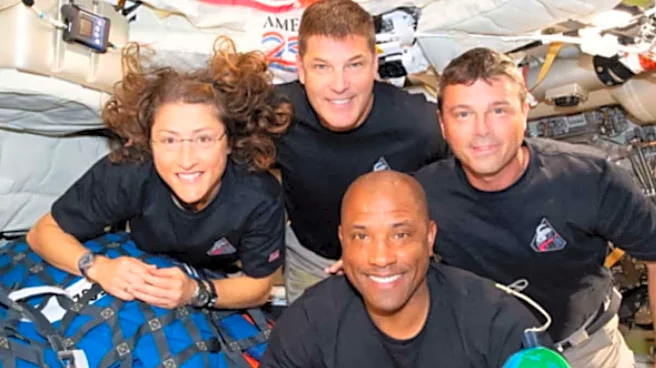
With less than two days before they plunge back through Earth’s atmosphere and splash down in the Pacific Ocean, the four astronauts of NASA’s Artemis II mission said the hardest part of their journey around the Moon may not be the fiery reentry ahead but it is making sense of everything that came before it.
Astronaut Victor Glover said, “I haven’t even begun to process what we’ve been through. We’ve still got two more days and riding a fireball through the atmosphere is profound as well. I’m going to be thinking about and talking about all of these things for the rest of my life.”
They’re halfway home.
The Artemis II astronauts have hit the “halfway” mark between the Moon and the Earth. They will splash down in the Pacific Ocean around 8:07 pm
ET on Friday, April 10 (0007 UTC on Saturday, April 11), off the coast of San Diego. pic.twitter.com/CQmOuDTVGh
— NASA (@NASA) April 10, 2026
Mission commander Reid Wiseman echoed that sentiment saying, “Human minds should not go through what these just went through. It is a true gift. And we have a lot that we just need to think about and journal and write and then we’ll get the full feeling of what we just went through.”
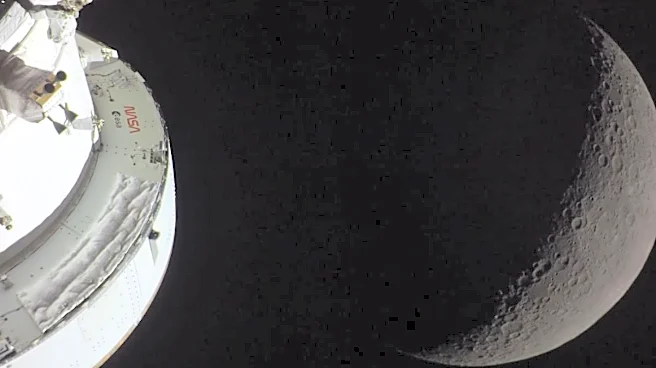
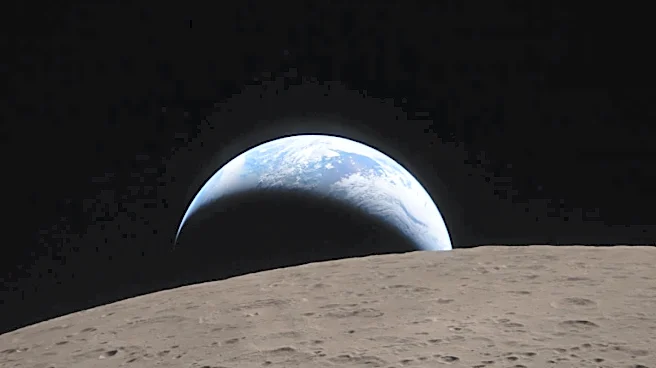
The four crew members- Americans Wiseman, Glover and Christina Koch, along with Canadian Jeremy Hansen- set a record for the farthest distance from Earth travelled by any humans during their lunar flyby, surpassing the mark set by the Apollo 13 crew in 1970. They took thousands of photographs and logged extensive observations over their 10-day mission.
Of Chills And Sweating Palms
Wiseman said the solar eclipse, watched from deep space, left a physical impression that hadn’t faded.
“I’m actually in chills right now just thinking about it, my palms are sweating,” he said.
Hansen, the first non-American to fly to the Moon, said he witnessed things on the lunar far side he “just had never even imagined.”
But the view only drew him closer to home.
“We live on a fragile planet in the vacuum and the void of space. Our purpose on the planet as humans is to find joy and lifting each other up by creating solutions together instead of destroying. When you see it from out here, it doesn’t change it. It just absolutely reaffirms that,” he said.
Close Like Brothers And Sisters
For Koch, the memory she said she will carry longest is not a view but a feeling. Asked what she would miss about life in space, she said camaraderie without hesitation.
“I will miss being this close with this many people and having a common purpose. This sense of teamwork is something that you don’t usually get, like, as an adult. I mean we are close like brothers and sisters. That is a privilege we will never have again,” she said.

/images/ppid_a911dc6a-image-177586152919559056.webp)

/images/ppid_a911dc6a-image-177588252793652807.webp)

/images/ppid_a911dc6a-image-177586852085130574.webp)
/images/ppid_59c68470-image-177587010743863218.webp)