
/images/ppid_a911dc6a-image-177641115583784862.webp)


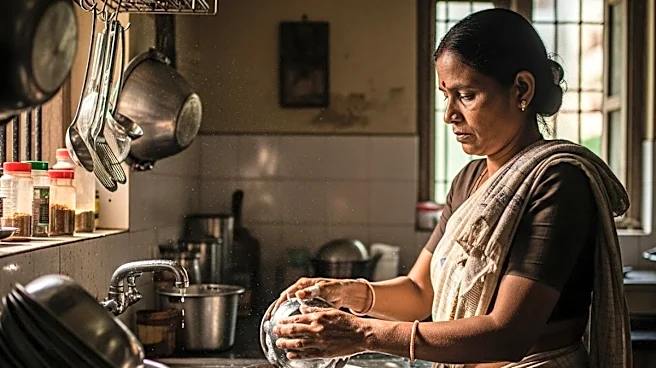
Are you paying your housemaid enough? You may never know since there is no rule book to define how much should domestic helps be paid in India. On Tuesday, April 14, when Noida was witnessing unrest due to factory workers demanding higher minimum wages and better working conditions, domestic helps took cue. Outside Cleo County in Noida’s Sector 121, several domestic workers gathered and held a protest demanding higher salaries.
These domestic workers questioned why they were not covered under government’s rules for minimum wages and claimed their salaries had remained stagnant for years even as the cost of living in cities like Noida, Gurugram and Delhi has gone up considerably. Apart from the hike in pay, the domestic workers also demanded that
they be given four days off every month, instead of the two days that they get at present.
These demands by domestic workers have put the spotlight at their big question: Are domestic helps covered under India’s labour laws and are they eligible for minimum wages? The answer to this question, even though majorly negative, is a complex one.
Are Domestic Workers Eligible For Minimum Wages In India?
In theory, domestic workers should get minimum wages in India. But in reality, it is uneven and depends heavily on the state. The law exists, but coverage is patchy and enforcement is weak.
The Code on Wages 2019 empowers state governments to fix minimum wages, and makes it illegal to pay below the notified rates. While this should apply to domestic helps, it doesn’t.
Domestic workers are part of the unorganised sector and are not automatically covered everywhere. Coverage depends on state government notifications.
Some states have included domestic work under minimum wage schedules, such as:
- Tamil Nadu
- Kerala
- Karnataka
- Andhra Pradesh
- Rajasthan
- Bihar
In these states, employers are legally required to pay state-notified minimum wages to domestic workers. However, in these states too, it is difficult to enforce these wages as these workers work in private homes which are not recognised as entities.
Meanwhile, many states still don’t fully cover them. In several states, domestic workers are excluded or not notified. That means, paying below minimum wage is not clearly illegal there.
What Supreme Court Said On Minimum Wages For House Helps
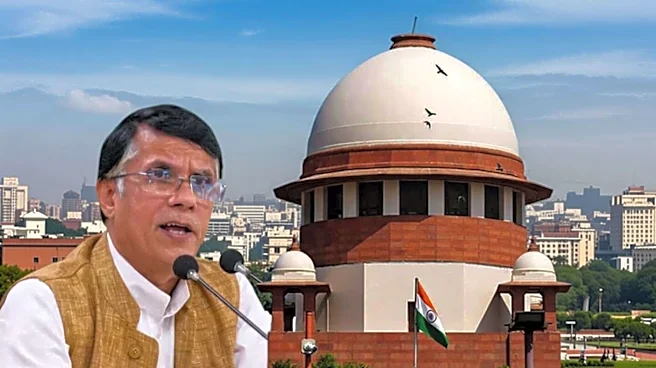
The legal ambiguity around domestic workers has also been acknowledged by the Supreme Court of India, but without a decisive nationwide fix. The Court has made it clear that while domestic workers deserve legal protection, it is not inclined to impose a uniform minimum wage regime across the country. In one instance, the Court observed that domestic staff “need the shield of law,” yet stopped short of directing the Centre to fix wages, instead leaving it to individual states to take a call.
More recently, it reiterated this position, urging state governments to “consider” framing policies on minimum wages for domestic workers, without making it a binding mandate. The result is a continuing grey area, where the need for protection is judicially recognised, but the responsibility to act remains diffused, keeping domestic work in a space that is acknowledged but still not fully regulated.
Why Is It Difficult To Set A Legal Framework For Maids’ Salaries?
There are three structural reasons why it becomes difficult to bring domestic workers under a blanket minimum wage system. These are:
Work happens inside private homes and homes are not treated like formal “establishments”. Labour inspection, therefore, becomes legally and socially tricky.
The employment of domestic workers is highly fragmented. One worker may work in 5–10 households. With no single “employer” in the traditional sense, regulation becomes a challenge.
Federal structure: Labour is partly a state subject. So states decide whether to include domestic workers under broad labour codes and what wages to fix.
Are Domestic Helps Hired Through Agencies Better Protected?
While agency-hired maids have slightly better working conditions than independent domestic workers, there is still no clear, uniform legal framework across India. Here’s why: Even if you hire via an agency, the workplace is still a private household, and the worker is still classified as part of the unorganised sector.
A few states like Maharashtra and even the UT of Delhi have tried to change this with rules requiring registration of placement agencies and police verification norms for workers. However, the enforcement of such rules remains patchy and many agencies continue to operate informally.
Are Apps Like Snabbit, Pronto, Insta Help Changing Things?
Platforms like Urban Company, Pronto and Snabbit bring more structure, pricing transparency, and tracking — but they don’t convert domestic workers into fully protected employees under labour law.
Under such apps, maids are classified as gig/independent workers. Platforms call them “partners” or “service professionals”.
So legally, they are not employees and still have no guaranteed minimum wage and no formal employer-employee contract.
The Code on Social Security, 2020, is the only law that directly recognises gig workers. It defines gig and platform workers, and allows government to create insurance and welfare schemes, but does not guarantee minimum wages.
Instead of salaries, these workers earn through per-task payments for things like cleaning, cooking, etc. Platforms take a commission, which is a portion of the payment of these tasks. The incentives based on ratings, number of jobs and peak hours.
While India may be moving towards transparency and better benchmarks for pay with these platforms, minimum wages for domestic workers in India are still far from reality. Whether the Noida protest sparks a debate and things move in this direction remains to be seen.