
/images/ppid_a911dc6a-image-177065357074889418.webp)


When economic liberalisation came to India in the 1990s, we were promised a marketplace of choices. The vision was simple: dismantle the Licence Raj, allow private players to compete, and let the Indian consumer reap the benefits of efficiency and innovation. For two decades, aviation was the poster child of this success. We went from the monopoly of Indian Airlines to a vibrant sky filled with Jet, Sahara, Kingfisher, Deccan, SpiceJet and IndiGo.
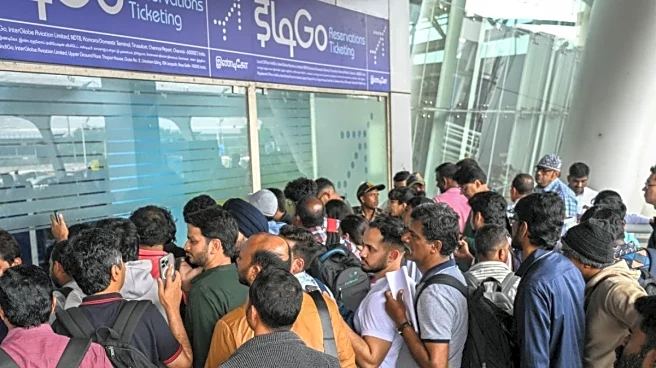
But the scenes witnessed across airports recently tell a different story. Thousands of stranded passengers, tarmac altercations, and a collapse of national mobility triggered by a crisis within a single airline. The IndiGo fiasco is not merely an operational failure; it is a structural warning. It is the inevitable
price of extreme market concentration. It shows how when one entity sneezes; the entire nation now catches pneumonia.
Knowingly or not, India has sleepwalked into an era of consolidation that has replaced the public monopolies of the socialist era with the private duopolies of the capitalist present. From aviation to telecom to our most markets, we are transforming from a democracy of consumer choice into an oligopoly of “national champions”. And the regulatory architecture charged with policing these markets has not evolved to meet the risks created by such concentration.
IndiGo’s collapse makes that vulnerability impossible to ignore. For years, the airline symbolised the promise of efficient and low-cost aviation. But when it began cancelling hundreds of flights and grounding aircraft, the headlines only hinted at the deeper institutional problem. India’s skies have become so concentrated that one company’s routine operational missteps can paralyse national mobility. In effect, we have built a market where a private bottleneck becomes a public emergency.
The numbers tell the story plainly. IndiGo carries nearly two-thirds of all domestic passengers. Air India and its affiliates are the only meaningful counterweight. Together, the two networks control close to 85–90 per cent of the market. In theory, such consolidation promises scale efficiencies. In practice, it removes redundancy. When an industry has several healthy players, the failure of one is absorbed by others. But in a duopoly running near full capacity, there is no spare cushion. A disruption in one network instantly becomes a nationwide shortage of mobility. The result goes far beyond hassle and effectively freezes the country’s logistical machinery.
This is not, fundamentally, a story of unlawful conduct. It is a story of flawed market design. India’s competition law, shaped in an era of fragmented markets, is excellent at penalising abuse of dominance under Section 4. But it is structurally blind to dominance itself unless it emerges through merger. The IndiGo episode exposes that blind spot brutally. A duopoly can be perfectly “legal” and still be structurally brittle. The framework punishes bad behaviour but lacks the tools to evaluate and mitigate systemic risk in essential services. We liberalised markets, yet allowed them to harden into single points of failure.
Global regulators have long moved in the opposite direction. The United States blocked the JetBlue-Spirit merger not only due to fare concerns but because eliminating a maverick would distort the long-term market architecture. Europe routinely imposes structural remedies to prevent fragile two-player outcomes. India, by contrast, has embraced a permissive merger philosophy grounded in the belief that global competitiveness requires domestic giants.
The Air India-Vistara merger was cleared without the rigorous slot remedies or ongoing behavioural monitoring that are standard in mature jurisdictions. This reflects a quiet but significant policy shift toward “national champion” thinking. But creating giants without matching oversight has a cost as domestic consumers lose bargaining power. The economy becomes dependent on a handful of firms that are effectively “Too Big to Fail” without being treated as public utilities. Thus, India’s legal framework needs a third lens. A structural-risk approach for essential mobility sectors where concentration itself is a form of systemic vulnerability.
If competition law is structurally limited, consumer protection law is procedurally weak as well. The Consumer Protection Act, despite its 2019 update, remains built for individual disputes. It cannot meaningfully address mass-harm events like the grounding of tens of thousands of passengers. No one expects each affected traveller to file an individual complaint. Yet that is effectively the only pathway our system offers. In essence, India lacks the mechanisms that make Western consumer protection responsive to systemic failures.
Take compensation. India still lacks automatic, no-fault payouts for controllable delays and cancellations. DGCA rules rely on vague “extraordinary circumstances”, placing the burden of proof on the passenger. The solution is straightforward: embed statutory, automatic, self-executing compensation on the model of Europe’s EC261. Accountability should be built into the transaction, not left to litigation.
Collective redress is the next missing pillar. Class actions were diluted in the transition from the 1986 to the 2019 law, leaving mass failures without a practical remedy. What India needs is a fast-track consolidation mechanism that aggregates thousands of identical claims into a single binding order. So that mass harm triggers mass relief, not mass paperwork.
Contractual fairness is the third gap. Airline contracts are classic adhesion contracts that cap liability, prolong refund cycles, and permit extensive unilateral changes. Many jurisdictions treat such clauses as unfair and void by default. India needs a modern unfair-contract-terms statute that prohibits clauses shifting disproportionate risk onto consumers, especially in essential mobility services.
All of this sits atop a regulatory body without the necessary instruments. DGCA is fundamentally a technical safety regulator. It can issue advisories but cannot impose structural remedies or economic penalties. A 21st-century aviation market requires a regulator empowered to conduct resilience audits, impose turnover-based penalties, and enforce capacity obligations for carriers above a threshold market share.
Because the cancellation of a flight is a nuisance. The inability to book another flight because there is no other airline is a crisis. And thus, IndiGo’s meltdown is a wake-up call. We are building an economy that is efficient, streamlined and increasingly fragile. Because we have prioritised the creation of national champions over the preservation of consumer resilience.
The legal and policy choices are not metaphysical. They are proximate, legislative and administrative. If we do not act to inject competition back into the market or impose strict utility-style regulation, we face a perilous future. We risk becoming a nation where the citizen is held hostage by the very infrastructure meant to serve them. The price of monopoly is high, and recently, the Indian passenger paid it in full. Through missed surgeries, ruined weddings, stranded students, and an erosion of trust in the market institutions we rely on. It is time the regulators sent the bill where it belongs.
(Prof. Manoj Sinha is Principal, Aryabhatta College, University of Delhi. Views expressed are personal and solely those of the author. They do not necessarily reflect News18’s views.)
/images/ppid_59c68470-image-177065754276587834.webp)

/images/ppid_59c68470-image-17706575780372121.webp)
/images/ppid_59c68470-image-177065753930384882.webp)


/images/ppid_a911dc6a-image-177065567868913302.webp)

/images/ppid_a911dc6a-image-177065562738227437.webp)
/images/ppid_59c68470-image-177065507049415544.webp)
/images/ppid_59c68470-image-177065505265365483.webp)
/images/ppid_a911dc6a-image-177065466501151392.webp)
/images/ppid_a911dc6a-image-17706547039401557.webp)