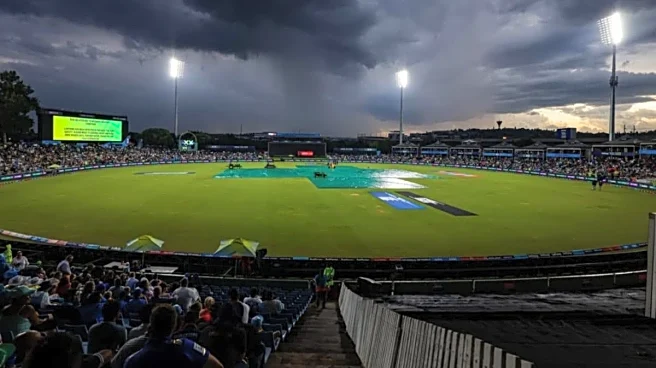


With the T20 World Cup around the corner and South Africa taking part in it, the SA20 governance had little option but to prepone the tournament to late December 2025. However, the shift from its usual window appears to be coming at a cost. Unseasonal rain across parts of South Africa has taken a toll on games and the group standings, with five matches yielding no results and points being shared between franchises.
The points table itself paints a concerning picture. Each of the six teams has lost at least one match to weather. Joburg Super Kings and Sunrisers Eastern Cape have suffered two washouts each, while Paarl Royals, Pretoria Capitals and MI Cape Town have each seen one game abandoned.
Durban’s Super Giants have been the unluckiest; three
of their seven games have been washed out, the latest against Sunrisers on Friday. With just one victory, they sit fifth on the table.
While acts of God are beyond control, washouts have left fans and players frustrated alike. Yet, the spirit of the league remains intact. With 12 games still to be played before the playoffs, teams continue to fight on and fans have kept turning up in numbers to enjoy the cricket across all six Protea venues.
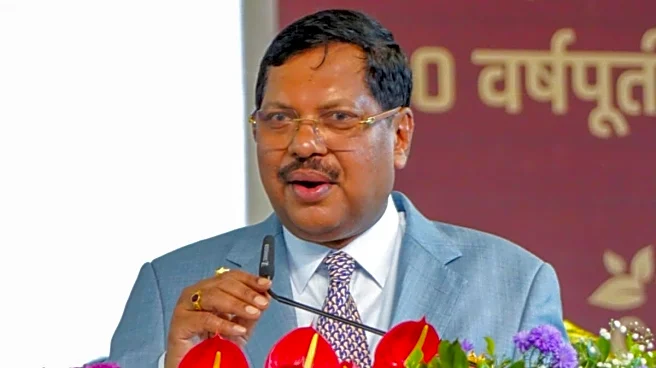
SA20 commissioner Graeme Smith understands the situation but believes the only way forward is to remain optimistic, with plenty of action still left in the tournament.
“Unfortunately, you can’t always predict these things, and when these unseasonal types of fronts come through certain parts of South Africa, it’s a challenge — especially when you’ve got a game a day and you are moving around the country,” Smith said while interacting with select Indian media in Kingsmead, Durban.
“But I think right now we have just got to stay positive. There is a lot of cricket still left to be played. We are only halfway really in the season,” Smith added.
The former South African cricketer also highlighted the encouraging signs witnessed in the early phase of the tournament.
“We’ve seen growth in the first two weeks. Viewership, crowd attendance, atmosphere and the cricket have been good. So, I think that was really exciting. I can just feel in the minds of people talking about wanting to come to games,” Smith said.
“Even after one or two rain-affected matches, watching how the crowds haven’t left shows you that the product has really stepped up another level this year. Our job is to stay positive, keep going and push for a strong finish to the season,” Smith added.
Traditionally, SA20 begins in the second week of January and concludes in early February. This season, however, has been different, with the South African team recently returning from a full bilateral series in India and set to travel back again for the World Cup.
Smith assured that the league will revert to its original window going forward.
“We’ve been pretty consistent with our window. I think this year is an anomaly because South Africa were in India until the 20th of December and the World Cup is in February, and there wasn’t any international cricket in the window.
“So, it made sense for us to start slightly earlier. But outside of that, our window will generally always be the same — around January 9 or 10, depending on when the New Year’s Test match starts — and run for a couple of weeks after that,” Smith said.
Despite the challenges, SA20 has continued to set benchmarks in global popularity. This season, in particular, has seen a spike of 27–28 per cent in ticket sales during the first half of the tournament, along with a significant rise in viewership in India.
The quality of cricket has also improved, with Shai Hope registering the highest individual score in the league’s history and Lungi Ngidi claiming the tournament’s first-ever hat-trick.
At the same time, the league has had to compete with other franchise tournaments and international fixtures worldwide. Smith, however, said the SA20 management is focused less on competition and more on strengthening its own product.
“We’ve never had a clean window. We’ve always had to build up against the ILT20 or a busy southern hemisphere schedule. And I think we’ve proven to be successful in that climate. Our brains don’t work like that,” Smith said.
“We are focused on developing the best product, making sure people enjoy it, that the cricket is competitive and that fans are filling the stadiums and having a great time. And hopefully we get some great sunshine in the next two weeks to really help with that momentum,” Smith added.
Although the league is only in its fourth season, every edition has unearthed new talent. Smith believes SA20 now provides players with a platform not only to push for national selection but also to make their mark on the global stage.
“If you’re outside South Africa’s first 15 or 16 players, this is the platform to push your case. The SA20 has changed the landscape. Last year alone, 17–18 South Africans played in the IPL, largely because of the exposure this league provides,” Smith said.
“Young players like Nqobani Mokoena were virtually unknown a few games ago, and now they’re on the global radar. There are now opportunities for players to put their names in the global hat,” Smith added.
“When I was playing, you had to play for South Africa to be seen, as domestic cricket never got noticed around the world. Now you’ve got a product that everyone globally is looking at and saying there’s real talent around,” Smith said.
“So, if you want to push for places, this is the tournament to do it,” the former South African cricketer added.