

/images/ppid_a911dc6a-image-178513655948578834.webp)
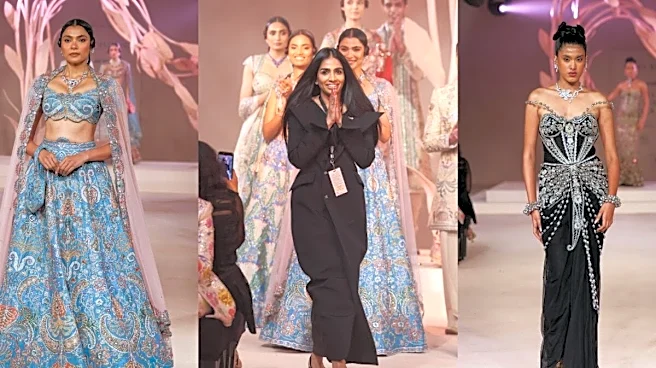
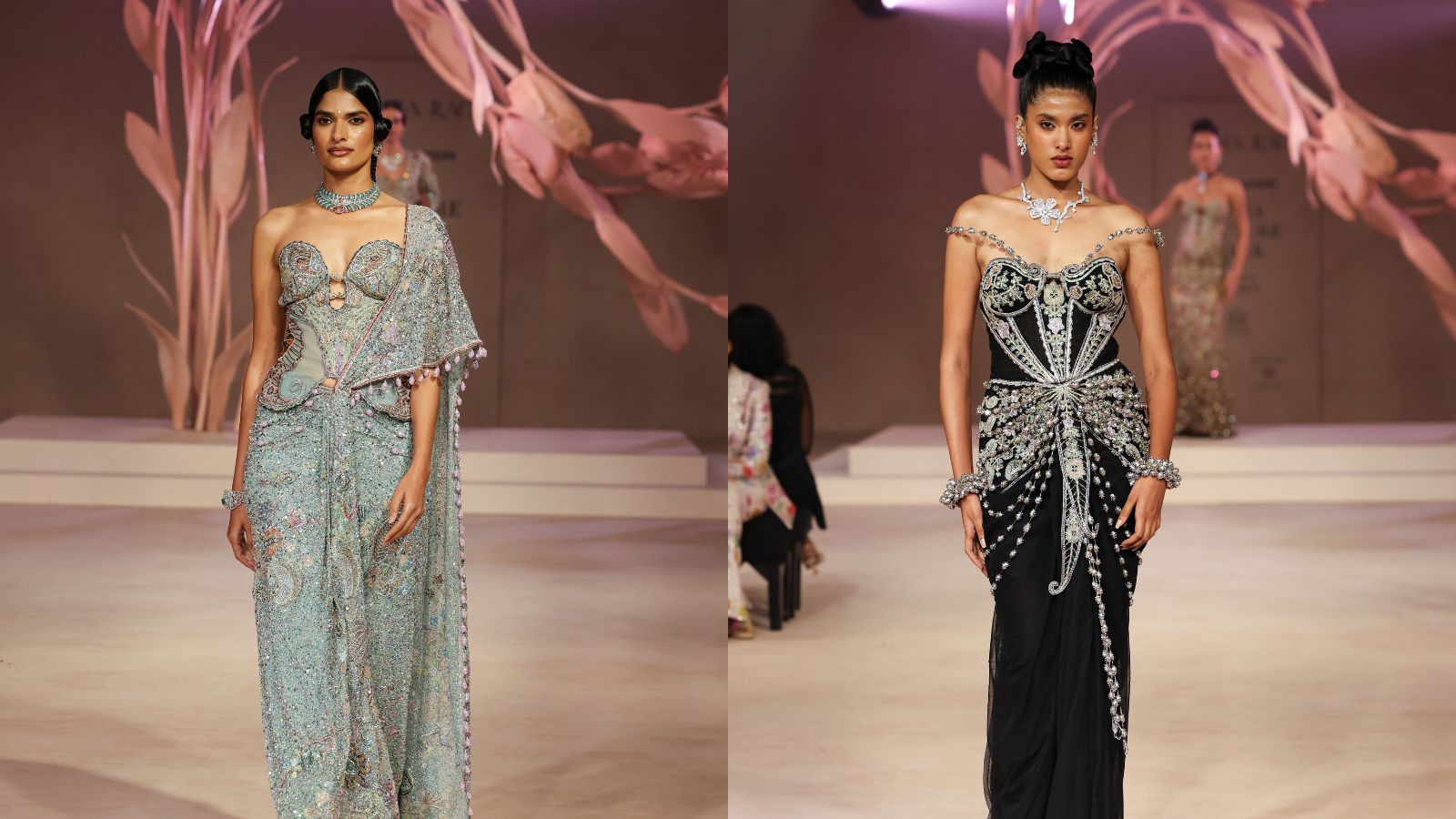
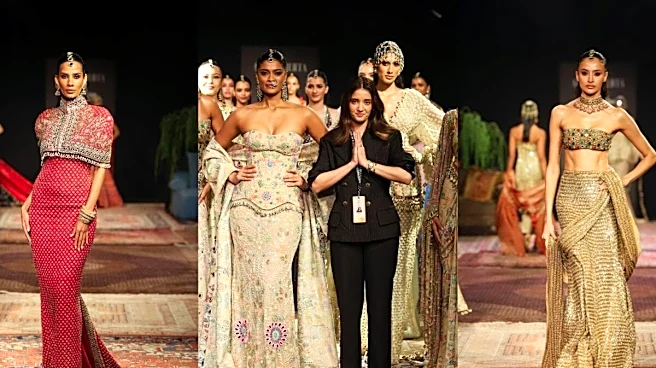
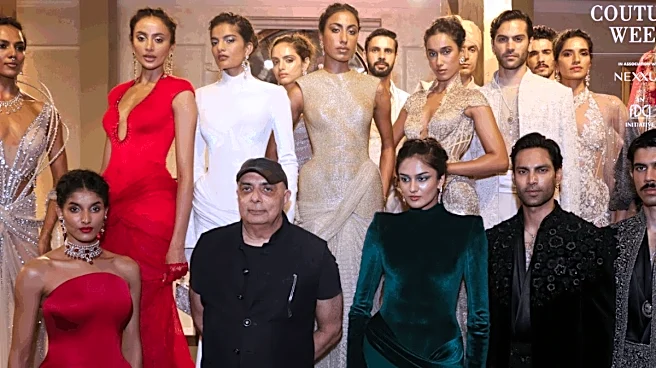
At Hyundai India Couture Week 2026, in association with Nexxus New York, an FDCI initiative, Aisha Rao unveiled Priyasi, a collection that moves through history, literature, mythology and cinema in search of one enduring idea: the beloved. The runway itself became a field of monumental tulips, staged with layered lighting, a cinematic score and a live performance.
Structured around three emotional states—Longing, Union and Remembrance—the collection drew on everything from Shah Jahan’s devotion to Mumtaz, to the restrained romance of Jane Austen, the sweep of Anna Karenina, and the grandeur of Mughal-e-Azam, translating each into Aisha Rao’s signature language of intricate embroidery, polychromatic appliqué and layered craftsmanship, this season
further extended through bio-based materials including bio-resham and bio-badla. The house also introduced a fine jewellery line in partnership with Shree Jewellers as an extension of the collection, with the presentation supported by Aisha Rao’s luxe gifting partner, Philips.
We caught up with the couturier to talk about translating longing into fabric, staying recognisable while constantly evolving, and why love—however it’s expressed today—hasn’t really changed at all.
You describe Priyasi as a collection about love told through many different stories — from Shah Jahan and Mumtaz to Jane Austen and Borges. Why did love feel like the right emotion to anchor your couture show this season?
“For us, the collection was never simply about love as an emotion, but about the enduring idea of the beloved. Across mythology, literature, history, and cinema, every culture has imagined the beloved differently, yet the emotions that surround that relationship remain remarkably constant. Whether it is longing, remembrance, or union, these feelings transcend time and geography, making them one of the few experiences that are deeply personal while also being universally understood.
That felt especially meaningful for couture. Every couture garment is created for an individual, yet the emotions it evokes are rarely singular. We wanted Priyasi to celebrate that shared emotional language, to create garments that feel intimate enough to belong to one person, while carrying sentiments that resonate with many. The stories of Shah Jahan and Mumtaz, Jane Austen, Borges, or mythology were never references to be recreated, they were reminders that every generation has searched for ways to express the same enduring human experience.
Ultimately, Priyasi celebrates not one love story, but the countless ways we experience the idea of a beloved, inviting each person to recognise a fragment of their own story within the collection.”
Your inspirations range from Pride and Prejudice and Anna Karenina to Mughal-e-Azam. How do you translate something as intangible as longing or romance into colour, embroidery and silhouette?
“I don’t think emotions can ever be translated literally into design, nor should they be. The moment a garment begins to illustrate a story too closely, it risks becoming a costume rather than couture. For us, the process was always one of interpretation rather than translation. Instead of recreating a narrative, we distilled its emotional essence. A rich, polychromatic colour palette draws from a spectrum of touchpoints and emotions, while familiar archetypal silhouettes are reimagined with a romantic sensibility. The references themselves were never the destination; they simply offered an emotional point of departure.
What interested us was creating garments that felt emotionally familiar without prescribing a single meaning. We wanted each person to encounter Priyasi through their own lens, allowing the collection to be completed not by us, but by the person who wears it.”
Your label has become synonymous with intricate appliqué, layered embroidery and painterly colour palettes. How do you continue evolving these signatures without losing what makes an Aisha Rao piece instantly recognisable?
“The most exciting part of our work is that we are constantly exploring how our craft can evolve. Appliqué has always been at the heart of our design language, but each collection challenges us to reinterpret it in new ways. We are continually experimenting with texture, layering, and tactile surfaces, finding different techniques to create depth while remaining rooted in the craftsmanship that defines us.
Colour has always been another signature. We are instinctively drawn to rich, vibrant palettes, but the intention is never simply to create something visually striking. It is about finding balance – allowing colour, embroidery, and embellishment to work in harmony so that the craft remains the protagonist, never overshadowed by excess.
I think that balance is intrinsic to the Aisha Rao language. Our work is richly detailed yet filtered through a contemporary lens. We continue to refine our techniques and push the possibilities of handcraft while preserving the precision and recognisable design vocabulary associated with the brand. Evolution, for us, is not about changing who we are, but about discovering new ways to express the same core identity.”
Today’s couture client wants emotion, but she also wants versatility and ease. How do you balance theatrical craftsmanship with clothes that feel relevant beyond the runway?
“Today’s couture client doesn’t see occasion wear as something that exists for a single evening. She wants pieces that hold emotional significance, but she also wants them to feel effortless, contemporary, and relevant to the way she lives. I think that has been an important shift in couture, and one that has challenged designers to think differently.
For us, craftsmanship and wearability are never opposing ideas. The artistry lies not only in the embroidery, but in creating garments that feel intuitive to wear. We think of functional aspects alongside aesthetics, trying to create modern, effortless silhouettes that offer a greater sense of versatility. We balance richly layered handcraft with thoughtful construction and a sense of ease, allowing the emotion of the piece to endure long after the occasion itself. Ultimately, couture should feel extraordinary without feeling inaccessible.”
Mughal-e-Azam remains one of India’s most visually iconic love stories. Was there a particular frame, costume or emotion from Indian cinema that found its way into this collection?
“What has always fascinated me about Mughal-e-Azam is its sense of grandeur. There is an undeniable visual opulence – the vibrant colours, regal golds and silvers, richly ornamented costumes, and larger-than-life silhouettes. We were certainly inspired by that royal magnificence and wanted Priyasi to evoke a similar sense of occasion at first glance.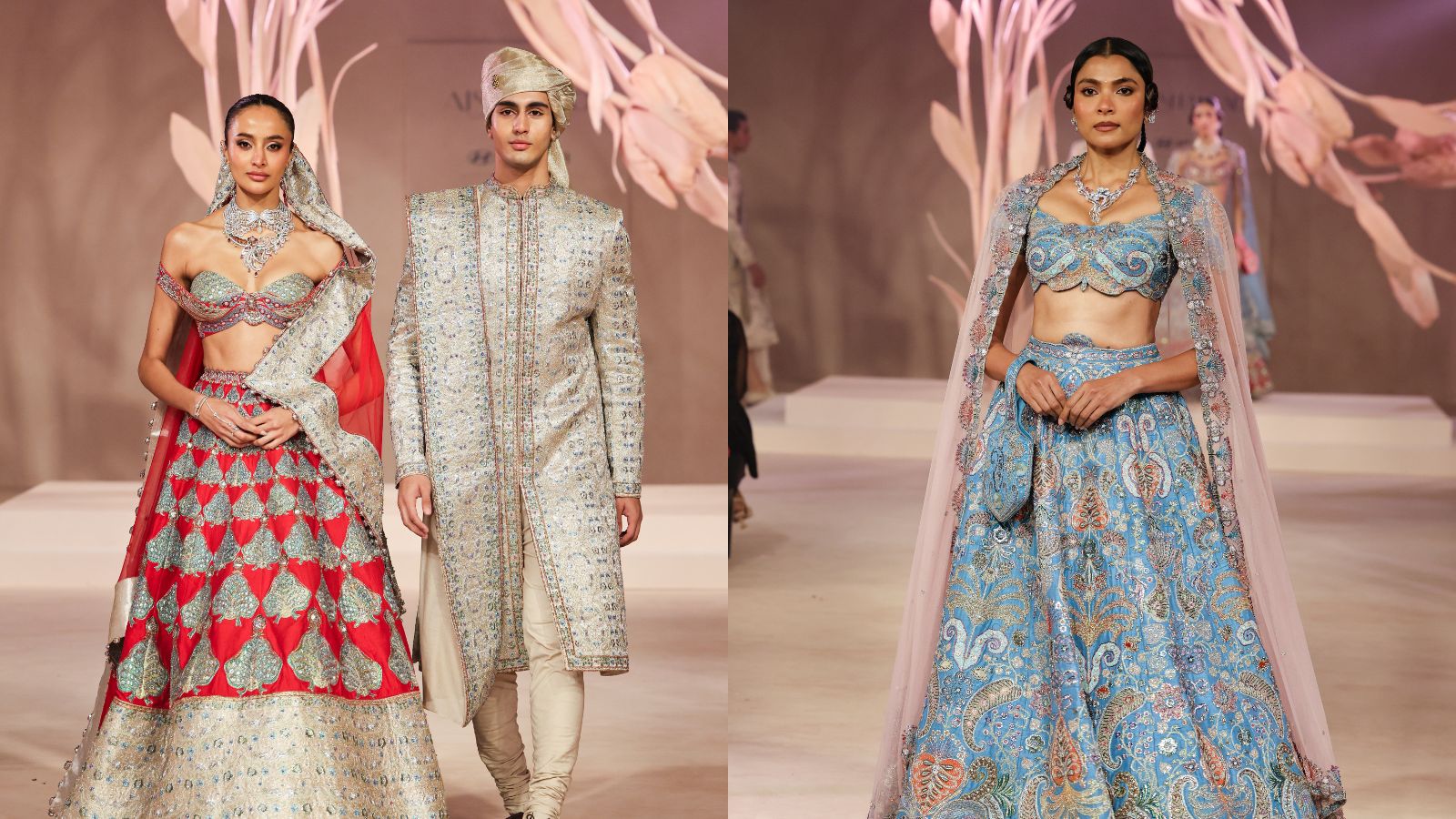
But beyond its visual language, what truly stayed with me was the emotion at its core. Mughal-e-Azam has endured for generations not simply because of its spectacle, but because it captures one of the purest expressions of love, its longing, sacrifice, devotion, and resilience. That emotional depth was far more influential to us than any single frame or costume.
So there isn’t one particular scene that you’ll recognise in the collection. Instead, there is a quiet sense of familiarity in the silhouettes, the richness of the palette, and the overall mood. More than recreating an iconic visual, we wanted to capture the spirit of Priyasi, the timeless emotion of the beloved that has resonated across generations and continues to do so.”
Love today is experienced through dating apps, long-distance relationships and social media, yet your references are timeless. Do you think the way we express love has changed more than the feeling itself?
“With every era of progress, the ways in which we experience and express love inevitably evolve. Today, technology has transformed how we meet, communicate, and sustain relationships, making love more immediate in some ways and more complex in others. But while the medium has changed, the emotion itself has remained remarkably constant.
That was the starting point for Priyasi. By revisiting love stories from different generations, cultures, and worlds, we wanted to remind ourselves that while every era reinterprets love in its own language, its essence never disappears. Longing, devotion, hope, and companionship continue to define the human experience, regardless of time or circumstance.
For me, that is what ties us together. The ways we express love may continue to evolve, but its pure, enduring nature remains one of the few things that transcends generations. That timeless emotional continuity is what we hoped to capture through the collection.”




/images/ppid_59c68470-image-178517753013741804.webp)