
/images/ppid_59c68470-image-178053760801243676.webp)
/images/ppid_59c68470-image-178062257037970418.webp)

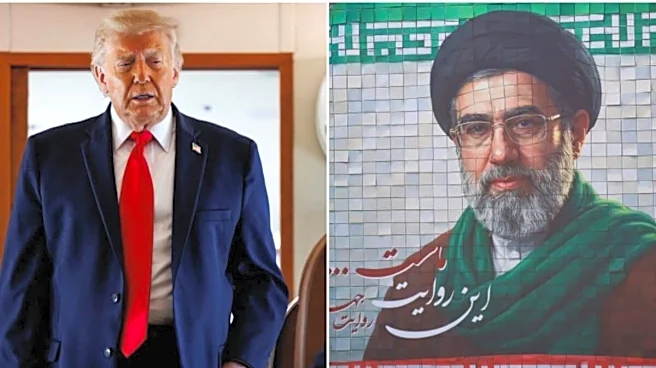
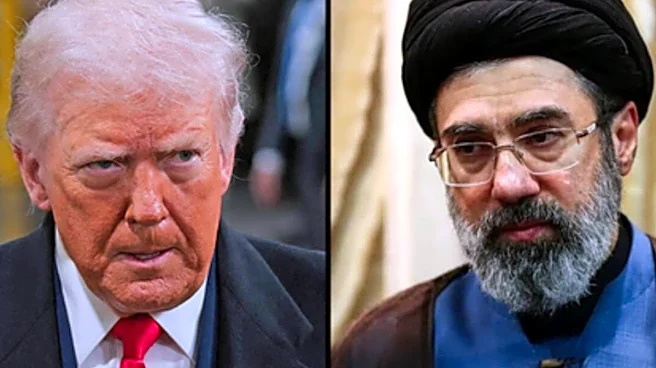
Iran’s leadership has dismissed the prospect of a meeting between US President Donald Trump and Supreme Leader Ayatollah Mojtaba Khamenei, with a senior adviser to the Iranian leader saying such an encounter “will not happen” while negotiations between Tehran and Washington remain stalled.
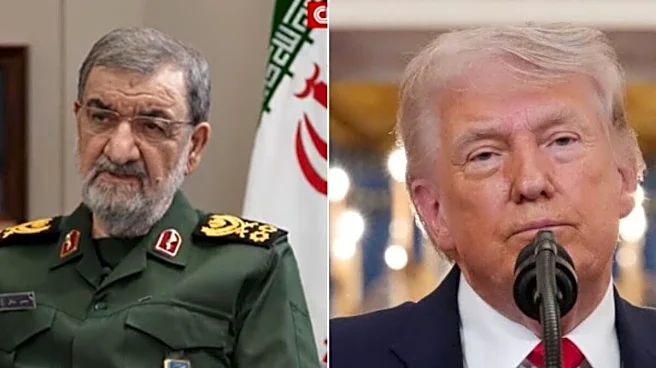
In an interview with CNN, Mohsen Rezaei, a senior adviser to Mojtaba Khamenei and secretary of Iran’s Expediency Discernment Council, said there was currently no possibility of a meeting between Trump and the Iranian leader.
Asked about Trump’s reported willingness to meet Khamenei, Rezaei replied, “This will not happen. Right now, we are in the first stage of negotiations, and Trump has brought the process to a standstill. Therefore, such a meeting will not take
place.”
Rezaei said the ongoing diplomatic process had reached an impasse and placed responsibility on Washington to move talks forward.
“In my opinion, the negotiations are at a deadlock, and it is Trump who must break this deadlock,” he told CNN when asked whether the sides could quickly reach a memorandum of understanding.
Addressing the key sticking points, Rezaei said Tehran had repeatedly demanded the release of frozen Iranian assets.
“Iran has openly stated that its assets have been frozen and that they must be released. The Americans are not telling the truth on this issue,” he said.
According to Rezaei, the issue is central to rebuilding trust between the two countries.
“If Trump is serious about negotiations, then $24 billion is not a significant amount for America. If he genuinely wants an agreement with Iran, releasing these funds would serve as a test of trust. This money belongs to Iran, not to America,” he said.
Rezaei also issued a warning over the possibility of further military escalation.
“If the war continues and the naval blockade is not lifted, we will expand the conflict to the Indian Ocean, the Bab al-Mandab Strait, the Red Sea, and the Mediterranean,” he said, adding that Iran would target additional American bases and that “America would suffer far greater losses, and those losses would be very heavy.”
Asked for a message to Trump, Rezaei said the US President should act independently of Israel and release Iran’s frozen assets.
“Trump must make decisions independently of Israel. He should recognise the rights of the Iranian people, end the blockade, and release Iran’s frozen assets. That could open a new chapter in relations between Iran and America,” he said.
FOREIGN MINISTER ALSO DISMISSES MEETING PROSPECT
Separately, AFP reported on June 5 that Iranian Foreign Minister Abbas Araghchi had downplayed the possibility of a meeting between Trump and Mojtaba Khamenei.
The remarks came after Trump told the New York Post on Wednesday, “Yeah, I’d like to meet him,” when asked about a possible meeting with the Iranian leader, adding that “we probably will meet at some point, depending on how it all works out.”
Responding in an interview with Lebanon’s Al Mayadeen television channel, which aired Thursday night, Araghchi suggested that such a scenario was unrealistic.
“I saw a report which apparently said that he (Trump) had stated that he was ready for a meeting or that he wanted to hold a meeting,” Araghchi said.
“I think we should be realistic and think and live in the real world,” he added.
Mojtaba Khamenei became Iran’s Supreme Leader in March following the death of his father and predecessor, Ali Khamenei, in US-Israeli strikes on February 28.
Araghchi said the new Supreme Leader maintained “a completely close and effective presence in the country’s affairs and has full control.”
He also attributed Khamenei’s absence from public view since assuming office to security concerns linked to the conflict, which has been under a fragile ceasefire since April 8.
Direct and mediated negotiations between Iran and the United States have yet to produce a lasting settlement to the conflict.
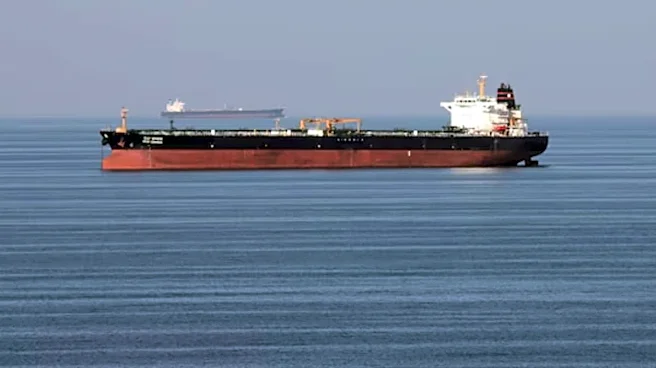
Meanwhile, the US military said Saturday it struck Iranian coastal radar and surveillance sites after intercepting drones launched by Iran toward the Strait of Hormuz.
Iran’s foreign ministry accused Washington of violating the April 8 ceasefire and warned that the United States would bear responsibility for the consequences of its actions.
The report said Tehran is seeking access to billions of dollars in oil revenue, sanctions relief, the lifting of restrictions on its ports and leverage over the Strait of Hormuz, while Washington faces growing pressure to contain the economic fallout of the conflict, including rising energy prices.
/images/ppid_59c68470-image-178066757344654423.webp)


/images/ppid_a911dc6a-image-178053982554317606.webp)
