
/images/ppid_59c68470-image-178641255005533838.webp)
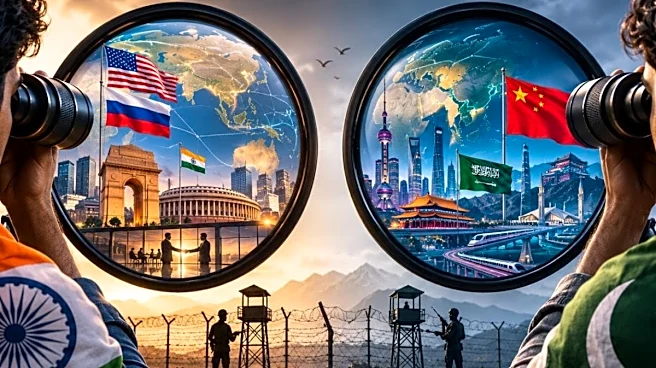
India and Pakistan have spent decades looking at each other through the lens of rivalry. But a new Pew Research Center survey shows that the two neighbours are not just divided over each other; they increasingly see the world itself very differently.
For Indians, Pakistan remains the biggest geopolitical threat, while Russia and the US emerge as the country’s most important allies. Across the border, Pakistanis overwhelmingly turn to China as their top ally, while India is seen as the biggest threat, followed by Israel and the US.
The numbers offer a fascinating snapshot of how two countries shaped by the same Partition, wars and decades of hostility now occupy very different geopolitical spaces. And there is another striking finding: people in both
countries believe their own side wants better relations, but largely doubt that the other side does.
ALSO READ | India’s Global Image: Loved In Sri Lanka, Divided In US, Rejected In Pakistan
The Pew survey, conducted among 3,566 adults in India and 1,039 in Pakistan between February and May 2026, offers a glimpse into how ordinary Indians and Pakistanis view their neighbours, major powers and the global order.
India And Pakistan Still See Each Other As The Biggest Threat
The most striking finding is also the least surprising. In India, 54 per cent identify Pakistan as their country’s greatest geopolitical threat. In Pakistan, 43 per cent name India as their biggest threat.
But China also features prominently in India’s threat perception: 21 per cent of Indians name China, making it the second most commonly cited threat. In Pakistan, meanwhile, Israel and the US each score 24 per cent as the next-biggest threats after India.
That means the two countries’ threat perceptions are structured differently beyond their shared rivalry.
The India-Pakistan Numbers
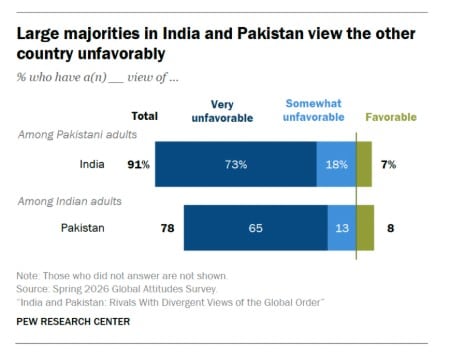
The mutual distrust runs even deeper when respondents are simply asked how they view the other country.
In India, 78 per cent have an unfavourable view of Pakistan, including 65 per cent who have a very unfavourable opinion. In Pakistan, the figure is even higher: 91 per cent have an unfavourable view of India, with 73 per cent describing their view as very unfavourable.
Pew notes that Indian attitudes towards Pakistan have remained overwhelmingly negative across more than a decade of its polling. Since 2013, no more than two in 10 Indians have expressed a favourable opinion of Pakistan.
There is also an interesting demographic split within India. According to the survey, 21 per cent of Indian Muslims have a favourable view of Pakistan, compared with just 6 per cent of Hindus.
Both Sides Think Their Country Wants Peace
Perhaps one of the most revealing findings concerns the question of peace. Majorities in both countries believe their own government and people are committed to good relations with the other side. But they largely do not believe the other country feels the same way.
In other words, the public perception is almost a mirror image.
Most Indians believe India wants better relations, but a majority do not think Pakistan’s government or people are similarly committed. Pakistanis express the same view in reverse: they believe Pakistan wants good relations, while majorities question India’s commitment.
This matters because it shows why diplomatic overtures can face a difficult public-opinion environment: each side tends to see itself as the more willing party and the other as the obstacle.
India Looks To Russia And US; Pakistan Looks To China
This is where the survey becomes a window into the emerging global order. Asked to identify their country’s most important ally, 36 per cent Indians name Russia, 16 per cent name the US, 75 per cent Pakistanis name China, and 12 per cent Pakistanis name Saudi Arabia.
The numbers reflect two very different strategic relationships.
India’s answer is notable because it shows that Russia continues to occupy an unusually important place in Indian public opinion, even as India has deepened its strategic partnership with the US and other Western countries.
Pakistan’s answer is much more concentrated: three out of four Pakistanis identify China as their country’s most important ally. That is consistent with the depth of the China-Pakistan relationship, which spans defence, infrastructure, investment and the China-Pakistan Economic Corridor.
Why Indians Still See Russia So Positively
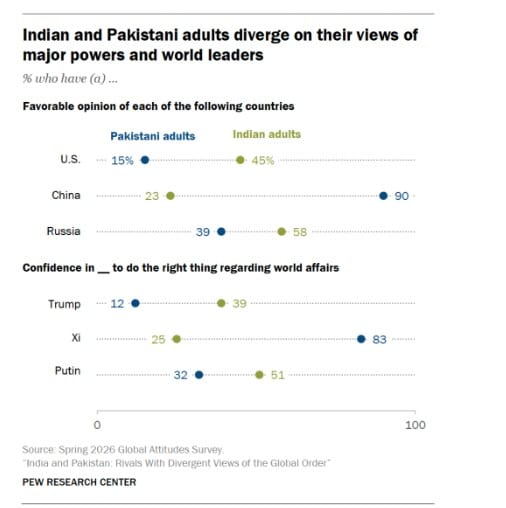
Pew found that 58 per cent of Indians have a favourable view of Russia, compared with 39 per cent of Pakistanis.
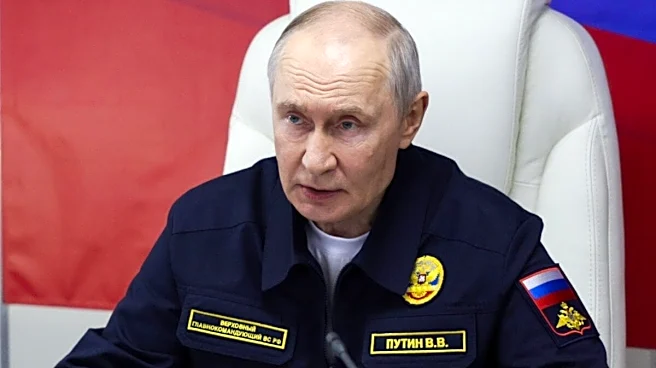
The difference is even visible in attitudes towards Vladimir Putin: 51 per cent of Indians express confidence in Putin to do the right thing in world affairs, compared with 32 per cent of Pakistanis.
Pew says Indians are among the most positive towards Russia and Putin across the 37 countries included in its survey.
This is an important reminder that India’s foreign-policy relationships cannot simply be understood through the prism of its expanding ties with Washington. India has maintained a longstanding defence relationship with Moscow while simultaneously developing strategic cooperation with the US, including across defence, technology and the Indo-Pacific.
That balancing act is one reason India’s worldview looks different from Pakistan’s.
US Is Viewed Very Differently In Delhi, Islamabad
The contrast is particularly stark when it comes to Washington.
Pew says Indians view the US three times more favourably than Pakistanis do and also express greater confidence in US President Donald Trump. India is, in fact, one of only six countries surveyed by Pew where people have a more favourable view of the US than China.
This comes against the backdrop of a steadily expanding India-US strategic relationship. Prime Minister Narendra Modi and US Vice-President JD Vance spoke in August about ways to deepen the two countries’ Comprehensive Global Strategic Partnership. But India’s favourable view of the US should not be mistaken for an exclusive alignment with Washington. The Pew numbers show that Russia remains the more frequently named ally.
Pakistan’s China Preference Is Overwhelming
If there is one number that best captures the difference between Indian and Pakistani worldviews, it may be this: 75 per cent of Pakistanis name China as their country’s most important ally. And 90 per cent of Pakistanis have a favourable opinion of China, while 83 per cent express confidence in Chinese President Xi Jinping.
The corresponding Indian numbers are dramatically lower: only around a quarter of Indians view China positively or express confidence in Xi. The divide reflects the strategic realities of South Asia.
China is Pakistan’s longstanding strategic partner and a major source of military equipment and economic investment. Pakistan’s dependence on Chinese defence supplies has also deepened over the years. For India, however, China is simultaneously an economic partner, military competitor and major security challenge.
Why China Is A Threat To India But An Ally To Pakistan
The divergence becomes easier to understand when geography and security interests are brought into the picture.
India and China share a disputed Himalayan border and have experienced deadly military clashes in recent years. The unresolved boundary dispute continues to shape India’s security calculations.
Pakistan, meanwhile, has built an unusually close relationship with Beijing partly around their shared strategic concerns about India.
That explains the remarkable Pew contrast:
India: 21 per cent name China as their biggest geopolitical threat.
Pakistan: 75 per cent name China their most important ally.
So, the same country occupies almost opposite positions in the strategic imagination of the two South Asian rivals.
Pakistan Also Sees Saudi Arabia As An Important Ally
China isn’t Pakistan’s only preferred partner. About 12 per cent of Pakistanis name Saudi Arabia as their country’s most important ally, according to Pew.
That finding is particularly interesting in the context of the region’s rapidly changing security architecture.
Pakistan, Saudi Arabia and Turkey signed the Mecca Joint Defence Agreement on August 7 this year. The pact establishes a mutual-defence framework under which an attack on one member is to be considered an attack on all three, although the agreement does not amount to a NATO-style alliance with identical military commitments.
India’s Worldview Is More Multi-Aligned
The Indian numbers suggest a more dispersed foreign-policy outlook. No single foreign country commands the overwhelming level of public support that China enjoys in Pakistan.
Russia comes first at 36 per cent, followed by the US at 16 per cent, while a sizeable share of Indians did not identify an ally. That broadly fits India’s long-standing approach of maintaining relationships with competing power centres rather than locking itself into one bloc.
India can cooperate with Washington on the Indo-Pacific and technology, maintain its defence relationship with Moscow, compete with China along the border and still engage Beijing through multilateral platforms. That is essentially the logic of strategic autonomy and multi-alignment.
The most important takeaway from the Pew survey is therefore not simply that Indians dislike Pakistan or Pakistanis dislike India. That has been known for decades. The more revealing finding is that the two societies are assigning completely different roles to the major powers shaping the world.
/images/ppid_59c68470-image-178662253597111037.webp)



/images/ppid_59c68470-image-178654252605728677.webp)
/images/ppid_59c68470-image-178658502685899562.webp)