

Bengaluru bus passengers will soon be able to track BMTC buses live and book tickets through ride-hailing platforms such as Ola and Uber, with the service expected to be rolled out by the end of September.
The Bengaluru Metropolitan Transport Corporation (BMTC) is currently holding discussions with private ride aggregators and plans to introduce a common, standard agreement for sharing its real-time bus data. BMTC Managing Director Raghunandan Murthy said any private aggregator that agrees to the specified conditions will be able to use the corporation’s data. The aim, he said, is to introduce the facility without placing any additional financial burden on passengers.
The integration is expected to make it easier for commuters who already use
cab and auto apps to find a BMTC bus for the next leg of their journey. For example, a passenger could complete part of a trip by cab, check the location and availability of a BMTC bus for the onward journey, and plan the connection without switching between multiple transport information systems.
How The New BMTC System Will Work
The system will essentially make BMTC’s real-time bus information available beyond the corporation’s own app. According to a report in Deccan Herald, once the data-sharing arrangement is finalised, participating ride-hailing platforms will be able to access BMTC’s live bus-location data. This means passengers using these apps will be able to see which BMTC buses are operating towards their destination and where those buses are on the route.
The planned ticket-booking facility would further reduce the need to switch to a separate platform for completing a bus journey.
The move is particularly aimed at making different modes of transport work together. A commuter could use an Ola or Uber for one part of a journey and then use a BMTC bus for the onward trip, with information about the bus available through the same mobility ecosystem.
The Transport Department has said the sharing of BMTC data with private mobility platforms will help passengers access bus information after getting off a cab or auto.
Namma BMTC App 2.0 To Launch Next Week
Alongside the integration with private platforms, BMTC is upgrading its own mobile application. The Namma BMTC Mobile App 2.0 is expected to be launched by the end of next week, according to Raghunandan Murthy. The upgraded app is intended to address issues raised by passengers and introduce new features. One of the biggest concerns has been unreliable live tracking.
Raghunandan Murthy said the upgraded system will provide live tracking information for every bus operating across the BMTC network.
The existing Namma BMTC app already provides journey planning, estimated arrival and departure information, route tracking and bus-location information. The upgraded version is expected to improve the reliability and usability of these services.
Why Live Tracking Could Matter To Commuters
For daily bus users, more reliable live tracking could mean less time waiting at bus stops without knowing when the next bus will arrive. Instead of relying only on a scheduled arrival time, commuters will be able to check the bus’s actual location and make decisions accordingly.
The wider availability of the data on apps that passengers already use could also make BMTC more accessible to people who do not regularly use the corporation’s dedicated app.
It could be particularly useful for commuters making multi-modal journeys, such as cab-to-bus, auto-to-bus or Metro-to-bus trips, by giving them information about the next leg of their journey.
BMTC Operates Around 6,200 Buses Daily
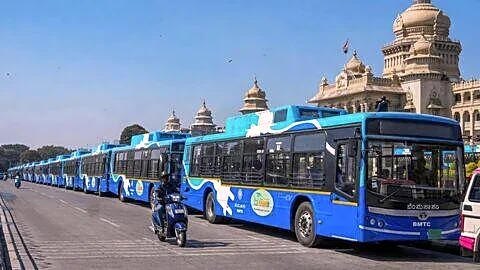
BMTC has a fleet of 6,938 buses, including 1,771 electric buses, and operates around 6,200 buses every day.
Making live information available across the network would therefore give commuters access to real-time information for a substantial portion of Bengaluru’s public bus system.
NCMC Payments To Be Enabled On BMTC Buses
BMTC is also expected to enable National Common Mobility Card (NCMC) payments across its buses around the same time.
Once the facility is operational, passengers will be able to use NCMC-enabled cards, including the NCMC cards issued for Namma Metro, to travel on BMTC buses. This would allow commuters to use a common mobility card across Metro and bus services instead of relying on separate payment arrangements for different modes of public transport.
The move is part of a broader effort to make public transport in Bengaluru more integrated and convenient.
200 Mini AC Electric Buses Planned For Metro Feeder Services
BMTC is also set to strengthen the connection between Metro stations and neighbourhoods with 200 mini air-conditioned electric buses. Transport Minister Byrathi Suresh has directed BMTC to deploy the buses within a 5-km radius of Metro stations.
The buses will be selected from the 4,500 electric buses being procured under the Centre’s PM E-DRIVE scheme.
The objective is to connect Metro stations with residential layouts and neighbourhoods that are difficult to serve with larger buses, particularly areas with narrower roads.
Feeder Network To Cover All Metro Stations
The proposed feeder network is intended to cover all Metro stations, including the six stations on the upcoming Pink Line along Bannerghatta Road.
BMTC is conducting a survey with the Bengaluru Metro Rail Corporation Ltd (BMRCL) and the traffic police to identify suitable feeder routes connecting stations on the Pink, Green and Yellow lines.
The aim is to address the first- and last-mile gap that often forces Metro passengers to depend on autos, cabs or private vehicles to reach stations.
Smaller Buses To Reach Narrower Roads
The focus on mini buses is significant because conventional BMTC buses can be difficult to operate on narrow roads around some Metro stations. Raghunandan Murthy said BMTC also plans to purchase 200 seven-metre diesel buses for Metro feeder and other routes.
The corporation currently operates 255 nine- and 12-metre buses as Metro feeders, but the smaller seven-metre buses are expected to be better suited to navigating narrower roads around Metro stations. The proposed 200 diesel buses are part of a budgetary announcement to procure 1,000 buses for all four state transport corporations in Karnataka.
BMTC is awaiting government approval to float the tender, after which the procurement process is expected to becompleted within six months, Murthy said.
More AC Buses Planned For Bengaluru’s IT Corridors
The state government is also looking at expanding AC bus services for employees of technology and IT companies.
Byrathi Suresh has directed officials to hold discussions with IT and technology companies on providing more AC bus services for their employees.
The objective is to encourage employees to use public transport instead of private vehicles, potentially reducing traffic and dependence on cars and two-wheelers.
What These Changes Could Mean For Bengaluru Commuters
Taken together, the measures are aimed at making Bengaluru’s different public and private transport options work more closely together.
For passengers, the changes could mean:
- Live BMTC bus locations accessible through apps such as Ola and Uber.
- BMTC ticket booking through participating ride-hailing platforms.
- More reliable live tracking through Namma BMTC App 2.0.
- NCMC payments on BMTC buses, including the use of eligible Namma Metro cards.
- 200 mini AC electric buses connecting Metro stations with neighbourhoods within a 5-km radius.
- Better first- and last-mile connectivity for Metro passengers.
- More AC services for IT and technology companies, potentially reducing private vehicle use.
The larger aim is to make it easier for commuters to combine different modes of transport rather than depending entirely on a private vehicle for an entire journey.
BMTC Also Asked To Plug Revenue Leakage
At the meeting with senior officials from the Transport Department, BMTC and KSRTC at Vidhana Soudha, Minister Byrathi Suresh also directed officials to take steps to prevent revenue leakage in BMTC and other state transport corporations.
Officials were asked to curb unnecessary expenditure and wastage and improve operational efficiency.
The digital upgrades and fleet expansion are therefore being accompanied by a push to strengthen the financial and operational performance of the state-run transport corporations.
A Shift Towards Integrated Public Transport
The proposed BMTC upgrades mark a move towards a more integrated transport system for Bengaluru, where buses, Metro services, cabs and autos can form part of a single journey.
If the planned September timelines are met, commuters could soon have more options to find, track and pay for their bus journeys; whether they start their trip on a Metro, in a cab or at a neighbourhood bus stop.
The biggest change, however, could be the wider availability of real-time BMTC data. Instead of bus information remaining within the BMTC ecosystem, commuters will increasingly be able to access it through the mobility apps they already use.