

Gurugram will enforce a fresh set of anti-pollution measures from November 5 to November 20, including a temporary ban on dust-generating construction and demolition activities and a 50% work-from-home mandate for government and private offices.
The Municipal Corporation of Gurugram (MCG) on Monday announced a 15-day suspension of outdoor construction and demolition work to curb dust pollution.
It also issued an advisory directing government and private establishments to ensure that no more than half of their workforce reports to office during the period, with the remaining employees working from home, The Times Of India reported.
The measures have been introduced in accordance with directions issued by the Commission for Air Quality Management
(CAQM) and are aimed at reducing vehicular congestion and emissions, besides controlling dust pollution.
Construction Restrictions Imposed
The construction restrictions will extend to private building projects and public infrastructure works, including highways, roads, flyovers, overbridges, electricity transmission lines, pipelines and telecommunications infrastructure.
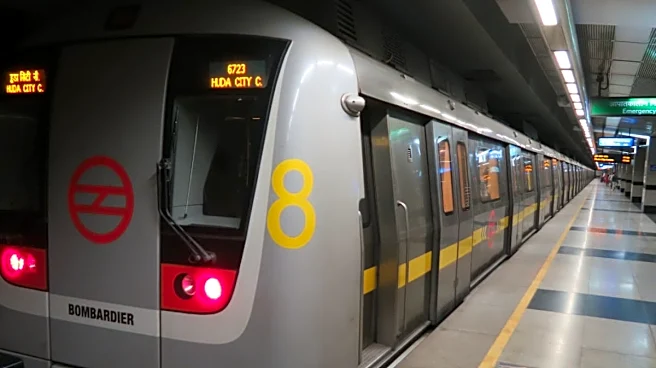
However, certain projects and essential services have been exempted, subject to prescribed conditions. These include railways, metro systems, airports, interstate bus terminals, hospitals, water supply and sanitation projects, national security and defence-related activities, and projects of national importance.
Also Read: Delhi AQI Hits 374, Remains ‘Very Poor’ A Day After GRAP-II Pollution Curbs Imposed
The civic body has also directed departments and executing agencies to identify activities covered by the construction ban and instruct contractors and field officials to halt the restricted work. Regular inspections will be conducted throughout the 15-day period to monitor compliance, The Times Of India reported.
WFH Imposed
The work-from-home advisory will require offices to restrict physical attendance to 50% of their workforce. Industrial establishments and essential services where the nature of operations does not permit remote working will be exempted.
Offices have been asked to prepare attendance schedules and work-from-home rosters in advance to ensure compliance from November 5.
MCG Commissioner Pradeep Dahiya said departments and agencies had been instructed to make the necessary arrangements before the restrictions come into force.
“Officials have been asked to put the required arrangements in place before Nov 5, with no negligence in enforcing the construction restrictions, office attendance requirements and monitoring mechanism,” Dahiya said.
Departments have further been asked to appoint nodal officers to communicate the CAQM directions to subordinate offices, contractors and associated agencies, The Times Of India reported.
They will also be required to submit action-taken reports to the MCG Additional Commissioner (Headquarters) before the restrictions begin, detailing suspended construction activities and compliance-monitoring arrangements.
Also Read: Delhi-NCR Pollution: GRAP II Curbs Imposed As AQI Breaches 300 Ahead Of Diwali
GRAP II Imposed In Delhi-NCR
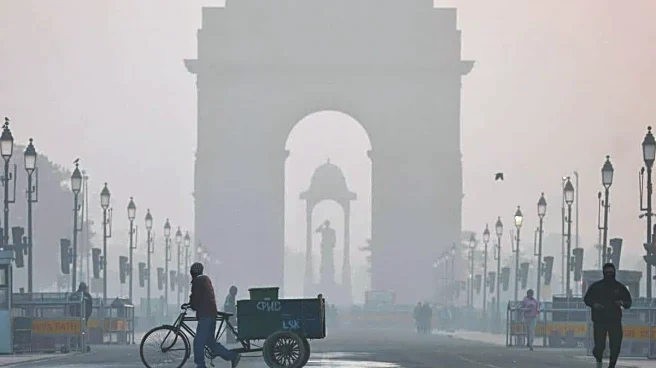
The curbs come amid a deterioration in air quality across Delhi-NCR, with Delhi’s Air Quality Index (AQI) entering the ‘very poor’ category for the first time this season on Monday.
The Commission for Air Quality Management’s (CAQM) GRAP sub-committee, which reviewed the situation on Monday, noted that the AQI had risen sharply from 117 on October 31 to 261 on November 1 before reaching 324.
Citing unfavourable meteorological conditions and forecasts by the India Meteorological Department (IMD) and the Indian Institute of Tropical Meteorology (IITM), the panel said air quality was likely to remain in the ‘very poor’ category over the coming days.
“Accordingly, the sub-committee decides to invoke all actions under Stage-II (‘very poor’ air quality) of the extant GRAP in the entire NCR, with immediate effect,” the order dated November 2 read.
Stage-II restrictions include higher parking charges and additional pollution-control measures, alongside those already in force under Stage-I of GRAP. All concerned agencies have been directed to intensify enforcement and prevent further deterioration in air quality.
As per the Central Pollution Control Board (CPCB), an AQI between 301 and 400 falls in the ‘very poor’ category, while readings between 401 and 500 are classified as ‘severe’.
With inputs from PTI