


Fresh questions have surfaced over the handling of a key piece of evidence, the ligature allegedly used in the death of Twisha Sharma, even as the Central Bureau of Investigation (CBI) continues its probe into the high-profile case.
According to documents cited by the complainant side and submissions made before the Madhya Pradesh High Court during anticipatory bail proceedings of retired judge and Twisha’s mother-in-law, Giribala Singh, the seizure of the ligature on May 13 has come under scrutiny over alleged procedural lapses.
The latest allegations relate to the manner in which the ligature was identified, seized and preserved immediately after Twisha’s death at her marital home in Bhopal on the night of May 12.
WHO IDENTIFIED THE LIGATURE?
As per the details, the ligature was seized by Sub-Inspector Dinesh Sharma on May 13 at 9.42 am.
However, the seizure memo allegedly does not mention the identity of the person who identified the object as the ligature connected to the incident.
The complainant’s side has argued that at the time of seizure, neither Giribala Singh nor her son and Twisha’s husband, Samarth Singh, had identified the ligature, and yet the document lacks details of any other person who may have done so.
The omission has raised questions about the chain of identification of a piece of evidence central to determining the circumstances surrounding Twisha Sharma’s death.
QUESTIONS OVER CUSTODY OF EVIDENCE
Another allegation pertains to the custody of the ligature after it was seized.
According to the claims made in court documents, the ligature remained in the custody of the same investigating officer and was allegedly kept in his vehicle before being sent to AIIMS Bhopal.
The complainant’s side has questioned whether proper procedures were followed to preserve the integrity of the evidence during this period.
The allegations gain significance because the post-mortem report later concluded that Sharma’s death was caused by “antemortem hanging by ligature.”
According to Twisha’s first autopsy report, she was found hanging from a gymnastic ring rope on the terrace of her residence.
Doctors recorded a double reddish patterned ligature mark around the upper third of her neck and concluded that the cause of death was “antemortem hanging by ligature.”
The report also documented multiple simple antemortem injuries caused by blunt force on different parts of her body, including bruises and abrasions.
The forensic samples were preserved for toxicology and DNA examination, ANI reported.
ACCESS TO CASE DOCUMENTS RAISES FURTHER CONCERNS
The complainant’s side has also alleged that the seizure memo relating to the ligature formed part of the case diary and should not have been accessible to the accused at that stage of the investigation.
However, according to the allegations, the same document was annexed to a reply filed by Giribala Singh in her anticipatory bail proceedings before the Madhya Pradesh High Court on May 27.
The complainant’s side has claimed that the inclusion of the document in court filings indicates that the accused had access to investigative material that was not ordinarily available to them.
These claims have not been independently verified, and no court has yet ruled on the allegations.
COMPARISON WITH OTHER SEIZURE MEMOS
The complainant side has further pointed to what it describes as inconsistencies in documentation prepared on the same day.
According to the allegations, three other seizure memos drawn up on May 13 contained detailed references to Samarth Singh and Giribala Singh, while the ligature seizure memo allegedly lacked comparable identifying details.
The developments come as the CBI continues to investigate the circumstances surrounding Twisha Sharma’s death.
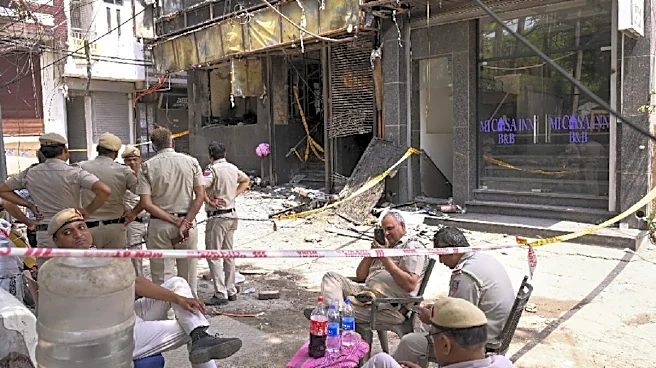
The agency on June 1 recreated the crime scene at the Katara Hills residence using a dummy weighing approximately the same as the deceased.
Samarth Singh and Giribala Singh were present during the reconstruction and were asked to explain the sequence of events after Sharma was allegedly found hanging.
The agency also sought to establish a minute-by-minute timeline of the night of May 12 and reconstruct the events leading up to Sharma’s death.
A day later, a Bhopal court remanded Giribala Singh and Samarth Singh to judicial custody after the CBI informed the court that key aspects of the investigation, including forensic analysis of electronic devices and a second post-mortem report, were still pending.
CASE BACKGROUND
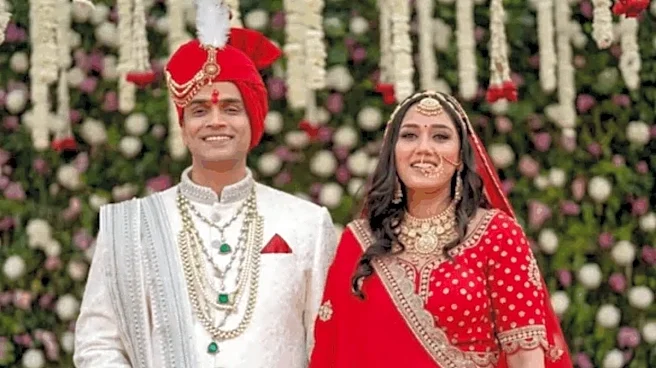
Twisha Sharma, a resident of Noida, married Bhopal resident Samarth Singh in December 2025.
Her family has alleged dowry harassment, domestic violence and mental torture by her husband and in-laws.
The FIR states that Twisha Sharma was brought to AIIMS Bhopal by her husband after she allegedly hanged herself at home.
Doctors declared her dead shortly after midnight on May 13.
Her family has maintained that she was subjected to sustained harassment and has demanded a thorough investigation into the circumstances of her death.
The CBI investigation remains ongoing, and the agency has not publicly commented on the latest allegations concerning the seizure and handling of the ligature evidence.
/images/ppid_a911dc6a-image-178074212899231404.webp)


/images/ppid_a911dc6a-image-178058142946533132.webp)