

/images/ppid_59c68470-image-177044253007719444.webp)
/images/ppid_a911dc6a-image-177044923088746416.webp)
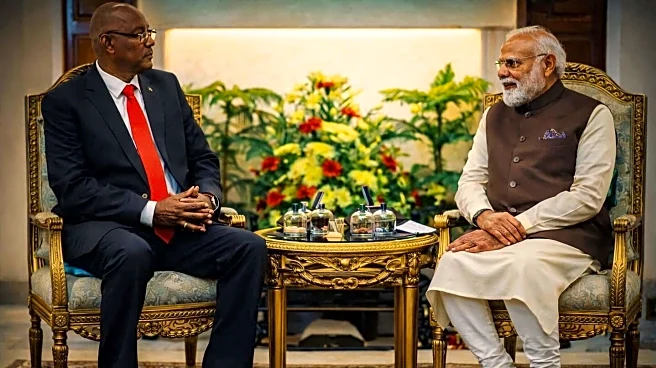
On December 16, Prime Minister Narendra Modi’s historic visit to Addis Ababa—the first by an Indian PM in 15 years—marked a watershed moment in Indo-African relations. During high-level delegation talks with Ethiopian Prime Minister Abiy Ahmed Ali, the two leaders formally elevated their bilateral relationship to a “Strategic Partnership”. This elevation signals a transition from a traditional development-focused bond to a robust, multi-dimensional alliance centred on security, technology, and economic resilience.
The timing of this upgrade is highly significant. Ethiopia, as the host of the African Union (AU) headquarters and a newly minted member of BRICS, serves as a critical diplomatic hub for the continent. Prime Minister Modi’s visit reinforces
India’s role as a “first responder” for the Global South, emphasising a partnership based on equality and shared democratic values rather than a donor-client dynamic. By anchoring ties with Ethiopia, India secures a strategic gateway to the Horn of Africa, an area increasingly vital for maritime security and trade in the Red Sea corridor.
A Modern Blueprint for Cooperation
The strategic partnership is underpinned by a forward-looking agenda. The two nations have committed to a “modern partnership” that prioritises Digital Public Infrastructure (DPI), health security, and defence. Prime Minister Modi specifically highlighted India’s willingness to share its expertise in large-scale administrative transformation—drawing from the success of “Digital India”—to support Ethiopia’s ambitious economic reforms.
Beyond government-to-government ties, the partnership leans heavily on capacity building. Prime Minister Modi announced a doubling of the ICCR scholarship quota, acknowledging the deep-rooted tradition of Indian teachers shaping Ethiopia’s educational system. This “people-to-people” bridge is further strengthened by new commitments in healthcare, specifically targeting maternal and neonatal care at the Mahatma Gandhi Hospital, a symbol of India’s long-standing humanitarian footprint in Addis Ababa.
Official List of Outcomes (December 16-17, 2025)
The visit culminated in the signing of several landmark agreements and Memorandums of Understanding (MoUs) that provide the legal and operational framework for this new strategic era:
- Strategic Partnership: Formal elevation of bilateral ties to a ‘Strategic Partnership’.
- Customs Cooperation: Agreement on Cooperation and Mutual Administrative Assistance in Customs Matters to streamline trade.
- Digital Infrastructure: MoU for establishing a state-of-the-art Data Centre at the Ministry of Foreign Affairs of Ethiopia.
- Peacekeeping: Implementing Arrangement for cooperation in United Nations Peacekeeping Operations Training, building on both nations’ roles as top troop contributors.
- Financial Resilience: Signing of an MoU on Debt Restructuring for Ethiopia under the G20 Common Framework, showcasing India’s support during Ethiopia’s economic recovery.
- Educational Expansion: Doubling of scholarships for Ethiopian scholars under the ICCR scholarship programme.
- AI & Tech Skilling: Introduction of specialised short-term courses in Artificial Intelligence under the ITEC programme for Ethiopian students and professionals.
- Healthcare Augmentation: Commitment to boost capacity at the Mahatma Gandhi Hospital in Addis Ababa, focusing on maternal and neonatal healthcare.
/images/ppid_a911dc6a-image-17705298299446085.webp)


/images/ppid_59c68470-image-177066254410022291.webp)

/images/ppid_a911dc6a-image-177053764417956845.webp)
/images/ppid_59c68470-image-177054003614399632.webp)
/images/ppid_a911dc6a-image-177043362645988687.webp)