

/images/ppid_a911dc6a-image-177668663625483738.webp)
Iran has mined the Strait of Hormuz as a retaliatory and defensive tactic during the ongoing Iran war, which began on February 28, with US and Israeli airstrikes on Iranian leadership and infrastructure.
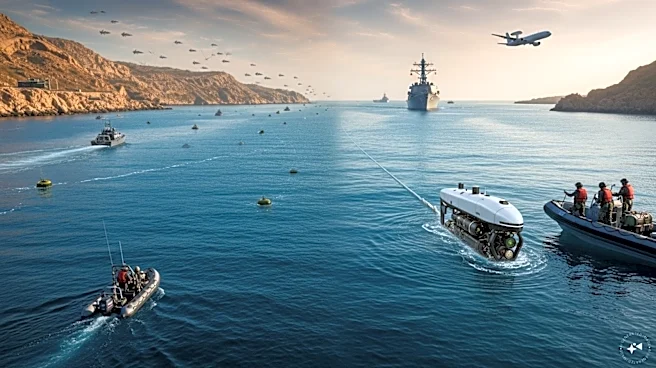
The US is now using robotic systems such as sea drones for mine clearance primarily to eliminate risks to personnel and to navigate a battlefield where traditional ships and divers are too vulnerable to attack.
Why Iran Mined the Strait
The mining is part ofIran’s strategy to maintain a “stranglehold” on global energy markets and leverage its geographical position during the conflict. Strategic Leverage: By mining the waterway, Iran effectively controls the transit of roughly 20% of the world’s oil and gas, allowing it to charge tolls (reportedly over $1 million per ship)
or selectively allow passage to friendly nations like China and Russia. Counter-Blockade: Iran reimposed the closure on April 18 in direct response to the US naval blockade of Iranian ports. Tehran has stated it will not fully reopen the strait unless the US allows free passage to Iranian vessels. Unintended Loss of Control: US officials report that Iran has actually lost track of many mines it planted, making it technically unable to guarantee the safety of the channel even if it wanted to fully reopen it.
Why the US is Using Robots Instead of Divers
The US Navy is deploying advanced unmannedsystems such as Knifefish and Kingfish underwater drones to clear these “deadly” fields.
- Robots use sonar to scan for and identify mines from a distance. If a mine is found, expendable robots like the Archerfish can be sent to destroy it with an explosive charge, keeping human divers far away from the blast zone.
- The Strait of Hormuz is extremely narrow (33-34 km at its tightest). In the current high-tension environment, crewed minesweepers or divers in small boats would be “sitting ducks” for Iranian missiles, drone swarms, or fast-attack boats.
- Unmanned underwater vehicles (UUVs) can map the seabed in days rather than the weeks required by traditional methods. This is critical for creating a “safe corridor” quickly to resume commercial shipping and lower global oil prices.
- The US Navy has retired much of its older, manned minesweeping fleet. It now relies on Littoral Combat Ships (LCS) that act as “motherships” for these semi-autonomous robotic systems.
KEY FAQs
Why did Iran mine the Strait of Hormuz?
To disrupt global shipping and gain leverage. The strait carries a huge share of the world’s oil; even a few mines can choke traffic, spike prices, and pressure adversaries. Iran laid mines after strikes against it to effectively restrict or control passage without needing a full naval confrontation.
Why are naval mines such an effective tool?
Because they’re cheap to deploy but hard to clear. Minescan be scattered by small boats and remain hidden—some sit on the seabed, others float or trigger via magnetic/acoustic signals. Even the threat of mines can halt shipping, creating outsized economic impact.
Why is the US using robots instead of divers?
Because mine-clearing is slow, dangerous, and makes humans easy targets. Ships and diversoperate at low speeds and are vulnerable to missiles or drones. So the US is using underwater drones and robotic systems to detect and neutralise mines remotely—reducing risk to personnel, even if the process remains complex and time-consuming.
With agency inputs


/images/ppid_a911dc6a-image-177682182853011695.webp)