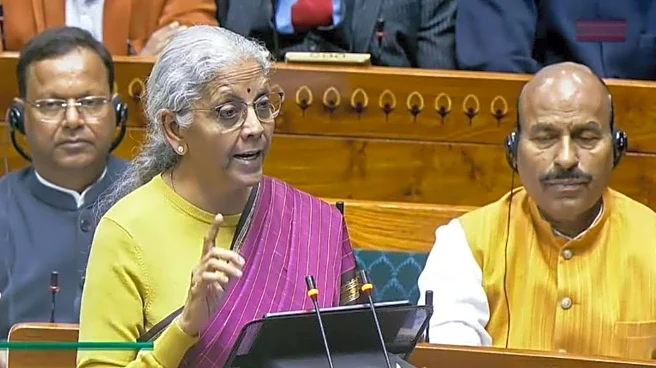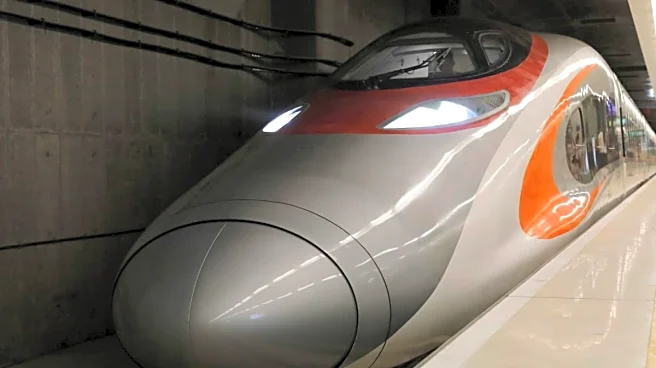



Even as India’s first high-speed rail (HSR) corridor is under construction after close to a decade of the foundation stone ceremony held in 2017, the Union government on Sunday proposed seven new routes with focus on improving connectivity between western and southern parts of the country. In her budget speech, Finance Minister Nirmala Sitharaman said that seven high-speed rail corridors will be developed across parts of India. The routes proposed are between Mumbai and Pune; Pune and Hyderabad; Hyderabad and Bengaluru; Hyderabad and Chennai; Chennai and Bengaluru; Delhi and Varanasi; Varanasi and Siliguri. All these cities in the south are major economic centres and with the proposed high-speed corridors they will get improved connectivity that will be beneficial
for the businesses around these belts. She called these “environmentally sustainable passenger systems”. The foundation stone ceremony for the first high-speed rail corridor, famous as Ahmedabad and Mumbai Bullet Train Project, was held in September 2017. Out of the 508 km section under construction, only Surat to Vapi section, is expected by August 15, 2027, as per official updates from the Union Railway Ministryissued earlier this year.
Long-Term Plan: HSR between Ahmedabad, Bengaluru, Chennai
As the list suggests, three routes are in the south connecting major cities – Hyderabad and Bengaluru; Hyderabad and Chennai; and Chennai and Bengaluru.
Only one route each is for connectivity around northern India (Delhi and Varanasi); north and eastern India (Varanasi and Siliguri) and west and south (Pune–Hyderabad).
Clubbed with existing projects, the Mumbai–Pune Corridor will be second for Western India.
Once all proposed routes are functional, India will have a continuous high-speed rail spine linking Ahmedabad with Bengaluru and Chennai, passing through Mumbai, Pune and Hyderabad.
Less Than Eight Hours for Delhi-Varanasi Rail Connectivity
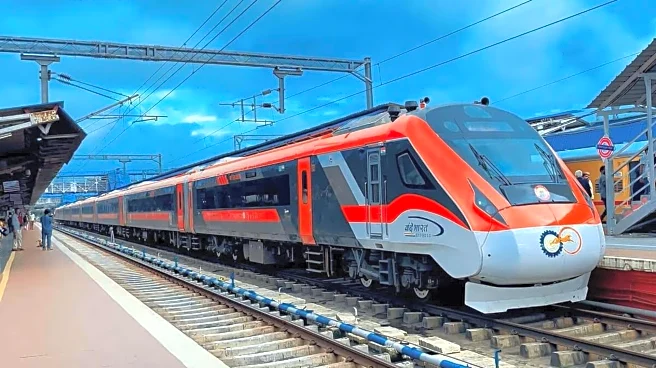
It is important to note that Delhi and Varanasi, the Lok Sabha constituency of Prime Minister Narendra Modi, already have two Vande Bharat pairs offering eight-hour journeys compared to the usual train ride of 12-13 hours.
The two cities are also well connected by flights as Varanasi is an important religious city in India.
This new corridor is expected to further drop the journey time to about three hours, a Railway official told News18.
The proposed Varanasi–Siliguri route will also establish a high-speed rail link between Delhi and West Bengal, helping cut travel time to Siliguri, the gateway to Darjeeling and other parts of north Bengal.
India’s Long Wait for High-Speed Railways
The feasibility study for the Mumbai-Ahmedabad High-Speed Rail project was done in December 2013 and the report submitted in July 2015. It was sanctioned by the Union Cabinet in December, 2015 with a promise for completion by August 15, 2022.
In 2017, when the foundation stone was laid for the Mumbai-Ahmedabad route, the Railway Ministry had said that it is a railway system where trains operate over 250 kmph. Until then the system was only available in 15 countries. The maximum design speed of the Mumbai-Ahmedabad High-Speed Rail project is 350 kmph while the maximum operating speed will be 320 kmph.
“India was a lone exception among major passenger railway systems not to have one,” then Railways Minister Piyush Goyal had said.
However, last month, Railway Minister Ashwini Vaishnaw said that only a section of this route will be ready by August 2027 and the entire project will be fully completed by late 2029.
Last year, News18 reported that the Vapi-Sabarmati section of the MAHSR project in Gujarat is expected to be ready by December 2027, while the entire corridor connecting Mumbai will be operational by the end of 2029.
The expected timeline of the train operations coincides with the scheduled assembly polls in the two states – Gujarat around 2027 end and Maharashtra towards the end of 2029.
Cost Already Doubled
When the project was announced, the cost of the Ahmedabad-Mumbai Bullet Train project was estimated at Rs 1.08 lakh crore. However, the delay has already pushed the cost to double at Rs 1.98 lakh crore. In January, Chairman and Chief Executive Officer of the Railway Board Satish Kumar, while announcing the new cost, said that the final sanction of the second revised estimate is yet to be done.
The Mumbai-Ahmedabad High-Speed Rail project is a double line 508 km route, passing through Gujarat (351 km), Maharashtra (156 km), and Dadra and Nagar Haveli (2 km).
The entire corridor was elevated for safety and land economy, except around Mumbai with only underground stations out of the 12. The elevated stations on the route are at Thane, Virar, Boisar, Vapi, Bilimora, Surat, Bharuch, Vadodara, Anand, Ahmedabad, and Sabarmati.
While the regular trains take six to seven hours for the journey between Mumbai and Ahmedabad, the bullet train will take less than three hours.
Speaking to News18, a Ministry official said that the Mumbai-Ahmedabad route was delayed as it was the first project and land issue was there in Maharashtra.
“The work in Maharashtra started very late due to land acquisition delays. Now, with the learning from this project, we have the confidence of completing the other routes in time,” the official said, demanding anonymity.